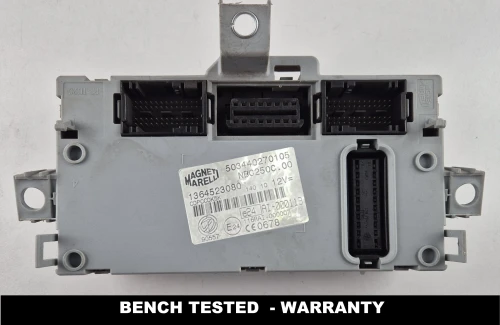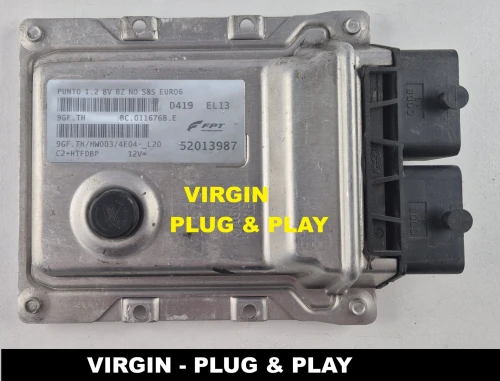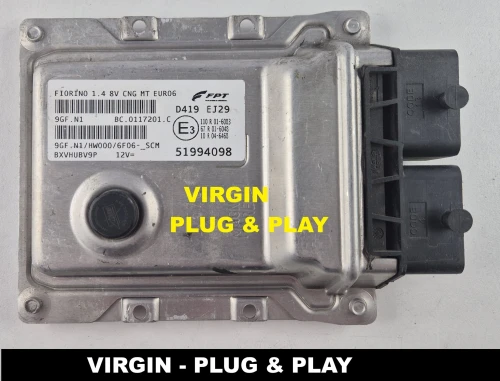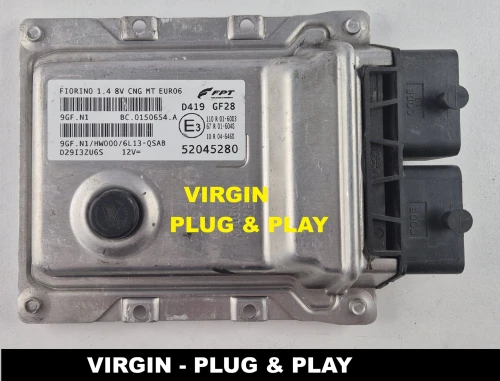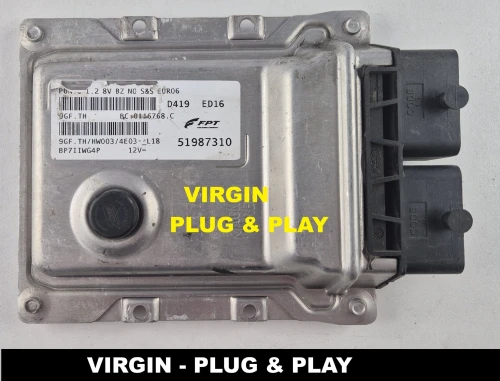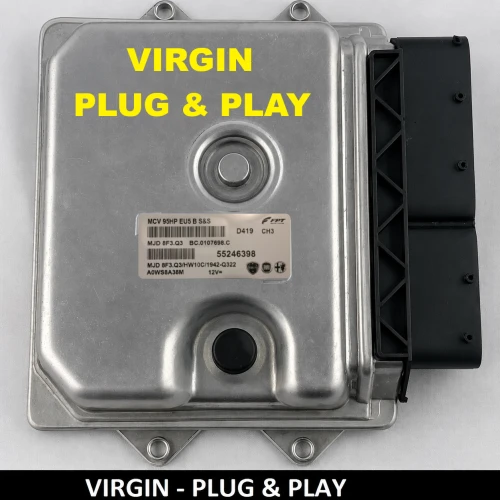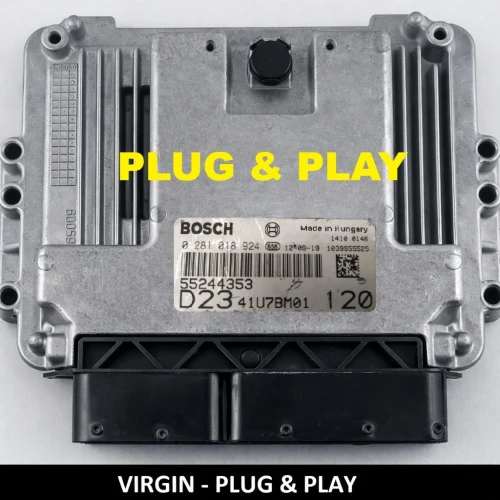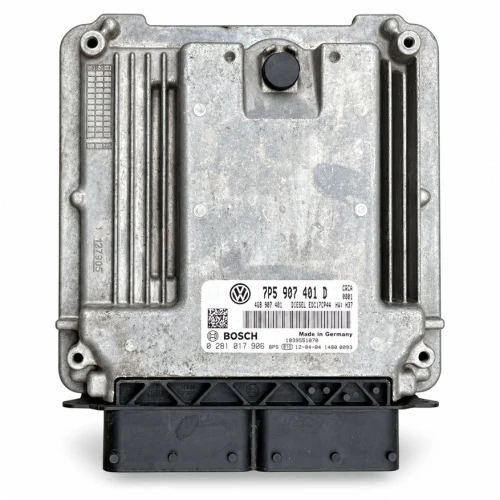


Your car was running normally the day before, but after a frosty night, the ABS and ESP warning lights and the engine management light come on, or several fault messages appear on the dashboard at once. Sometimes the engine will not start, the starter motor does not respond or a diagnostic tool cannot communicate with the engine control unit.
Cold weather, rain, snow and moisture can reveal existing problems with the battery, wiring, connectors or electronic modules.
An electrical or electronic fault after a frosty night does not necessarily mean that the engine ECU has failed. The cause may be a discharged or ageing battery, a voltage drop during starting or a fault in the power supply wiring. In other cases, water entering a control module can cause corrosion and damage to its electronics.
At ECUSale, we encounter water-damaged engine control units from certain Audi Q7, Opel Corsa D 1.3 CDTI and Opel Combo versions, as well as faults affecting Volkswagen ABS pumps and BCM, BSI, BSM and SAM modules. In this guide, we explain where to begin diagnosis and what to check before repairing or replacing a control unit.
Contents
- Why do several faults appear after a cold night?
- Battery condition and voltage drops during starting
- Blocked scuttle drains: how does water reach the ECU?
- Audi Q7: water entering the engine ECU
- Opel Corsa D 1.3 CDTI and certain Combo versions
- Volkswagen: moisture and corrosion in ABS control modules
- BCM, BSI, BSM, SAM, UCH and CAS modules
- How to recognise a water-damaged engine ECU
- Common diagnostic trouble codes
- How to distinguish a battery problem from an ECU fault
- Diagnosing and preventing vehicle electronics faults in winter
- ECU replacement: VIRGIN, Plug & Play and cloning
- Frequently asked questions
- How to prevent further damage to control units
Why do several faults appear after a cold night?
A modern car contains numerous electronic control units. The engine control unit, commonly called the ECU, the ABS/ESP module, body control module (BCM), transmission control unit (TCU) and modules associated with the immobiliser exchange information through the CAN bus or other vehicle networks.
Each module needs the correct supply voltage. If the voltage drops sharply during starting, some units may temporarily stop responding, reset or store communication fault codes.
Common symptoms after a frosty night
- ABS and ESP warning lights and the engine management light coming on together.
- Difficulty starting the engine.
- Immobiliser fault messages.
- Temporary loss of CAN communication.
- Low-voltage fault codes.
- Some modules failing to respond to a diagnostic tool.
Several warning lights coming on together do not necessarily mean that several control units have failed. A shared power supply problem may explain all the symptoms.
Battery condition and voltage drops during starting
Low temperatures reduce a battery’s ability to deliver high current. At the same time, turning a cold engine can place greater demands on the starter motor.
If the battery is deteriorated or insufficiently charged, its voltage may drop significantly during starting. Some control units may then reset or temporarily lose communication.
How do you check the battery’s resting voltage?
For a typical 12 V lead-acid battery, after a suitable rest period and at approximately room temperature, the following readings provide a general guide:
- 12.6–12.8 V: generally indicates a well-charged battery.
- Approximately 12.4 V: may indicate partial discharge.
- Approximately 12.2 V: generally indicates a low state of charge.
- 12.0 V or lower: may indicate substantial discharge.
These figures depend on temperature, battery technology and the time since the battery was last charged or used. Resting voltage alone does not establish whether the battery can deliver enough current to start the engine.
What voltage drop should cause concern?
Under certain standardised battery load-test procedures at around 20 °C, a reading below approximately 9.6 V may indicate that further checks are needed. This reference applies only under the conditions specified for the test.
It is not a universal threshold for every voltage reading taken during engine starting. Temperature, test duration, battery type and the manufacturer’s procedure must all be considered.
If CAN communication faults appear during starting, check the battery under load, earth cables, power supply connections and relevant relays before concluding that an ECU is faulty.
Blocked scuttle drains: how does water reach the ECU?
The scuttle is the area at the base of the windscreen. Depending on the vehicle, this area may contain wiring, fuse boxes or electronic control modules.
Leaves, mud and other debris can block the drains. Snow and ice may also restrict drainage, allowing water to collect near electrical components when the snow melts.
How can water enter a control unit?
- Leaves, mud and debris collect in the scuttle area.
- The drains become blocked.
- Rainwater or melting snow accumulates instead of draining away.
- Water reaches the control unit housing, connectors or an area with damaged seals.
- If water enters the module, it can cause corrosion and electronic damage.
The symptoms do not always appear immediately. A vehicle may continue to run normally for some time before corrosion causes starting or communication problems.
If a control unit has suffered water ingress, the damage must be assessed and the source of the leak corrected before the unit is repaired or replaced.
Audi Q7: water entering the engine ECU
On certain Audi Q7 versions, drainage or sealing problems can allow water to collect around the engine ECU. The unit’s location and protection vary with the vehicle generation, engine and specific module.
Where the ECU is installed near the scuttle, it is important to check the drains, protective enclosure, housing seals and connectors.
How can water enter an Audi Q7 ECU?
From our experience with some damaged units, water can enter through the housing vent or another point where protection has deteriorated.
The vent allows pressure inside the housing to equalise. It does not guarantee protection against prolonged immersion. The risk of water ingress depends on the unit’s design and the condition of its protective elements.
If blocked drains allow the water level to rise, water may reach the housing, vent or connectors. This does not mean that all Audi Q7 versions are exposed to the same risk.
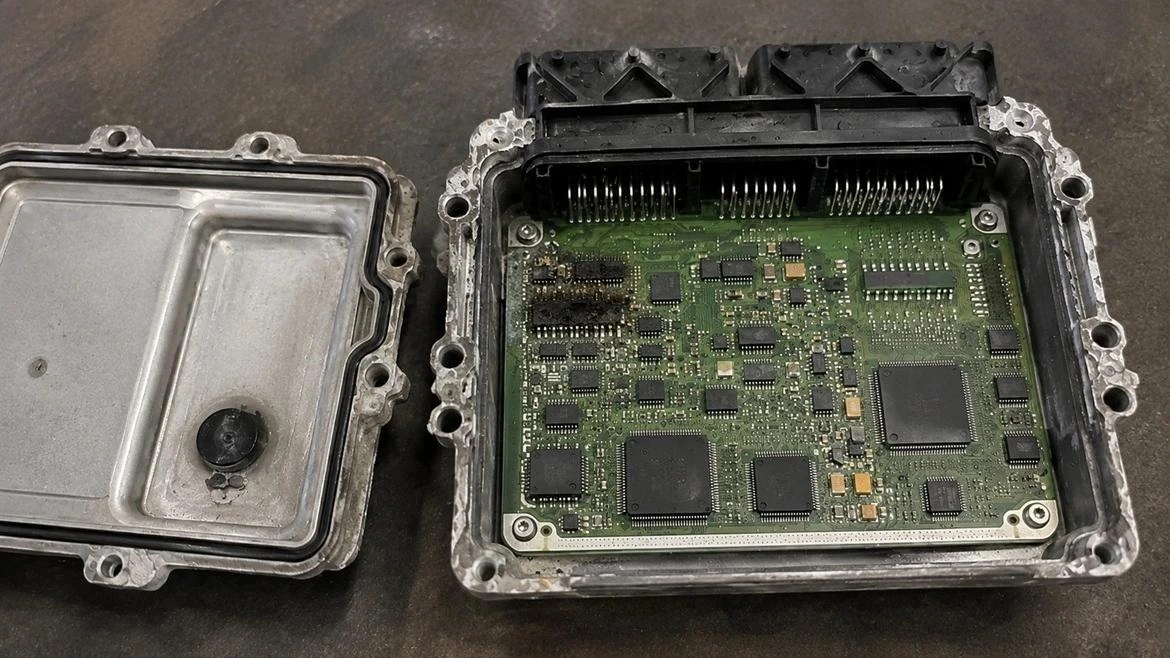
An example of corrosion and electronic damage caused by water entering an engine ECU.
Symptoms that may justify checking the ECU
- The engine will not start.
- A diagnostic tool cannot communicate with the engine ECU.
- CAN communication faults are recorded.
- Powertrain fault messages appear.
- Problems develop or become worse after rain or a thaw.
- Water marks or corrosion are visible on the connectors or inside the unit.
These symptoms can also result from a discharged battery, a power supply fault or damaged wiring. They do not, by themselves, confirm ECU failure.
In severe cases, water can damage the power supply circuits, processor or communication components. The unit may then stop responding altogether.
What should you check before replacing an Audi Q7 ECU?
Inspect the scuttle drains, protective enclosure, ECU housing, seals, connectors and wiring. Verify the unit’s power supplies and earth connections as well.
If water continues to reach the module, the replacement unit may suffer the same damage.
ECUSale offers Audi engine control units, including units for various Q7 engines.
Explore our selection of Audi Q7 Plug & Play engine ECUs.
Choose a replacement using the complete original part numbers and manufacturer references, together with compatible hardware and software versions.
Opel Corsa D 1.3 CDTI and certain Combo versions: moisture-related ECU damage
We also encounter water-related damage in control units fitted to the Opel Corsa D 1.3 CDTI and certain Opel Combo versions.
Depending on the vehicle configuration, the ECU and associated wiring may be exposed to moisture, water spray and dirt. Their protection and electrical connections should therefore be inspected.
Why can winter make the problem worse?
Melting snow and blocked drains can allow water to accumulate. Persistent moisture can also worsen an existing problem with a damaged seal or a corroded connector.
Water, dirt and road salt can contribute to contact corrosion and deterioration of electrical connections.
Symptoms to investigate on 1.3 CDTI versions
- The engine will not start.
- There is no diagnostic communication with the engine ECU.
- The engine stalls intermittently.
- Communication faults occur between control units.
- Problems appear after rain.
- Intermittent faults become more frequent in damp conditions.
Similar symptoms can result from a faulty earth cable, a blown fuse, a faulty ECU power supply relay or damaged CAN wiring.
Opel Corsa D 1.3 CDTI: HW03A hardware designation
Our range includes control units with the HW03A hardware designation for the Opel Corsa D 1.3 CDTI. This marking alone is not enough to confirm compatibility: the remaining part numbers, software and immobiliser requirements must also be checked.
Explore our Opel Corsa D 1.3 CDTI HW03A ECU selection.
Other units are available in our engine ECU category.
Before replacement, check the drains, seals, connectors, wiring, power supplies and earth connections. Confirm the preparation required for the specific replacement unit, and correct any source of water ingress before installation.
Volkswagen: moisture and corrosion in ABS control modules
Engine ECUs are not the only components that can be affected by moisture. Electrical connections and electronic modules in ABS/ESP assemblies may also develop faults.
An ABS assembly includes hydraulic components and an electronic control module. Components in the engine compartment are exposed to temperature changes, vibration, moisture and dirt.
How can moisture affect an ABS control module?
- It can corrode electrical contacts.
- It can increase resistance in connections.
- It can disrupt power supply or earth connections.
- It can cause CAN communication faults.
- It can damage electronic components if water enters the unit.
Symptoms may include ABS and ESP warning lights, loss of diagnostic communication or incorrect system operation.
Similar warnings can also be caused by faulty wheel speed sensors, damaged wiring or other braking system problems. These should be checked before the assembly is replaced.
Volkswagen ABS pump 1K0614517BD / 1K0907379AD
One assembly in the ECUSale range carries the following references:
- 1K0614517BD: hydraulic unit reference.
- 1K0907379AD: ABS control module reference.
These references may correspond to certain Volkswagen Group vehicle versions. Compatibility must be checked using the complete original part numbers and the vehicle’s configuration.
View the 1K0614517BD / 1K0907379AD ABS pump for Volkswagen, Audi, SEAT and Škoda.
For more parts, browse our Volkswagen ABS pumps.
An illuminated ABS warning light may indicate that anti-lock braking is limited or unavailable. If additional brake warnings appear or braking feels abnormal, do not continue driving until the vehicle’s safety has been checked.
BCM, BSI, BSM, SAM, UCH and CAS modules: symptoms of water ingress
Modern vehicles use several types of modules to manage body functions, electrical power distribution and start authorisation.
- BCM: Body Control Module, which manages various body electrical functions.
- BSI: a central body systems interface used in vehicles including Peugeot and Citroën.
- BSM: an engine compartment module that distributes electrical power and controls selected circuits.
- SAM: a signal acquisition and control module used in Mercedes-Benz vehicles.
- UCH: a passenger compartment control unit used in vehicles including Renault.
- CAS: an access and start authorisation module used in certain BMW models.
Their exact functions and locations depend on the vehicle. They may be fitted under the dashboard, near fuse boxes, in the engine compartment or elsewhere in the body.
How can water reach these modules?
- Through leaking door or glazing seals.
- As a result of blocked scuttle drains.
- Through a fuse box housing or protective cover with damaged seals.
- Through damaged or incorrectly fitted wiring grommets.
- As a result of blocked sunroof drains.
- Through other leaks that leave moisture under carpets or interior trim.
Symptoms that may be associated with a BCM or BSI fault
- Central locking works intermittently or stops responding.
- Wipers switch on by themselves or fail to operate.
- Lights fail to work or remain switched on.
- The vehicle does not recognise the key.
- Immobiliser or starting problems occur.
- CAN communication faults are recorded.
- The battery discharges while the vehicle is parked.
- A diagnostic tool cannot communicate with some modules.
A fault in one module can affect several vehicle systems. Wiring faults and other components can produce similar symptoms, so a complete diagnosis is needed before replacing a unit.
ECUSale offers BCM, BSI, BSM, SAM, UCH and CAS body control modules for many vehicle makes.
How to recognise a water-damaged engine ECU
Water damage is not always visible from the outside. The housing may look intact even though internal contacts or the circuit board are corroded.
Signs that may indicate water ingress
- Green or white deposits on contacts.
- Oxidation on connector pins.
- Water marks on the housing or circuit board.
- Corrosion on electronic components and circuit board tracks.
- Deteriorated seals or a damaged housing.
- Moisture remaining inside the module.
In severe cases, water can cause short circuits and permanent electronic damage.
If water ingress is suspected, do not apply power to the control unit until it has been inspected. Supplying power while moisture remains inside can make the damage worse.
The vehicle’s connectors and wiring should also be checked. Replacing the module may not solve the problem if terminals remain corroded or water continues to enter the area.
Common diagnostic trouble codes relating to power supply and CAN communication
After cold weather or water ingress, a diagnostic scan may reveal voltage or communication faults. The diagnostic trouble codes (DTCs) below help identify areas to investigate, but do not by themselves prove that a module has failed.
| DTC | Meaning and diagnostic checks |
|---|---|
| P0562 | Low system voltage — check the battery, power supply connections and charging system. |
| P0563 | High system voltage — check the alternator, voltage regulation and charging system connections. |
| U0100 | Lost communication with the engine ECU — check its power supplies, earth connections and CAN wiring before concluding that the unit is faulty. |
| U0121 | Lost communication with the ABS module — check power supplies, earth connections, connectors and the communication network. |
| U0140 | Lost communication with the BCM — check its power supplies, earth connections and communication network. |
Exact code descriptions and diagnostic procedures can vary with the vehicle make and model. A communication fault does not automatically mean that the named control unit is defective.
How to distinguish a battery problem from an ECU fault
The distinction should be based on measurements and diagnostic checks. Some symptoms provide useful clues, but none is conclusive on its own.
Signs pointing towards a battery or power supply problem
- The starter motor turns more slowly than usual.
- Dashboard lights and displays dim during starting.
- Several modules record low-voltage faults.
- The problem disappears after charging the battery or correcting a connection.
- The fault appears after the vehicle has been parked for a long time.
Signs that justify investigating the ECU and wiring
- No communication despite correctly verified power supplies and earth connections.
- Water marks or corrosion on the module or its connectors.
- Problems repeatedly appearing after heavy rain.
- The engine will not start even though the starter motor operates.
- Intermittent loss of communication with the unit.
- Persistent faults after power supply problems have been corrected.
Wiring, immobiliser or other component faults can cause similar symptoms. A battery load test, measurements during starting and voltage-drop checks help establish the cause before a replacement is considered.
Diagnosing and preventing vehicle electronics faults in winter
If several modules report faults after a frosty night or rainfall, follow a logical diagnostic sequence:
- Check the battery. Assess its state of charge, voltage during starting and ability to deliver current under load.
- Check the alternator. Verify that the charging system operates according to the vehicle manufacturer’s specifications.
- Check fuses and relays. Test the circuits supplying the affected modules.
- Measure voltage drops across earth connections. Check the engine, body and control unit earth connections under load.
- Read fault codes from all modules. Save the codes and available diagnostic data before clearing them.
- Check the CAN network. Inspect and test wiring and connections using the vehicle’s network layout and diagnostic procedure.
- Inspect the scuttle area. Remove leaves and debris, and verify that water drains away correctly.
- Inspect modules and connectors. Look for moisture, corrosion and physical damage.
- Correct the underlying cause. Repair leaks, power supply faults or damaged wiring before repairing or replacing a control unit.
How can you reduce the risk of water ingress?
- Regularly remove leaves and mud from the scuttle area.
- Keep water drains clear.
- Remove accumulated snow where it could obstruct drainage.
- Inspect seals, covers and protective enclosures.
- Investigate persistent moisture inside the vehicle.
- Check the battery’s condition before winter.
Do not block ECU housing vents with tape or sealant. They are part of the unit’s design, and any housing repair should follow the manufacturer’s requirements.
ECU replacement: VIRGIN, Plug & Play and cloning
If diagnosis confirms damage that cannot be repaired, replacing the control unit may be necessary.
At ECUSale, we offer engine control units and automotive electronic modules prepared in different configurations. The appropriate preparation depends on the part number, software, immobiliser system and vehicle equipment.
VIRGIN ECU
A unit prepared in a virgin state needs to be adapted to the vehicle. Some systems carry out the required learning automatically under specified conditions. Others need an adaptation or programming procedure using a diagnostic tool.
The VIRGIN designation does not mean that every unit can be installed in the same way. Check the instructions for the specific part.
Plug & Play ECU
A unit offered as Plug & Play is prepared for installation and operation under the conditions stated in its product listing. Before ordering, confirm compatibility and check whether original data, components or additional installation steps are required.
ECU cloning
Cloning involves transferring the necessary data from the original ECU to a compatible replacement. The data must be readable, and the replacement unit must be suitable.
Cloning a water-damaged ECU is not always possible. Corrosion or damage to the processor, memory or circuits needed for reading may prevent the required data from being recovered.
The preparation method should be selected for each case, taking account of the vehicle and the condition of the original unit.
Browse the available engine ECUs at ECUSale.
Frequently asked questions
These answers explain common winter electronics problems. A final diagnosis depends on the vehicle, stored fault codes and test results.
Can frost cause ABS and ESP faults?Cold weather can reduce battery performance. A voltage drop during starting may then cause stored faults or temporary communication problems in ABS and ESP modules. Check the fault codes and power supplies to establish whether another system fault is present. |
Why will an Audi Q7 not start after rain or frost?Possible causes include a discharged battery, a power supply fault, damaged wiring or a start authorisation problem. On certain versions, it is also worth checking for water around the ECU and inspecting the drains, protective enclosure and connectors. |
Can water enter an ECU through its vent?It can under certain conditions, depending on the unit’s design and condition. A damaged vent element or prolonged immersion may allow water to enter. Housing seals and connectors should also be checked. |
Why is communication with an Opel Corsa D 1.3 CDTI ECU lost?Possible causes include a missing or incorrect power supply, a poor earth connection, damaged CAN wiring or a faulty ECU. If the symptoms appear after rain, also check for moisture and corrosion. |
Can moisture damage a Volkswagen ABS pump?Yes. Moisture and road salt can promote connector corrosion, and water entering the unit can damage its electronics. Before replacing the assembly, check the wheel speed sensors, wiring, power supplies and earth connections. |
Is drying a water-damaged engine ECU enough?Not necessarily. Drying does not remove corrosion or deposits, and it does not repair damaged components. The unit must be inspected before power is applied, and the source of water ingress must be corrected. |
Can a water-damaged BCM or BSI prevent the engine from starting?Yes, depending on the vehicle and the module’s functions. A fault can affect start authorisation, power distribution or communication with the engine ECU. Power supplies, earth connections and the network should be checked before module failure is confirmed. |
How can you distinguish a battery problem from an ECU fault?Test the battery under load, measure voltage during starting and verify the ECU’s power supplies and earth connections. If the problem remains, continue with checks of the wiring, communication network and control unit. |
Does a replacement ECU require programming?It depends on the system and how the unit has been prepared. A VIRGIN ECU may need automatic learning or adaptation using a diagnostic tool. For a Plug & Play unit, follow the compatibility and installation conditions stated in the product listing. |
Can a water-damaged ECU be cloned?Sometimes, if the necessary data can be read correctly and a compatible replacement is available. Damage to the memory, processor or reading circuits may make cloning impossible. |
How to prevent further damage to control units
Cold weather, snow and moisture can reveal battery problems, deteriorated connections, blocked drains or water leaks. ABS, ESP and engine warning lights should therefore be investigated before deciding which component to replace.
On certain Audi Q7, Opel Corsa D 1.3 CDTI and Opel Combo versions, check the ECU’s protection and connections. Diagnosis of ABS and body modules should also include power supplies, earth connections and communication wiring.
Identifying the underlying cause is essential. Replacing a control unit without correcting a leak, restoring the housing’s seals or clearing blocked scuttle drains can expose the replacement unit to the same damage.
If diagnosis confirms that replacement is necessary, explore the available parts:
- Engine control units (ECUs)
- Audi Q7 engine ECUs
- Opel Corsa D 1.3 CDTI HW03A ECUs
- Volkswagen ABS pumps
- BCM, BSI, BSM, SAM, UCH and CAS body control modules
When choosing a replacement, compare the complete OEM part numbers and manufacturer references. If you are unsure, send us a clear photo of the original module’s label so that compatibility and preparation requirements can be checked.
ECUSale offers tested engine control units, ABS pumps and automotive electronic modules for workshops and vehicle owners. Check each product listing for compatibility and installation requirements.