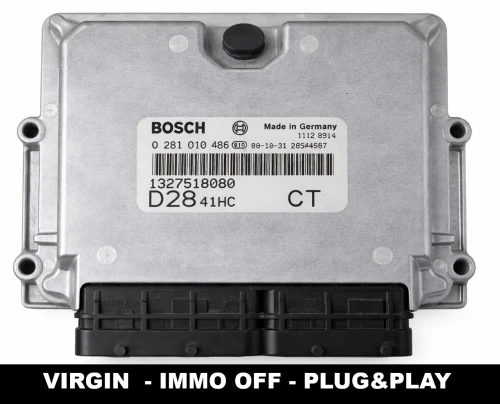
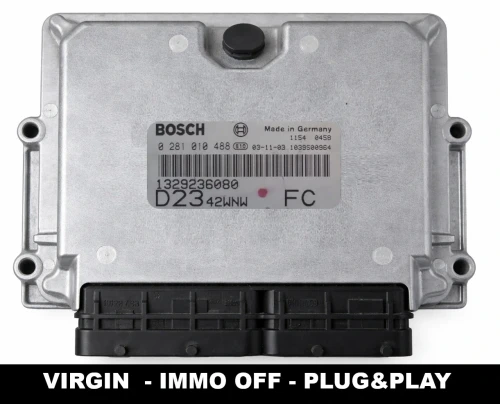
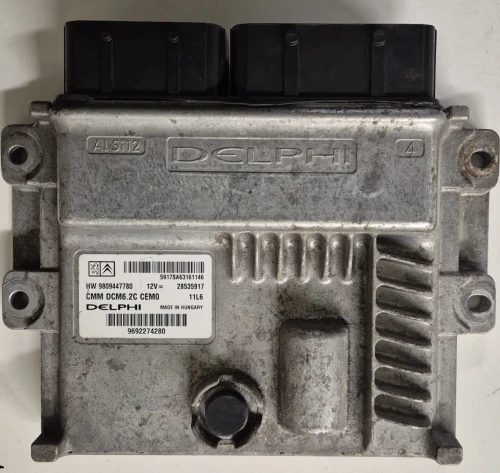
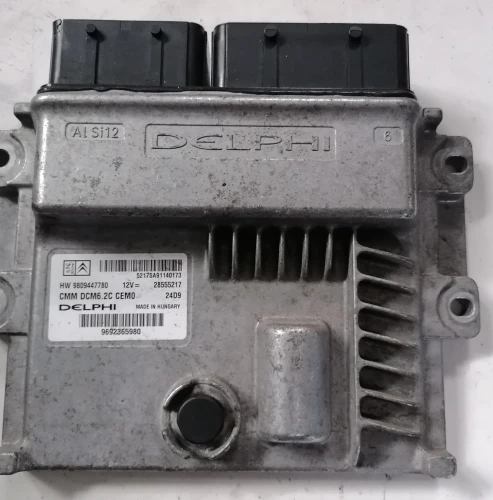
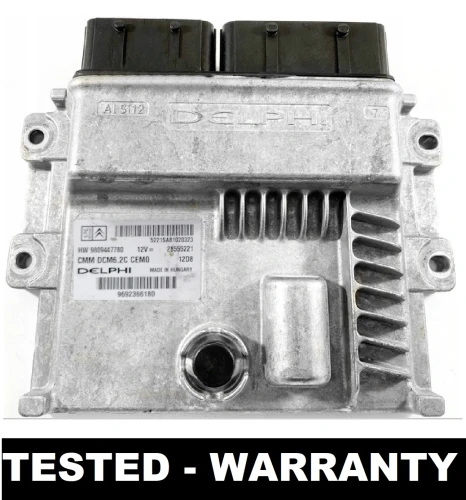
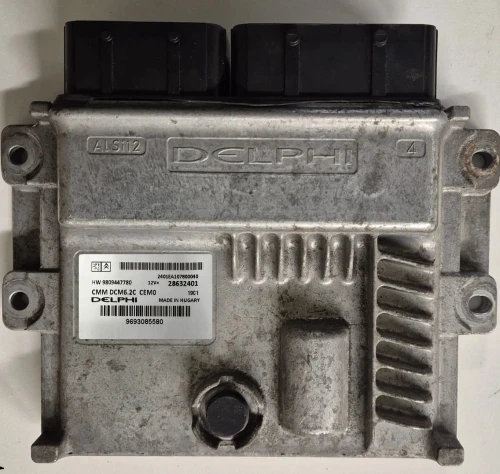
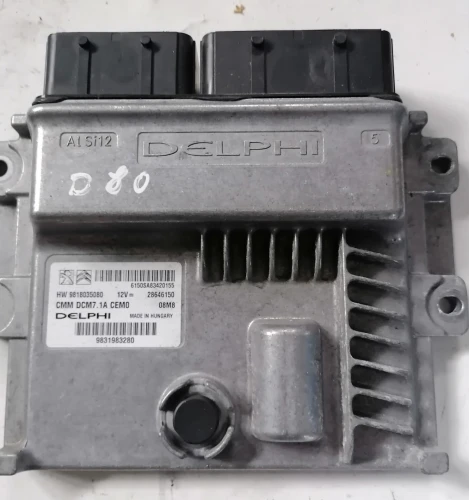
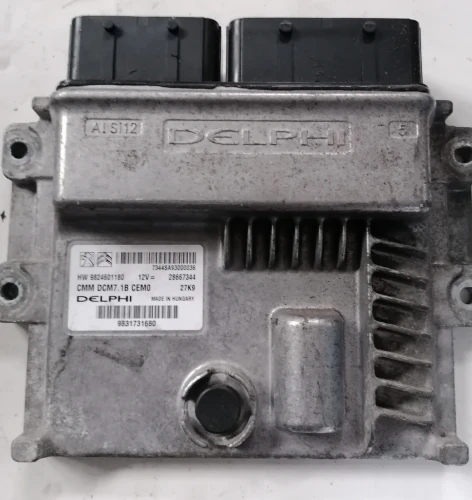
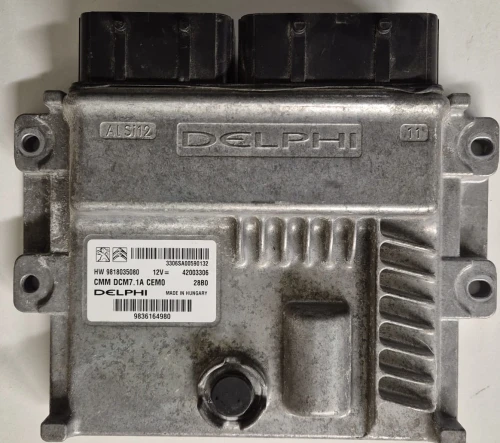
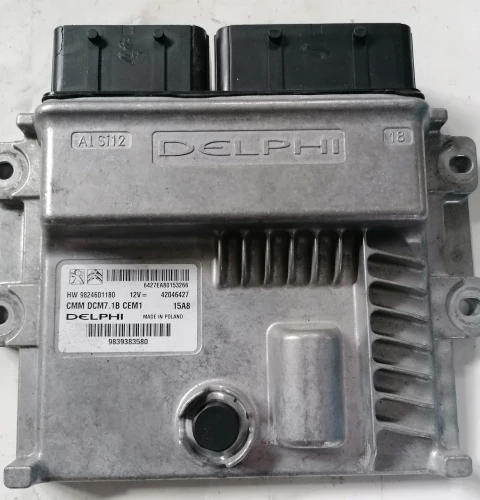
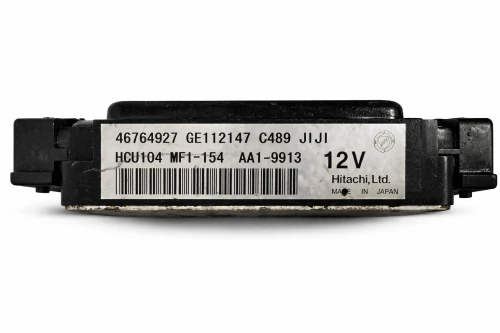
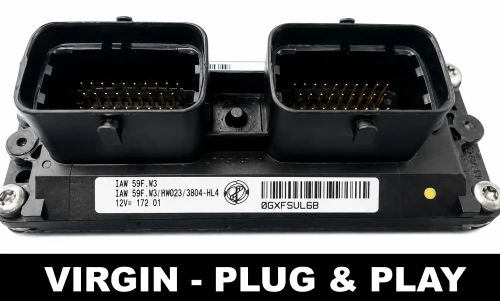
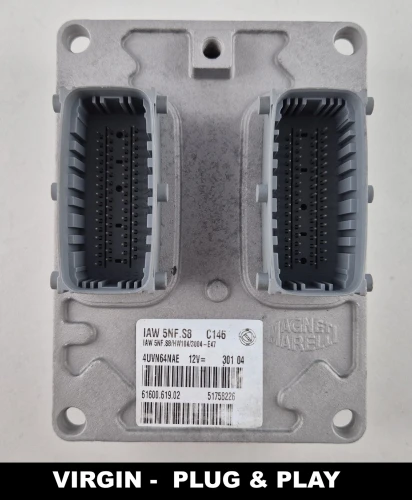
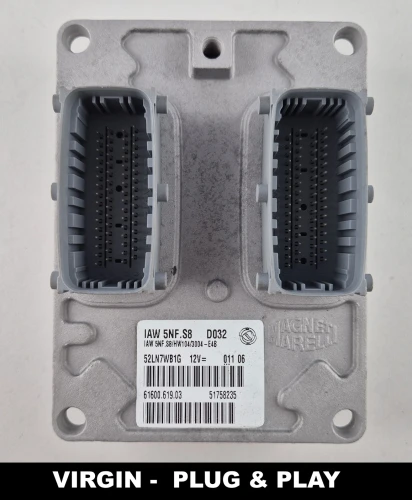
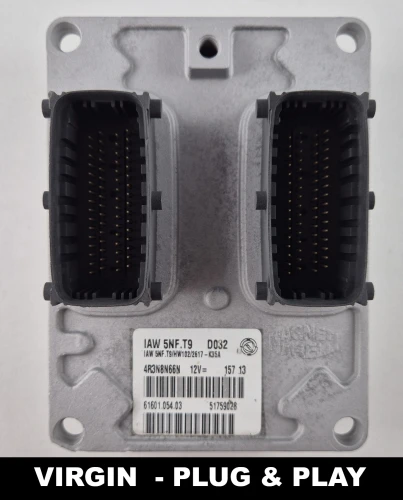
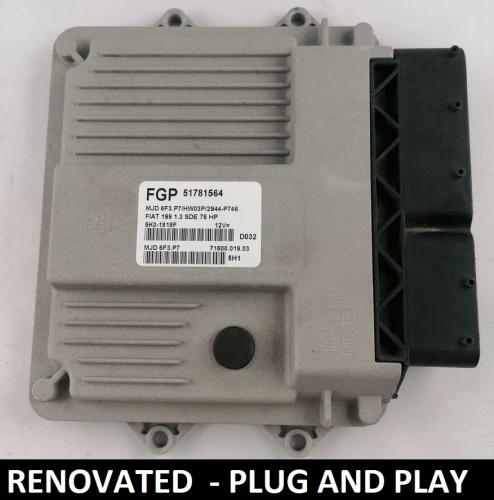
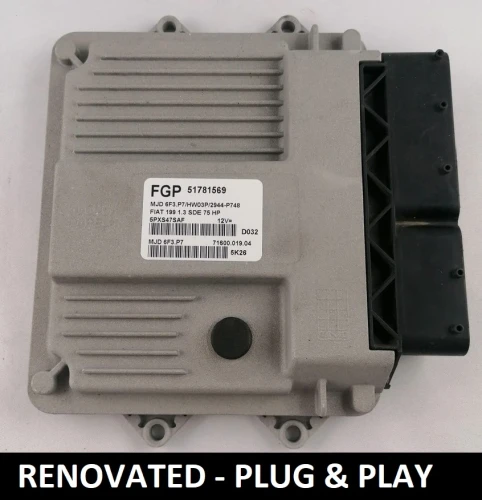
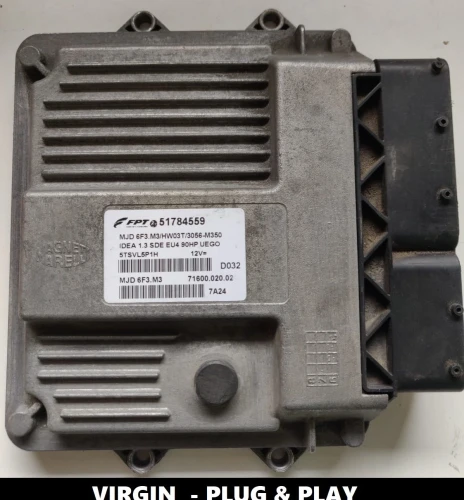
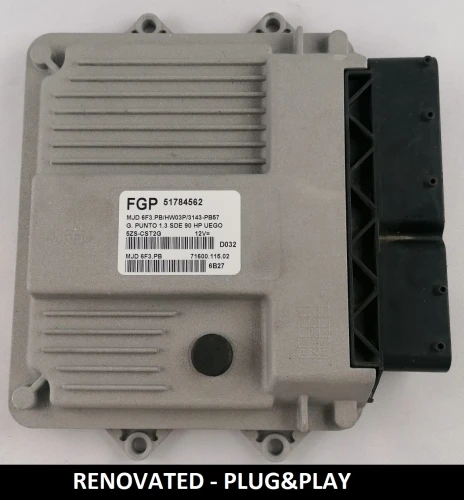
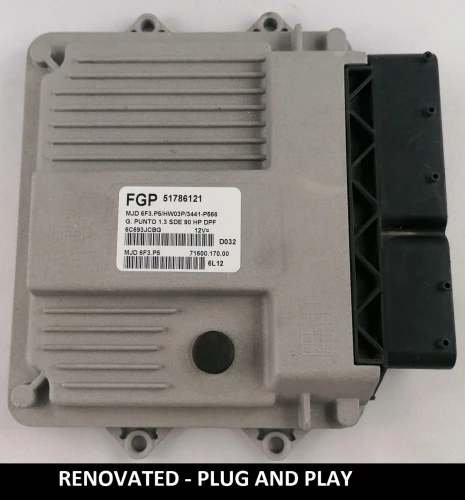
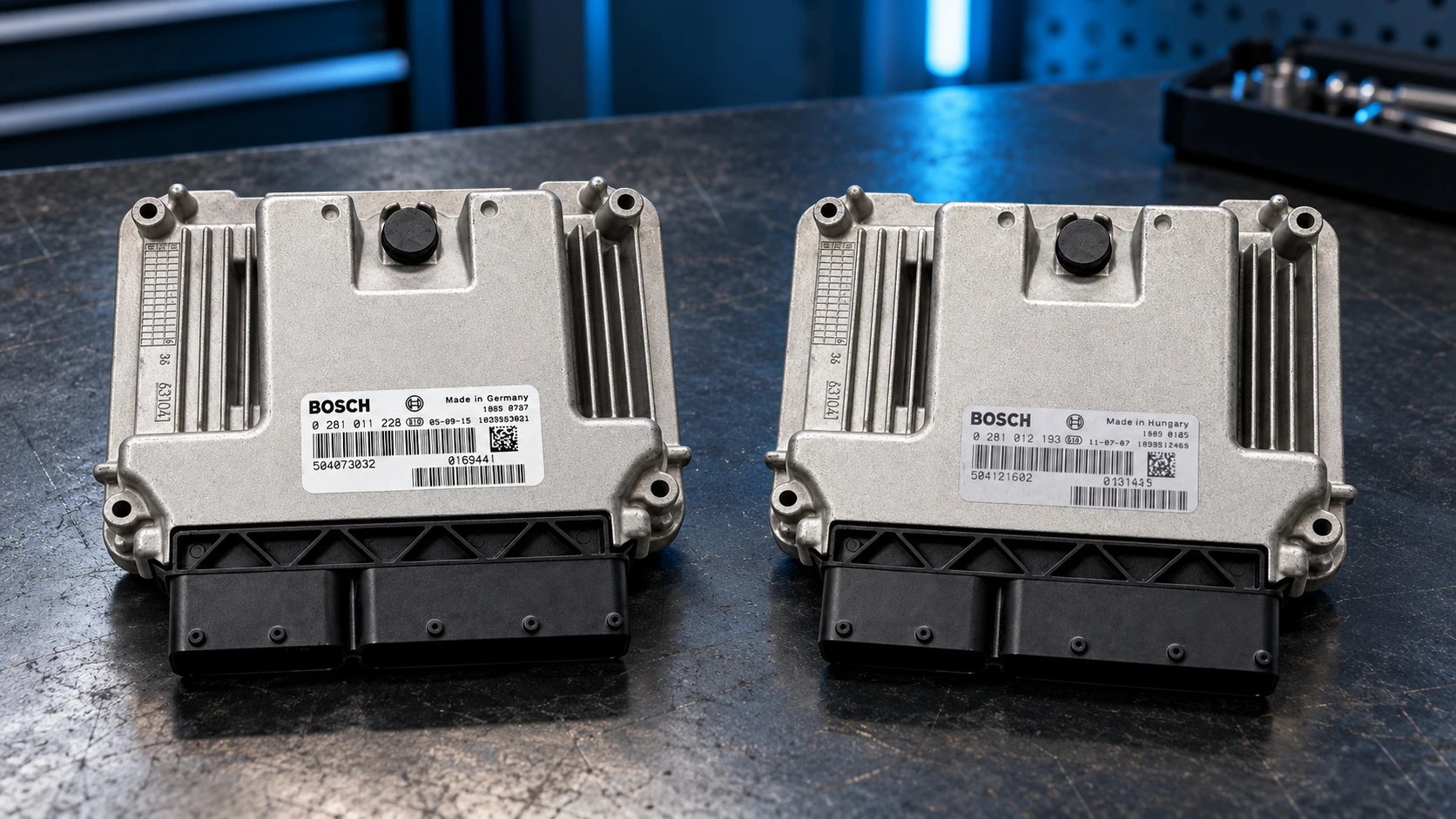
Fiat engine control units – tested ECU modules
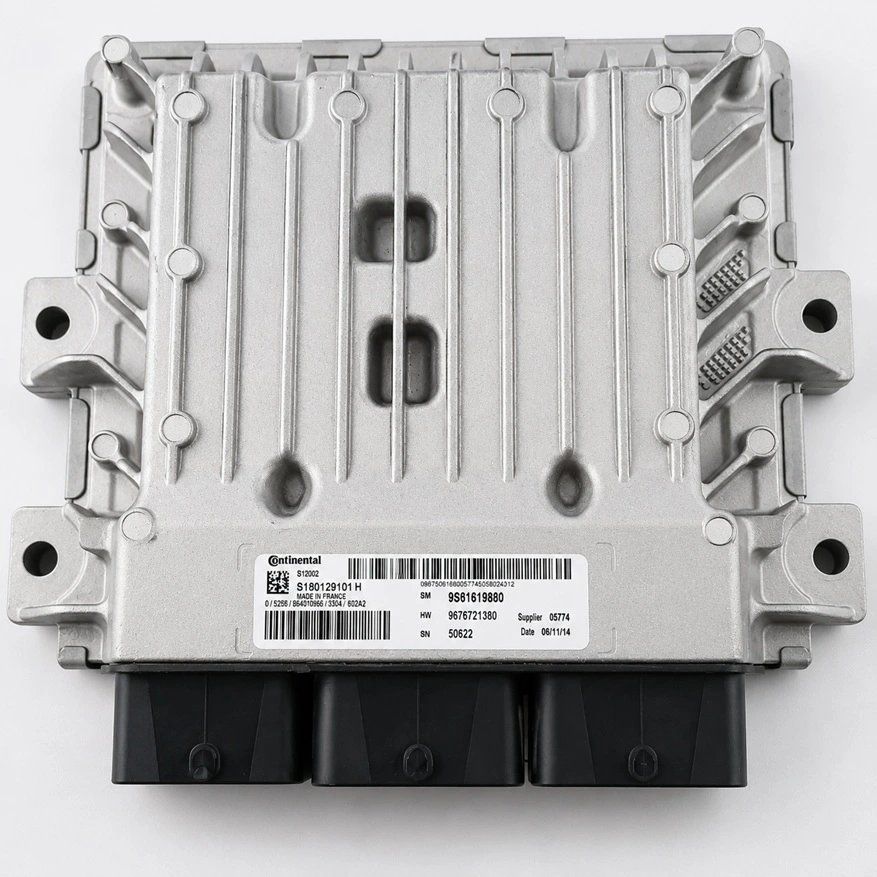
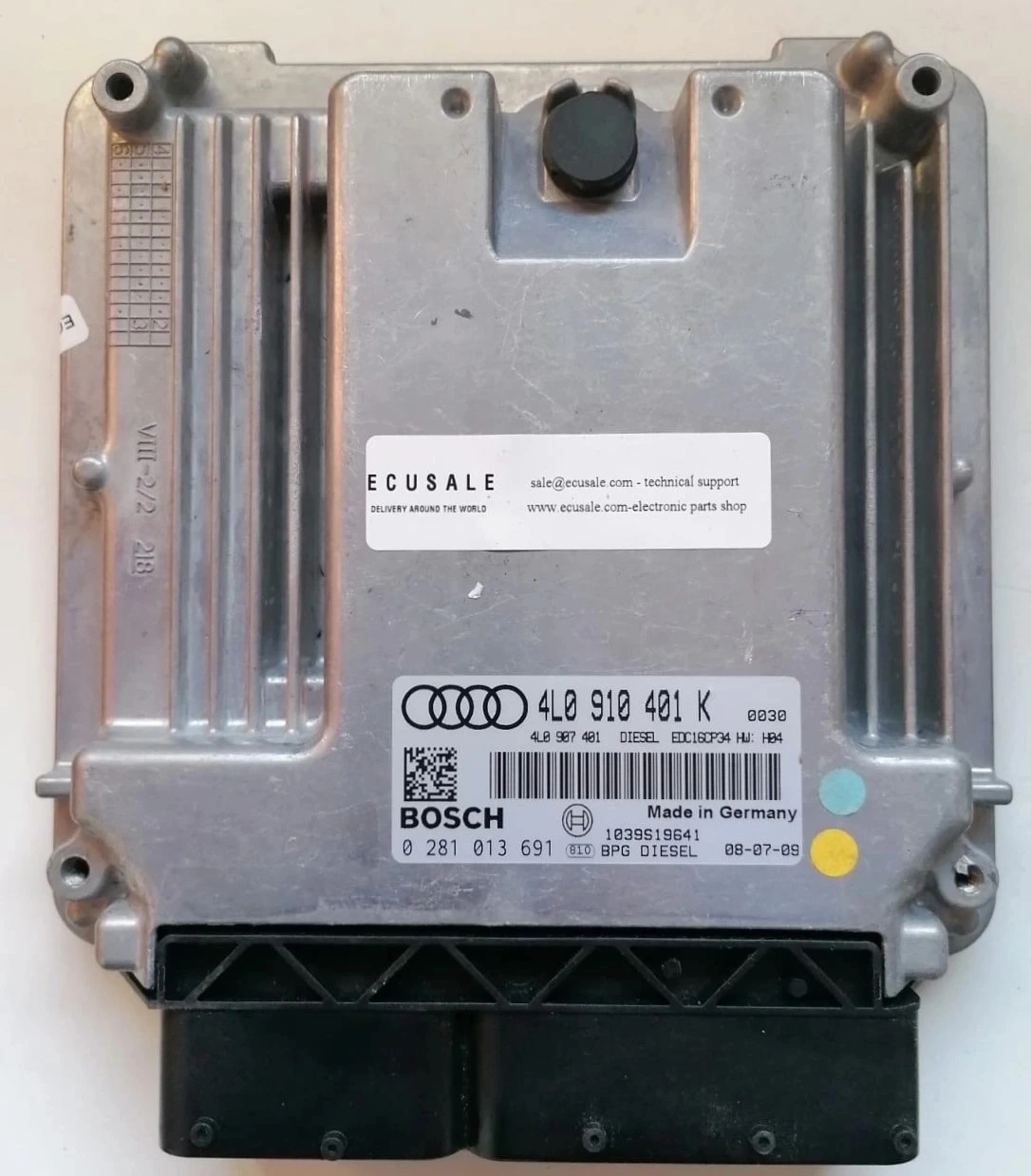
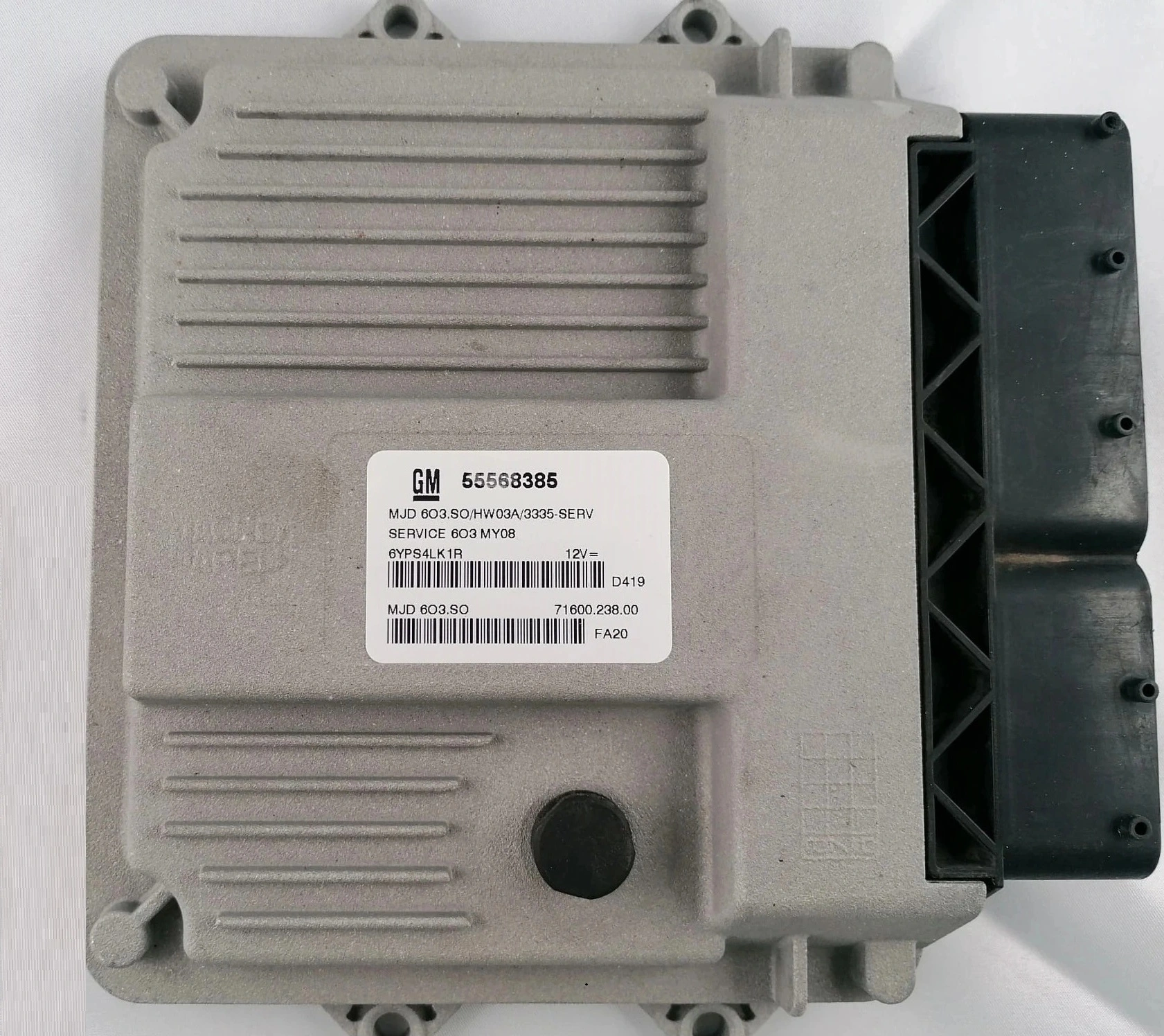
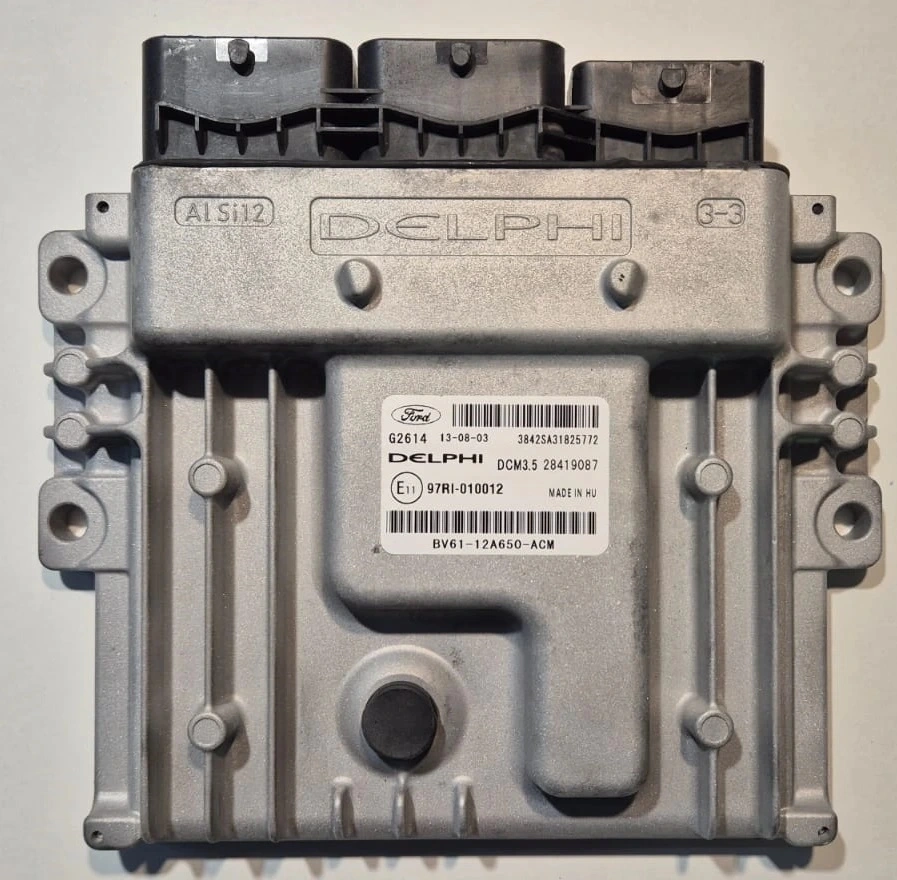
A Fiat engine control unit, also called the ECU, engine computer or injection control unit, controls fuel injection, ignition, the turbocharger, the EGR valve and the DPF filter, and communicates with the immobiliser and the other modules of the car.
At ECUSale you will find original control units for Fiat passenger cars and vans. The range includes modules for the Fiat 500, Panda, Punto, Grande Punto, Bravo, Tipo, Doblo, Fiorino, Scudo and Ducato, among others. Availability of a specific ECU depends on the OEM number, the manufacturer, the engine type and the software used.
Not sure which control unit fits?
Send a photo of the whole label of the old ECU and the VIN. We will check the numbers and help you decide whether you need a VIRGIN, IMMO OFF or Plug & Play version, or a unit for cloning.
Send ECU numbers for checking
Most popular Fiat Ducato 2.3 control units
A large part of our range consists of engine control units for the Fiat Ducato 2.3 JTD and 2.3 Multijet. Depending on the model year and emission standard, these vans used different ECU families, including Magneti Marelli MJD8F3, MJD9DF and Bosch units.
MJD9DF control unit for Fiat Ducato 2.3 Euro 6
One of the most frequently chosen products is the 52115025 MJD9DF control unit for Fiat Ducato 2.3 Euro 6. The module is prepared as VIRGIN, meaning it holds no data from a previous vehicle.
In a compatible vehicle, a properly prepared VIRGIN unit can take the immobiliser data from the Body Computer module at the first start. The exact procedure and any equipment coding depend on the ECU version and the vehicle configuration.
MJD8F3 control units for Fiat Ducato 2.3 JTD
The Fiat Ducato 2.3 used many variants of Magneti Marelli MJD8F3 units. Individual versions should not be chosen by engine size alone. Check the full Fiat number, the MJD8F3 designation and the hardware version suffix.
The current range includes, among others:
If you are searching for something like “MJD8F3 ECU Fiat Ducato 2.3 won't start” or “Fiat Ducato 2.3 VIRGIN ECU without cloning”, start by comparing the complete designation of the module. The MJD8F3 family name alone does not confirm compatibility.
Bosch control units for Fiat Ducato 2.3 JTD
Some Ducato versions also use Bosch engine control units. One example is the 51861913 / 0281015576 ECU for Fiat Ducato 2.3, available as VIRGIN or IMMO OFF depending on the selected variant.
The same Bosch number 0281015576 can appear with different OEM numbers. That is why it is worth also checking the 51900702 / 0281015576 Fiat Ducato 2.3 JTD Euro 4 VIRGIN control unit and comparing the full set of markings with the old module.
New Fiat Ducato 3.0 control units – VIRGIN and Plug & Play
For the Fiat Ducato 3.0 there are also new control units intended for programming, or prepared as VIRGIN and Plug & Play. These modules can also be used in selected Peugeot Boxer and Citroën Jumper 3.0 versions, but compatibility must always be confirmed by part numbers.
55254808 control unit Fiat Ducato 3.0 VIRGIN
Available is the 55254808 control unit for Fiat Ducato, Peugeot Boxer and Citroën Jumper 3.0 VIRGIN. The module has no data from a previous vehicle and is prepared for assignment in a compatible vehicle.
An alternative is the 0281030431 / 55254808 control unit in Plug & Play version. Before buying, check what data or files are needed to prepare the module.
0281018291 control unit for Ducato, Boxer and Jumper 3.0
For 3.0 engines there is also the 0281018291 / 51903028 Plug & Play control unit. The range also includes a new 55249251 / 0281018291 control unit for Fiat Ducato, Peugeot Boxer and Citroën Jumper 3.0.
A new control unit does not always mean a module ready to start the vehicle straight away. Depending on the offer, it may need programming, writing the correct software or preparation for a specific vehicle.
Water-damaged Fiat Ducato 2.3 control unit – repair or replace?
Engine control units in vans are exposed to moisture, water, corrosion and wiring damage. A flooded ECU can cause loss of diagnostic communication, engine starting problems, random injection faults or a completely immobilised vehicle.
You will find more information in the guide: water-damaged Bosch Fiat Ducato 2.3 control unit – symptoms, solutions and ECU availability.
If the old module still allows its memory to be read, it may be possible to transfer the data to a working control unit. With serious electronic damage, the alternative is a correctly matched VIRGIN or IMMO OFF unit.
How to choose a Fiat engine control unit?
Correct selection is based on all the numbers on the label of the old ECU. The car model, year, engine size or power are not enough, because one vehicle version may have been fitted with several different control units.
Before buying, compare:
- the Fiat OEM number,
- the manufacturer number, e.g. Bosch or Magneti Marelli,
- the full ECU family designation, e.g. MJD8F3.BV, MJD8F3.BD or MJD9DF,
- the hardware and software version,
- the engine type, capacity and power,
- the emission standard,
- the gearbox type and the car's equipment.
The VIN helps identify the vehicle, but it does not replace the numbers on the control unit label.
Fiat VIRGIN ECU – how does it work?
A VIRGIN control unit has been cleared of the previous vehicle's data. In many Fiat units, a properly prepared module reads the immobiliser information from the Body Computer after fitting and pairs itself at the first start.
Automatic immobiliser pairing does not always cover the full equipment configuration. Depending on the model and ECU type, PROXI alignment, injector coding or writing the gearbox, air conditioning, cruise control or Start-Stop variant may be required.
After the first pairing the control unit is no longer VIRGIN. Do not test-fit it in another vehicle. During the first start, make sure the battery voltage is stable and do not interrupt the procedure.
Fiat Plug & Play ECU and cloning
A Plug & Play control unit is prepared for a specific vehicle to reduce the work needed after fitting. Depending on the ECU type, preparation may require sending the old control unit or a complete set of memory files such as EEPROM, FLASH and MPC.
Cloning means transferring the data from the old ECU to a compatible replacement module. This keeps the immobiliser data, VIN, configuration and engine software.
Fiat IMMO OFF control unit
IMMO OFF means the immobiliser function is disabled in a compatible control unit. An ECU prepared this way can allow the engine to start without the standard synchronisation with the anti-start system.
Not every control unit supports IMMO OFF. After fitting, the immobiliser warning light may stay on in the instrument cluster, or a fault may be stored in another module. This does not have to mean an ECU fault if the engine starts and runs correctly.
Most common symptoms of a faulty Fiat ECU
- the engine does not start or starts irregularly,
- no diagnostic communication with the control unit,
- the engine cuts out while driving,
- limp mode and reduced power,
- injector, ignition or turbocharger faults,
- immobiliser or CAN communication faults,
- problems after the control unit has been flooded with water or diesel,
- damage after a short circuit, voltage surge or reversed battery connection,
- no start after interrupted ECU programming.
These symptoms can also be caused by damaged wiring, sensors, fuses, relays, the power supply or the Body Computer module. Before buying a control unit, the car should be properly diagnosed.
Why buy a Fiat control unit from ECUSale?
- we offer original modules from Bosch, Magneti Marelli and other manufacturers,
- control units are checked before shipping,
- we list OEM numbers and manufacturer designations,
- we state whether the product is VIRGIN, IMMO OFF, Plug & Play or needs programming,
- we help verify compatibility from a photo of the old ECU and the VIN,
- products are covered by warranty under the store terms,
- we ship domestically and internationally.
Before buying you can check the available payment methods, information on delivery times and costs and the rules for returns and complaints.
FAQ – Fiat engine control units
Does a Fiat engine control unit need identical numbers?
The safest choice is an ECU with an identical OEM number and a matching manufacturer number. Some control units have interchangeable numbers, but compatibility should be confirmed before buying.
Does a Fiat VIRGIN control unit program itself?
In many models, a properly prepared VIRGIN unit takes the immobiliser data from the Body Computer at the first start. Depending on the ECU and equipment, additional coding or PROXI alignment may still be needed.
Does a used Fiat control unit work just by plugging it in?
An ordinary used ECU usually contains the previous vehicle's data and may not start the engine. The module should be prepared as VIRGIN, IMMO OFF or Plug & Play, or cloned from the old control unit.
Which control unit fits a Fiat Ducato 2.3?
It depends on the model year, emission standard, engine version and the numbers of the old module. The Ducato 2.3 uses MJD8F3, MJD9DF and Bosch units, among others. The 2.3 engine size alone is not enough to choose an ECU.
What is the difference between MJD8F3 and MJD9DF?
They are different Magneti Marelli control unit families used with different engine versions and emission standards. They are not automatically interchangeable. Check the full OEM number, hardware designation and software.
Is a new Fiat Ducato 3.0 control unit ready to fit?
That depends on the product version. A new ECU may need programming, while a unit described as VIRGIN or Plug & Play is already prepared. Details are in the description of each offer.
Can a water-damaged Fiat Ducato control unit be cloned?
If the memory of the old ECU can be read, the data can be transferred to a compatible replacement module. With serious electronic damage, a VIRGIN unit or one prepared as IMMO OFF may be needed.
What information should I send before buying a Fiat ECU?
Ideally send a photo of the whole control unit label, the VIN, the car model and year, the engine capacity and power, the gearbox type, equipment details and the fault codes from diagnostics.