


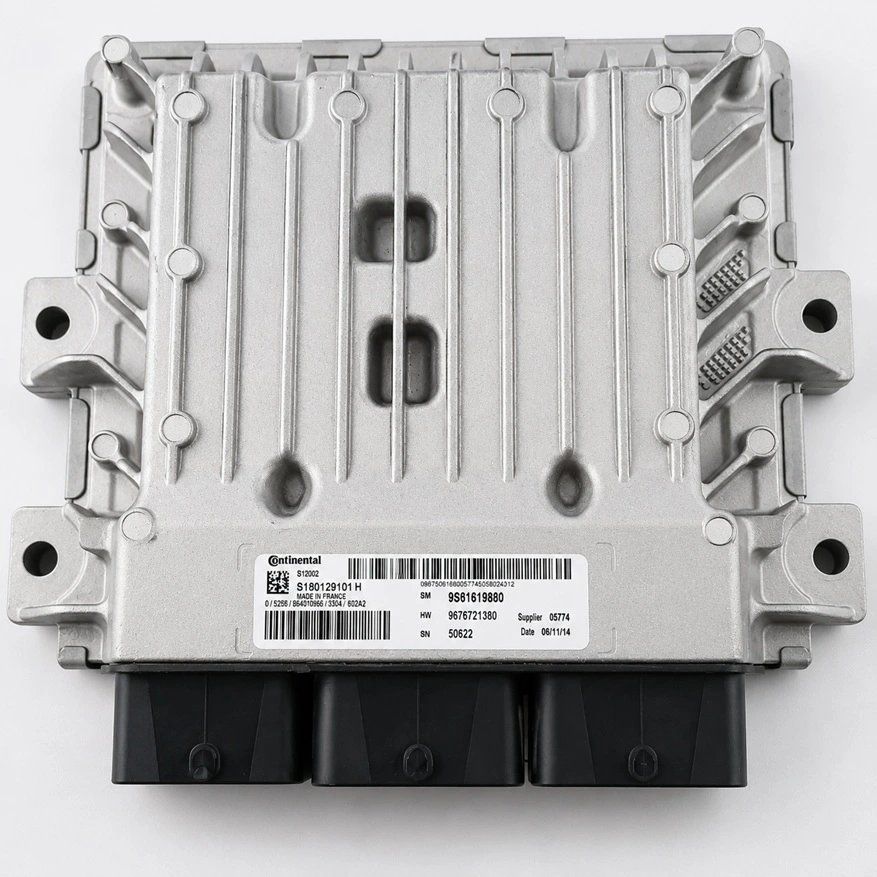
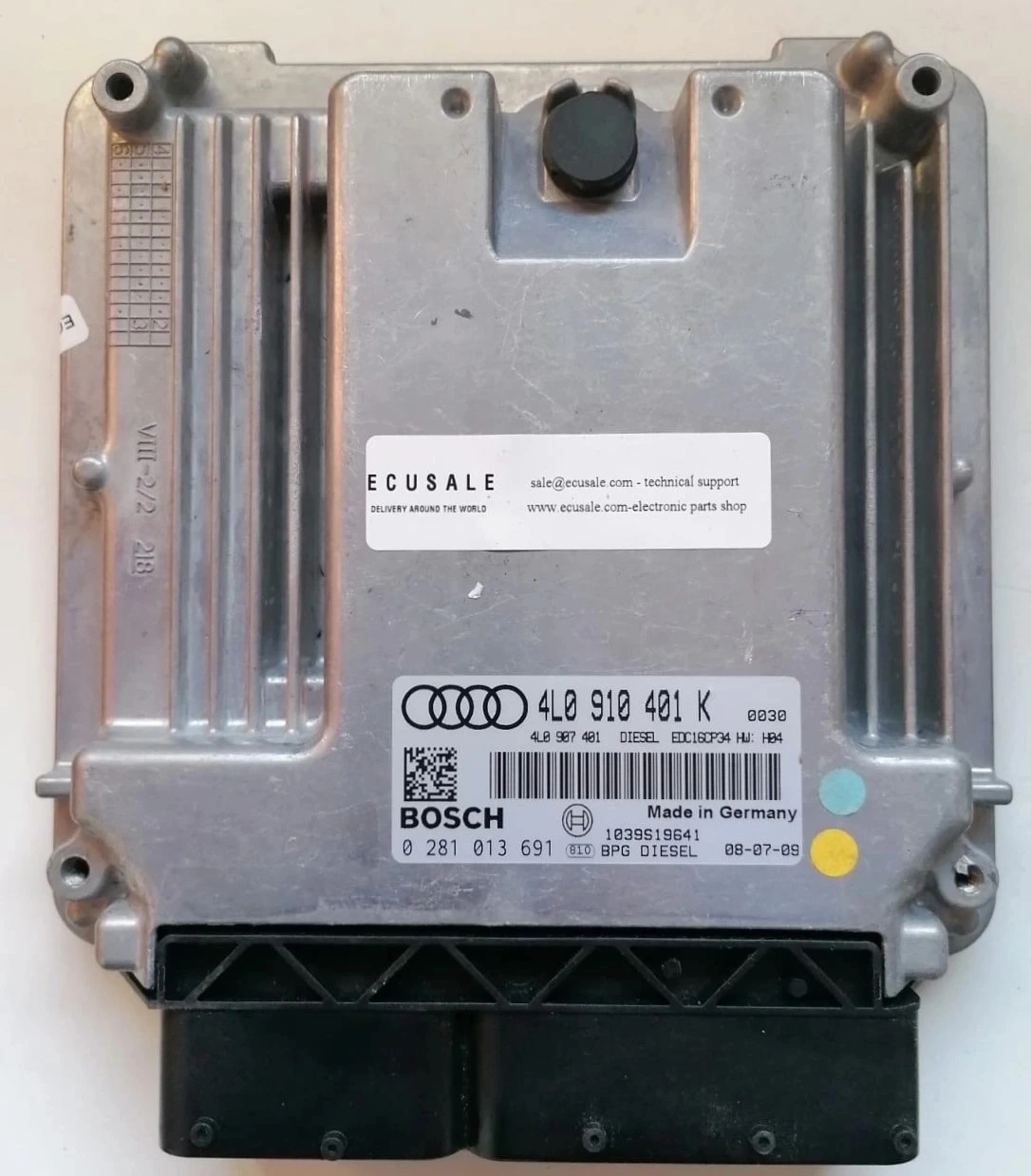
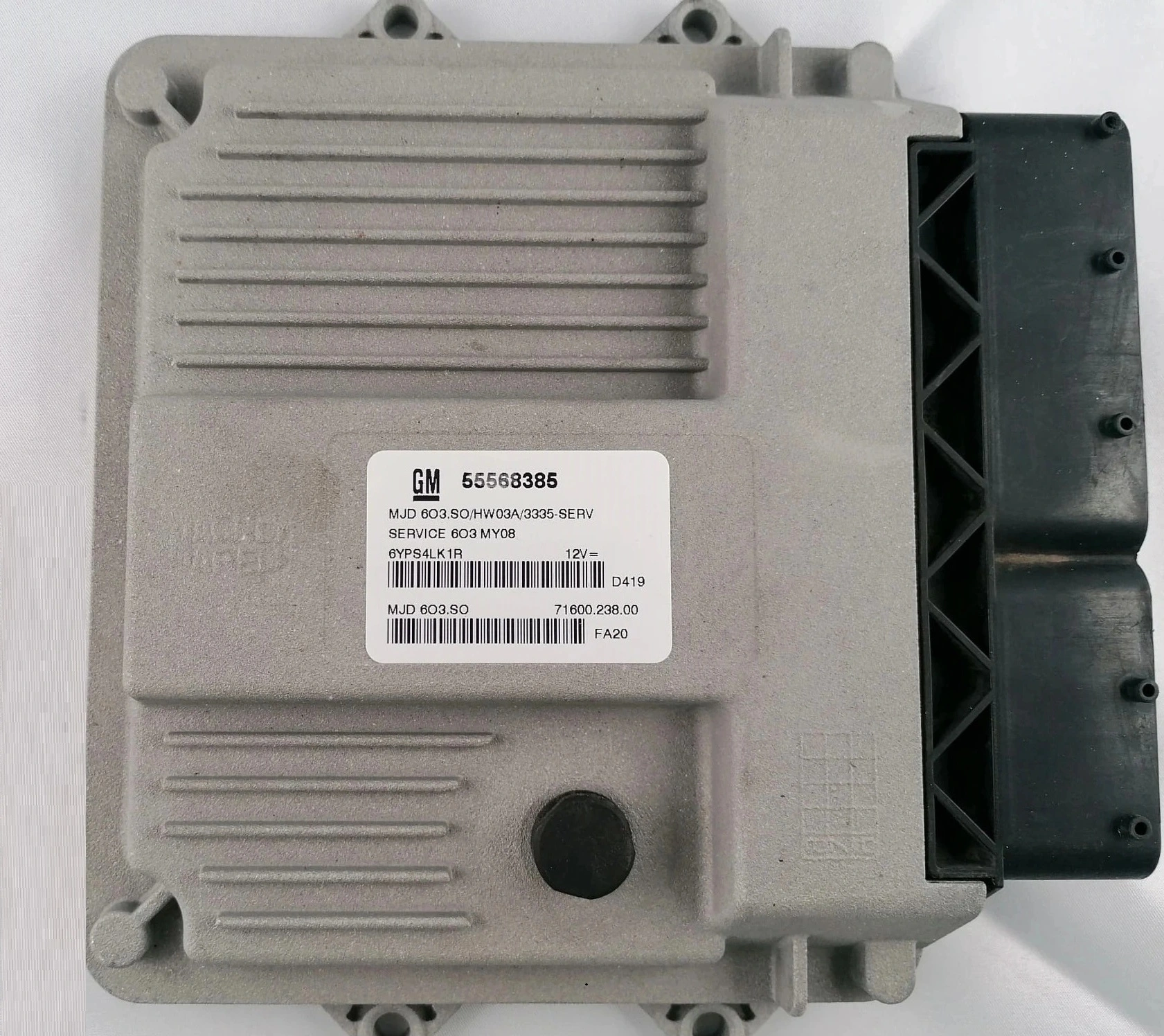
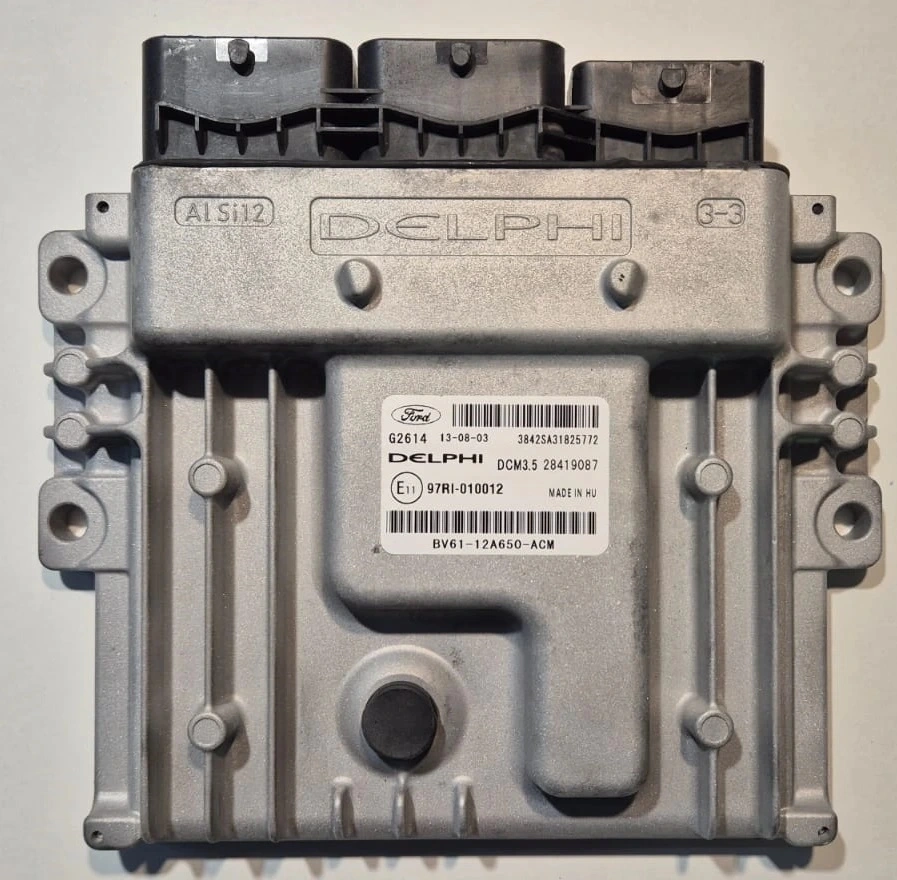
Ford DCM3.5 Engine ECUs for 2.0 and 2.2 TDCi
Ford DCM3.5 ECUs prepared for FORScan or IDS programming
Tested Delphi DCM3.5 engine ECUs for selected Ford vehicles equipped with 2.0 and 2.2 TDCi engines. Each module is selected using the Ford and Delphi part numbers, vehicle specifications and VIN, then prepared for programming with FORScan or Ford IDS.
After installation, the correct configuration and PATS immobiliser adaptation must be completed in the vehicle. Depending on the vehicle and the selected procedure, two working keys may be required. A Plug & Play ECU can also be prepared by cloning the required data from the original module.
List of products
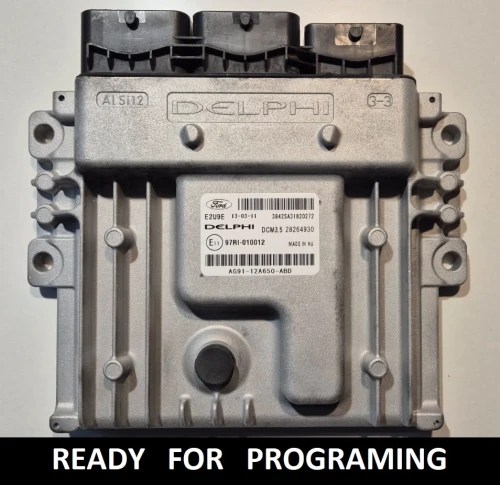
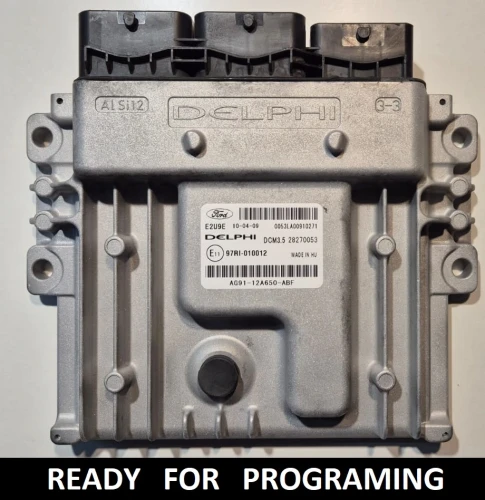
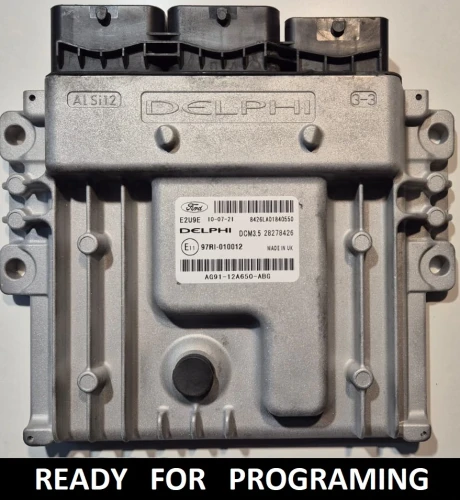
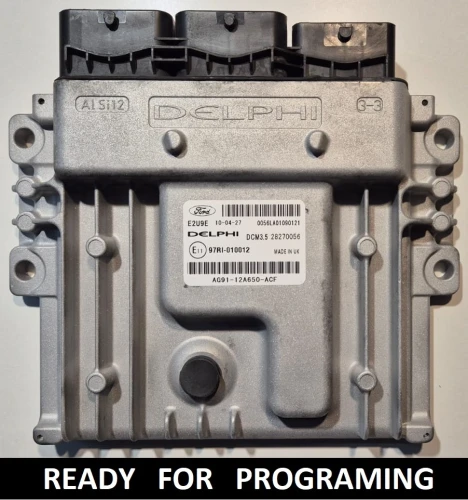
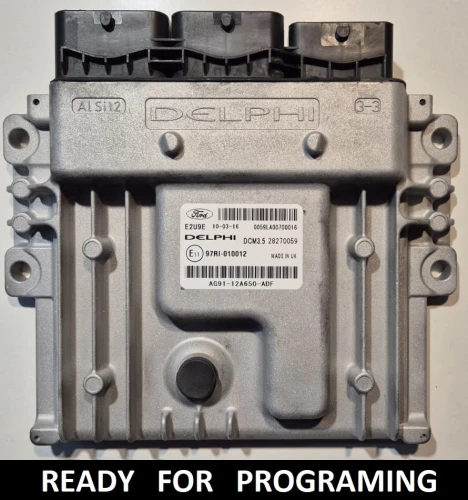
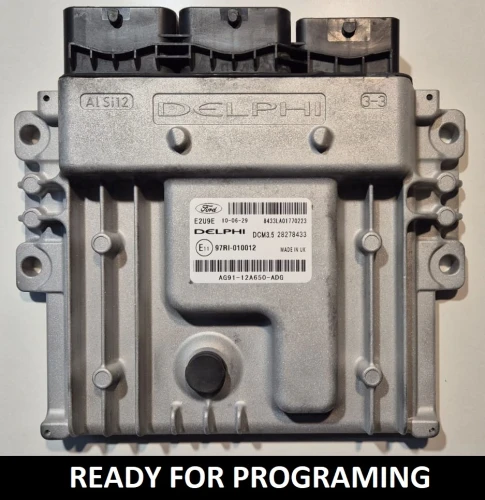
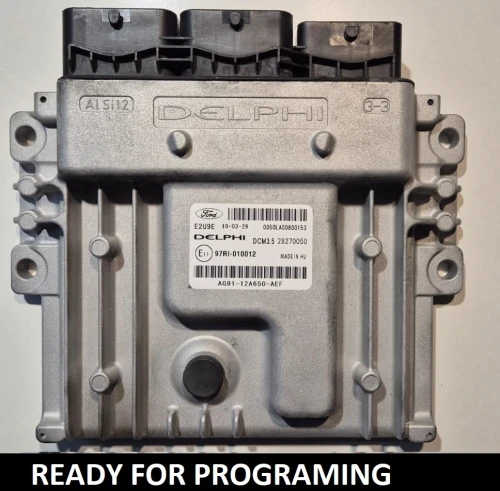
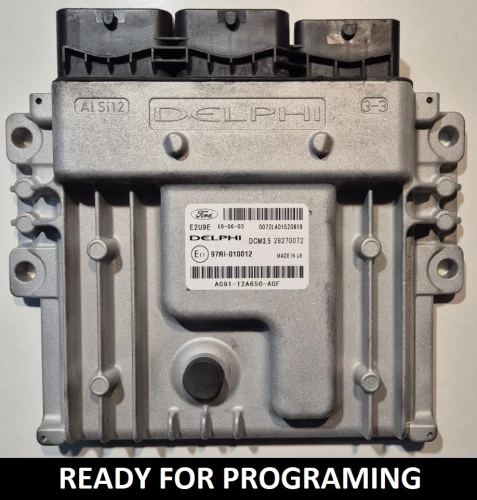
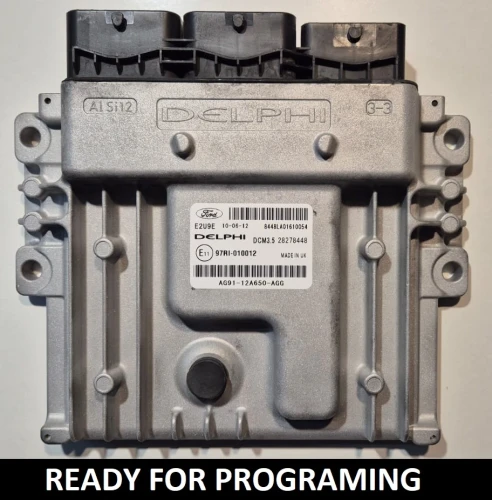
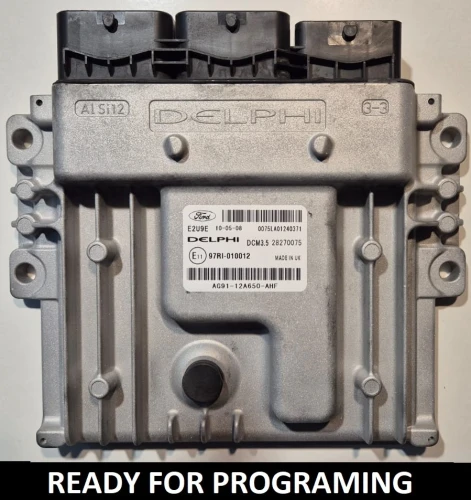
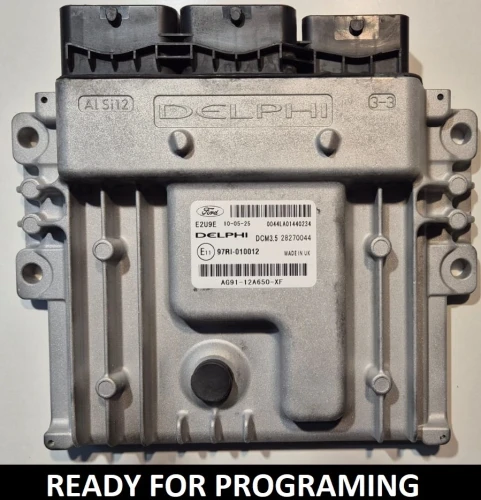
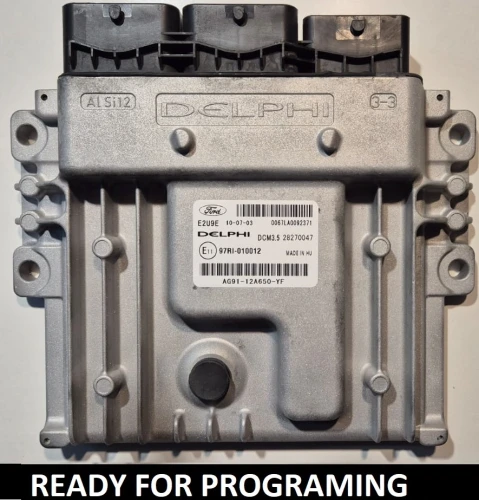
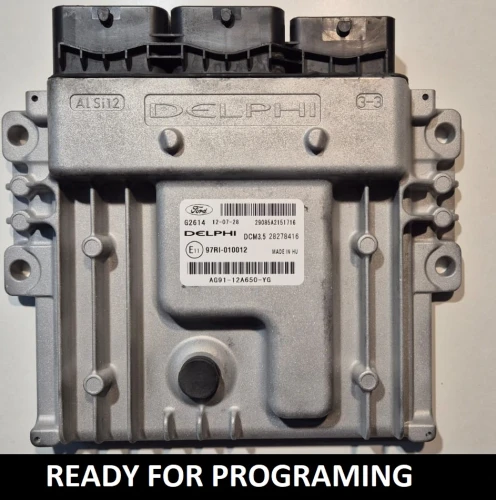
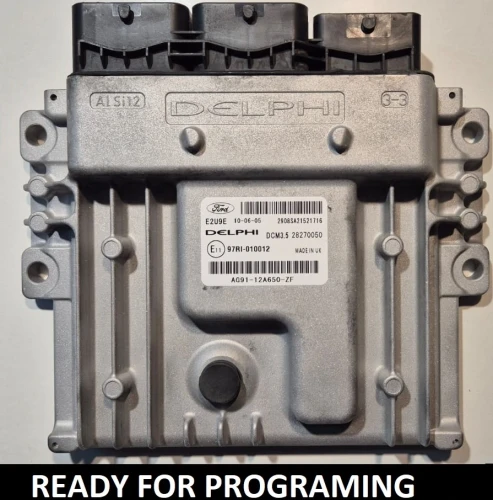
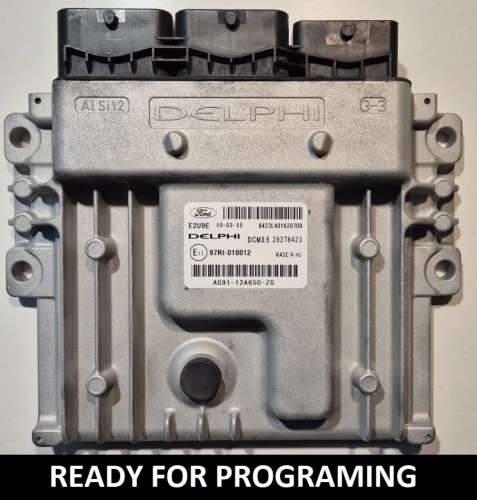
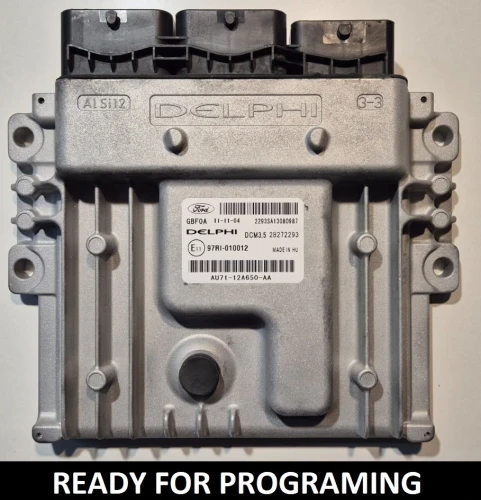
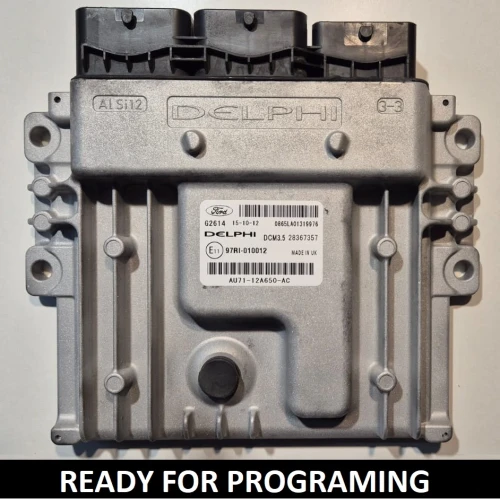
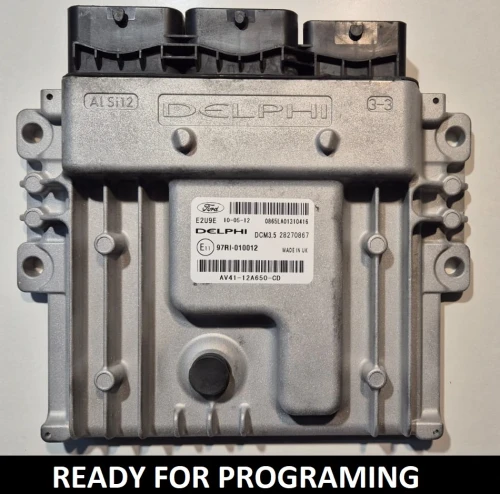
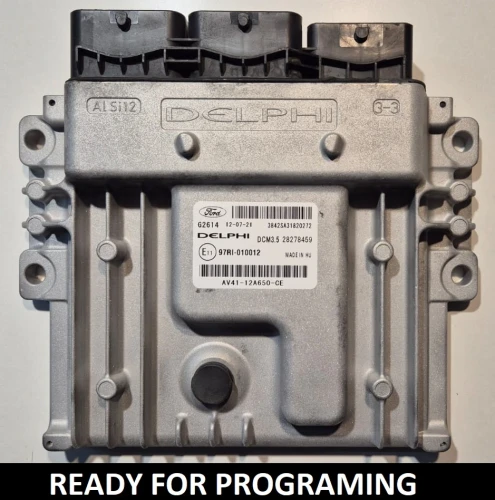
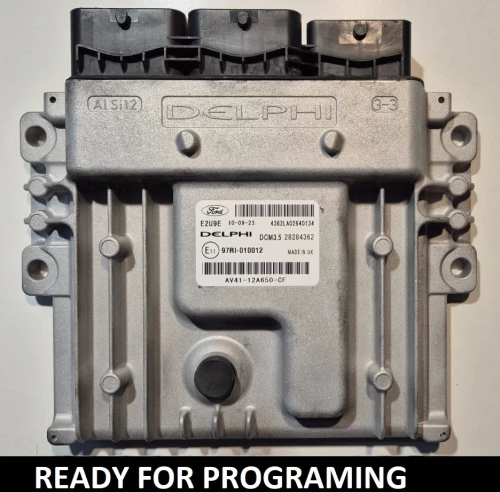
Delphi DCM3.5 engine ECUs for Ford 2.0 and 2.2 TDCi vehicles
Looking for a suitable Ford DCM3.5 engine ECU? ECUSALE supplies tested Delphi engine control units for selected Ford vehicles equipped with 2.0 and 2.2 TDCi engines. The DCM3.5 ECU family can be found in certain versions of the Ford Mondeo, S-Max, Galaxy, Focus, Kuga, Transit and Transit Custom.
This does not mean that every DCM3.5 ECU is interchangeable between these vehicles. Individual units may have different Ford part numbers, Delphi numbers, software, calibration, gearbox configuration, engine output, equipment settings and immobiliser data.
Before ordering, all numbers printed on the original ECU label should be compared. The vehicle VIN is also used to help identify the engine version, production year, vehicle configuration and suitable software.
Browse our complete range of Ford engine ECUs and other Delphi engine control units and electronic modules.
Is a standard Ford DCM3.5 ECU Plug & Play?
No. A standard DCM3.5 ECU prepared for vehicle programming is not a Plug & Play module. Simply connecting the replacement ECU is not sufficient to start the engine. The controller must be correctly configured and assigned to the vehicle’s security system.
After installation, the required programming functions must be completed using FORScan, Ford IDS or another diagnostic system that supports the necessary Ford service procedures. The PATS immobiliser adaptation must also be performed.
A Plug & Play solution can be prepared when we receive the original ECU and can read and clone the necessary data. We can also work from correctly read ECU files if they contain all memory areas required to create a complete clone.
Selected Ford DCM3.5 ECUs available from ECUSALE
Our range includes different Delphi DCM3.5 engine control units used in selected Ford 2.0 and 2.2 TDCi vehicles. Every replacement ECU must be selected by comparing the complete Ford and Delphi numbers with the label of the original controller.
- AV41-12A650-DA / 28250876 – Ford DCM3.5 engine ECU
- AG91-12A650-ABD / 28264930 – Ford DCM3.5 engine ECU
- BV61-12A650-KB / 28268288 – Delphi DCM3.5 ECU
- BV61-12A650-ACB / 28268297 – Ford DCM3.5 controller
- AG91-12A650-YF / 28270047 – Ford 2.0 TDCi DCM3.5 ECU
- AG91-12A650-YG / 28278416 – Delphi DCM3.5 ECU
- BG91-12A650-NB / 28280612 – Ford DCM3.5 controller
- BG91-12A650-FHF / 28425303 – Ford DCM3.5 engine ECU
- BG91-12A650-FFF / 28459226 – Delphi DCM3.5 ECU
These are selected examples from our range. Use the complete Ford DCM3.5 ECU product search to find additional part numbers currently available in our store.
If the required number is not listed, browse our complete selection of Ford engine ECUs or send us a clear photograph of the original ECU label together with the vehicle VIN.
Programming a DCM3.5 ECU with FORScan or Ford IDS
Our standard DCM3.5 ECUs are prepared for programming after installation in the vehicle. The exact procedure depends on the Ford model, year, engine and equipment, but it may include:
- checking diagnostic communication with the replacement ECU,
- installing or verifying the correct software and calibration,
- configuring the PCM according to the vehicle equipment,
- performing PATS initialisation or immobiliser adaptation,
- programming the vehicle keys when required by the procedure,
- entering or checking injector correction codes where applicable,
- clearing fault codes and checking communication with other modules.
A stable power supply must be connected before programming begins. A voltage drop or communication interruption while writing the ECU software may corrupt the data and prevent the module from operating correctly.
Ford PATS adaptation after replacing the DCM3.5 ECU
PATS is Ford’s factory immobiliser system. After the PCM is replaced, the replacement ECU must be correctly linked to the vehicle’s security system before the engine can start.
The following should be prepared before beginning the procedure:
- a computer with a suitable version of FORScan or Ford IDS,
- a stable and compatible diagnostic interface,
- a fully charged battery or stabilised power supply,
- all available and working vehicle keys,
- a correctly operating BCM and CAN communication network.
Depending on the PATS generation and the function being performed, two physical working keys may be required. Before ordering an ECU, check how many working keys are available and whether the diagnostic tool supports the required security functions for the particular vehicle.
The PATS procedure should not be started if the vehicle has a faulty key, BCM problems, interrupted CAN communication or unstable power. These faults can prevent successful adaptation even when the replacement ECU is fully operational.
Matching a Ford DCM3.5 ECU by part number and VIN
The VIN helps identify the correct vehicle configuration, but the VIN alone does not replace comparison of the ECU part numbers. The numbers printed on the original module remain the primary compatibility criteria.
Before ordering, check the following information:
- the complete Ford engineering or service part number,
- the Delphi ECU number,
- the DCM3.5 controller family,
- engine type and capacity,
- engine power output,
- manual or automatic transmission,
- vehicle model and production year,
- software and calibration version, where available.
If you are unsure which ECU is correct, send us the VIN and a clear photograph of the entire original ECU label. This helps reduce the risk of selecting a unit with unsuitable software, calibration or vehicle configuration.
DCM3.5 ECU software prepared using the vehicle VIN
Using the VIN, we can help identify the appropriate ECU version and prepare suitable software for the vehicle. However, preparing the calibration according to the VIN does not automatically assign the ECU to the immobiliser.
After the module has been installed, the required vehicle configuration and PATS procedure must still be performed using FORScan or Ford IDS. The VIN helps us select and prepare the correct software, while the PATS procedure links the ECU to the vehicle’s security system.
Cloning a DCM3.5 ECU for a Plug & Play replacement
If you require a replacement that does not need standard programming in the vehicle, we may be able to prepare a Plug & Play ECU by cloning the necessary data from the original module.
Depending on the ECU version, the cloning process may include transferring:
- PATS immobiliser data,
- the vehicle VIN,
- vehicle configuration data,
- EEPROM memory,
- FLASH and other required memory areas.
We can also prepare a replacement from supplied files, provided that the files were read correctly and contain all data required for a complete clone.
Cloning availability depends on the condition of the original ECU and the integrity of its memory. If the original data is corrupted or incomplete, the replacement ECU may need to be programmed directly in the vehicle using the standard FORScan or IDS procedure.
Common symptoms of Ford DCM3.5 ECU failure
Symptoms that appear to indicate ECU failure can also be caused by faults elsewhere in the vehicle’s electrical system. A complete diagnosis should therefore be carried out before ordering a replacement controller.
Possible symptoms include:
- engine cranks but does not start,
- no diagnostic communication with the PCM,
- CAN communication faults,
- intermittent engine stalling,
- no control of injectors or selected actuators,
- multiple power supply, sensor or communication fault codes,
- ECU damage following a collision, water ingress or voltage surge,
- failure during an incorrect programming or tuning attempt.
Before replacing the ECU, check its power supplies, grounds, fuses, relays, wiring, connectors, CAN network and communication with the BCM. Loss of diagnostic communication does not always mean that the engine ECU itself is faulty.
How are Delphi DCM3.5 ECUs tested?
Each ECU undergoes a technical inspection appropriate to its version and condition. The process may include:
- inspection of the housing and electrical connectors,
- checking for moisture, corrosion and mechanical damage,
- power supply and diagnostic communication tests,
- verification of CAN network communication,
- checking the ECU memory and software condition,
- preparing the appropriate software or calibration,
- final testing before dispatch.
Read our technical guide for more information about selecting and installing a replacement controller:
Ford DCM3.5 ECU replacement – part-number matching, programming and PATS.
Payment, delivery and compatibility assistance
Before ordering, review our available payment methods and information about shipping costs and delivery times.
If you are unsure which controller is suitable, send us the vehicle VIN and a clear photograph of the original ECU label. We will check the part number and available options for standard programming or data cloning.
FAQ – Ford DCM3.5 engine ECUs
Will a replacement DCM3.5 ECU start the vehicle without programming?
No, not in the standard version prepared for adaptation. After installation, the required vehicle configuration and PATS immobiliser procedure must be completed using FORScan, Ford IDS or another compatible diagnostic system.
Is a PATS procedure required after replacing the ECU?
Yes. The replacement PCM must be assigned to the vehicle’s immobiliser system. The exact procedure depends on the Ford model, production year and PATS generation.
Are two keys required for Ford PATS programming?
Many PATS procedures require two physical working keys. The exact requirements can vary according to the vehicle, PATS generation, procedure and diagnostic tool being used.
Can a DCM3.5 ECU be programmed using FORScan?
Yes, FORScan can perform the required programming and service functions on supported vehicles. Ford IDS can also be used. Before starting, confirm that the selected software version and diagnostic interface support the particular vehicle and required security functions.
Is the VIN sufficient to prepare a Ford DCM3.5 ECU?
The VIN helps identify the appropriate software and vehicle configuration, but it does not replace comparison of the original ECU part numbers. After installation, an ECU prepared using the VIN still requires the appropriate PATS procedure.
Can I order a Plug & Play DCM3.5 ECU?
Yes, when the required data can be read and cloned from the original ECU. To use this option, send us the original module or a complete set of correctly read files.
How can I check DCM3.5 ECU compatibility?
Compare the complete Ford and Delphi numbers, the DCM3.5 family, engine version, transmission type and software calibration. If there is any uncertainty, send us the VIN and a photograph of the original ECU label.