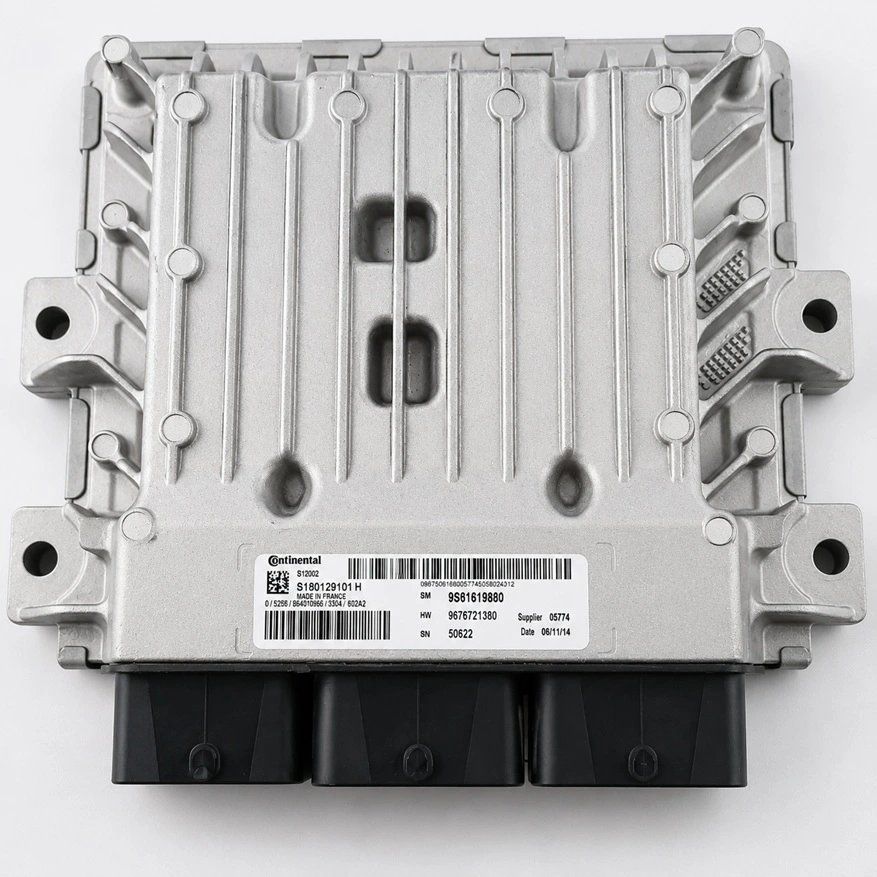
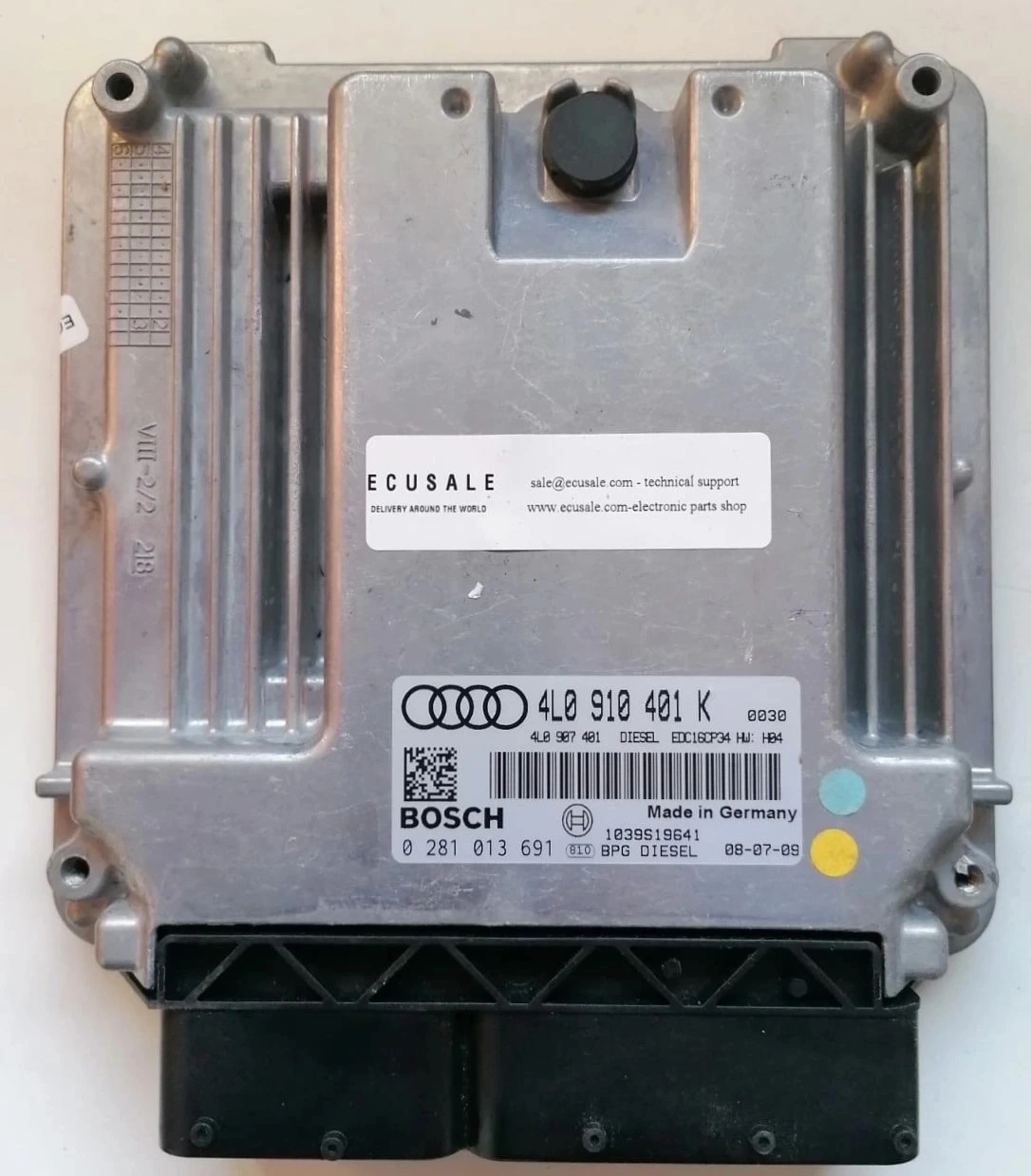
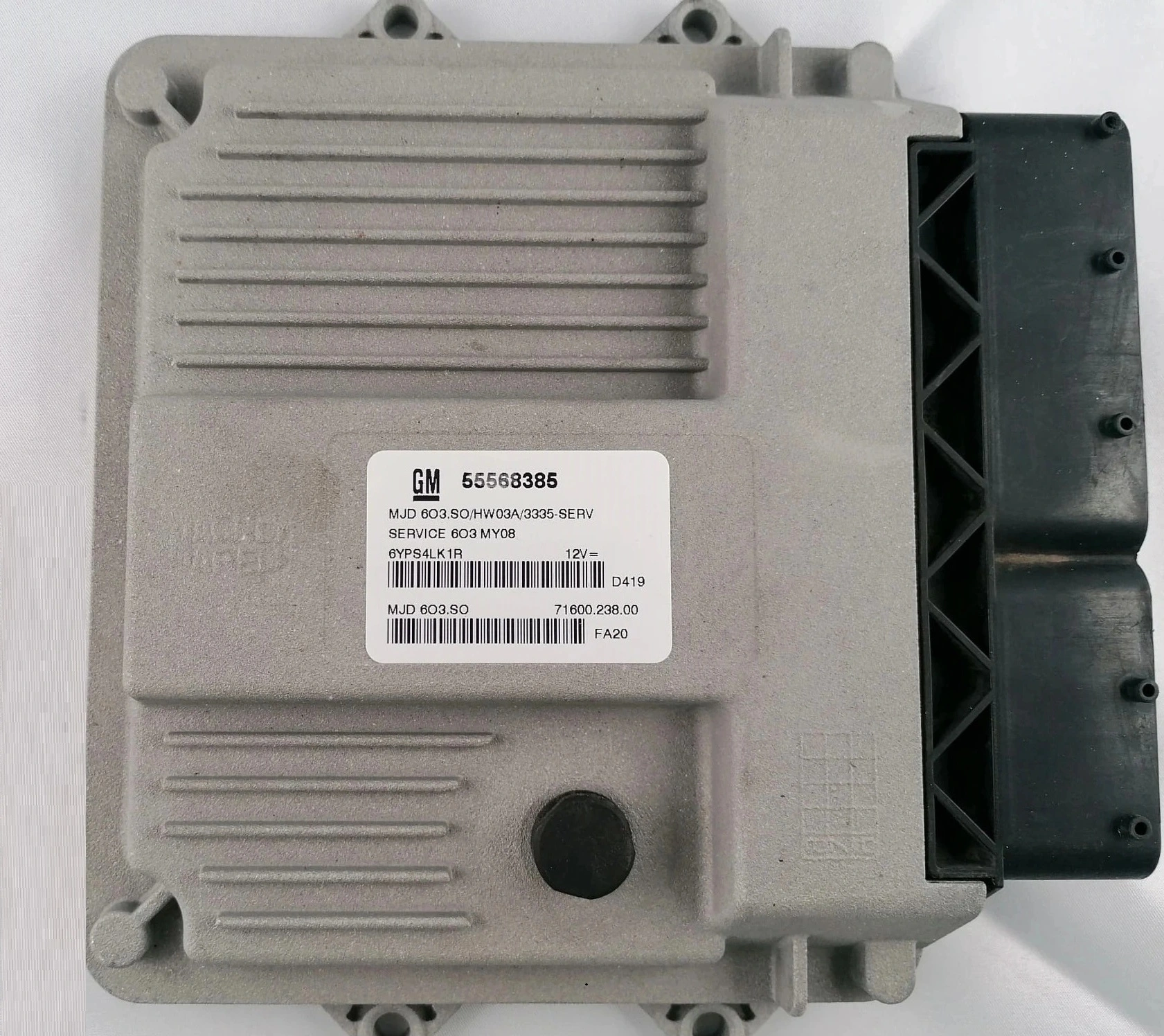
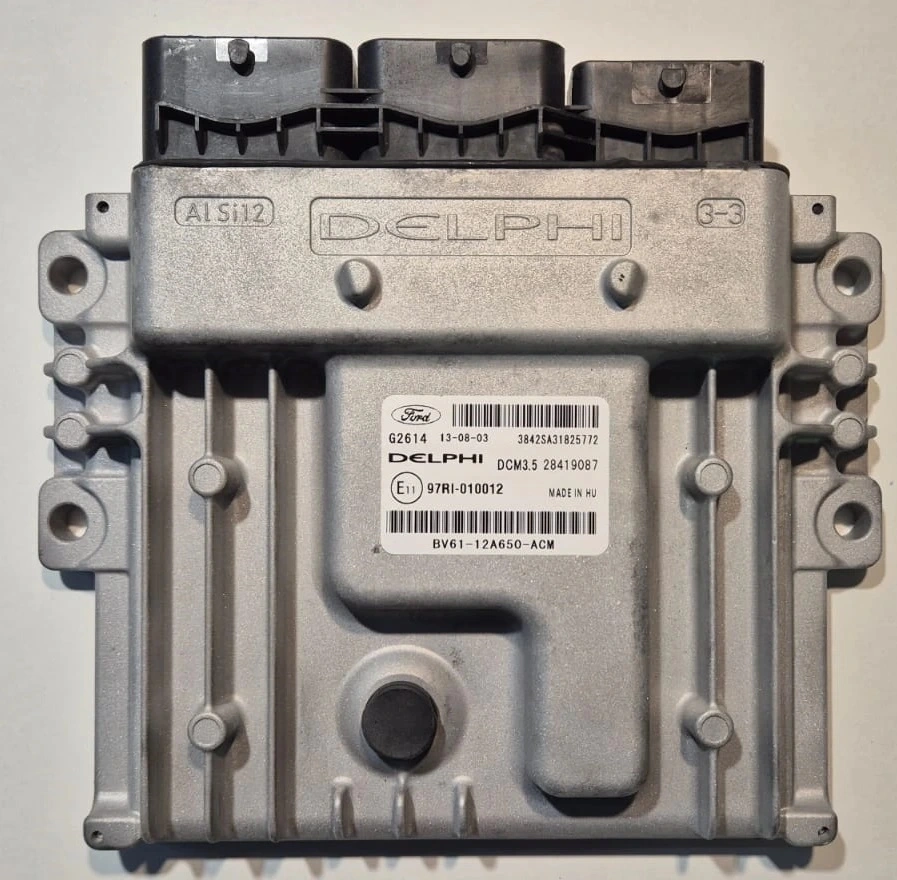
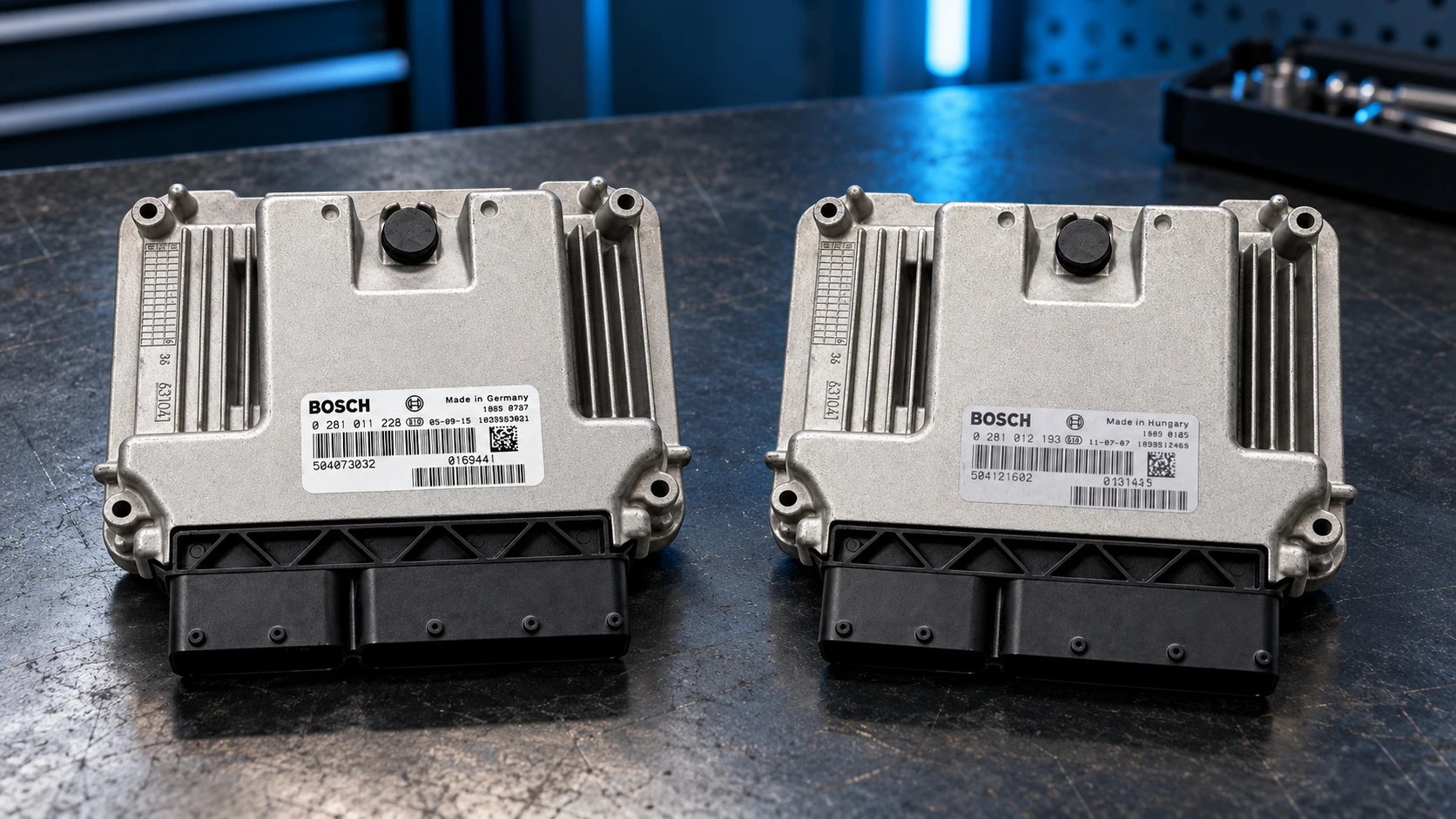
Toyota engine control units – original replacement ECUs
A Toyota engine control unit, also known as an ECU, ECM or engine computer, controls essential powertrain functions. Depending on the engine and vehicle generation, it manages fuel injection, ignition, turbocharger operation, throttle control, EGR, DPF regeneration and communication with the immobiliser and other electronic modules.
This category is intended for original, used and tested engine controllers for Toyota petrol, diesel and selected hybrid vehicles. The modules may be manufactured by Denso, Bosch, Continental and other original-equipment suppliers.
Compatibility must always be established using the complete Toyota OEM number, manufacturer reference, ECU hardware and software. The vehicle model, engine capacity or production year alone does not reliably identify the correct controller.
Need help identifying your Toyota ECU?
Send a photograph showing the complete label of the original controller together with the VIN. Include the model, production year, engine capacity, power output and gearbox type.
Request a compatibility check
Toyota ECU applications
Toyota has used many engine-controller families across its passenger cars, SUVs, pick-ups and vans. Depending on current availability, the category may include replacement ECUs for models such as:
- Toyota Yaris and Yaris Cross,
- Toyota Auris and Corolla,
- Toyota Avensis and Camry,
- Toyota RAV4 and Highlander,
- Toyota Hilux and Land Cruiser,
- Toyota Prius and other selected hybrid models,
- Toyota Proace and Proace City,
- Toyota GT86 and selected sports models.
This list is provided as a general guide and does not confirm current stock or compatibility. One model and engine version can use several different ECU references depending on the market, production period, emissions standard, gearbox and equipment.
Toyota Denso engine controllers
Denso ECUs are widely used as original equipment in Toyota vehicles. Their labels may include a Toyota OEM number together with a separate Denso reference. Both numbers should be checked before purchasing a replacement controller.
A similar housing, connector arrangement or Denso family designation does not prove that two ECUs are interchangeable. Controllers can contain different:
- hardware versions,
- engine software and calibration,
- immobiliser data,
- emissions-system configurations,
- automatic or manual gearbox settings,
- market-specific vehicle configurations.
When searching for a Denso Toyota ECU, use every number shown on the original label. If the part has several barcodes or secondary references, include all of them in the compatibility request.
Bosch and Continental ECUs for Toyota diesel engines
Selected Toyota diesel vehicles use Bosch or Continental engine controllers. This is particularly relevant to models and engines developed jointly with other vehicle manufacturers or used across related commercial-vehicle platforms.
For these modules, the Toyota number should be compared with the complete Bosch or Continental reference. The ECU family, engine code, emissions standard and software version must also be verified.
A controller described only as a “Toyota 2.0 D-4D ECU” or “Toyota 2.2 D-4D engine computer” cannot be reliably identified. Several incompatible variants may exist for the same engine capacity.
Searching for a Toyota diesel ECU?
Compare the Toyota OEM number, manufacturer reference, engine code and complete hardware and software markings. Engine capacity alone is not sufficient.
View Toyota ECUs Check your ECU numbers
Toyota hybrid engine ECU and hybrid control modules
A Toyota hybrid vehicle contains several electronic controllers. The petrol-engine ECU is not necessarily the same component as the hybrid vehicle control ECU, battery management module, inverter controller or power-management ECU.
Before ordering a module for a Prius, Auris Hybrid, Corolla Hybrid, RAV4 Hybrid or another electrified Toyota, first identify which controller has actually been diagnosed as faulty. A diagnostic trouble code stored in one module can be caused by another part of the hybrid system or by a CAN communication problem.
When identifying a hybrid controller, provide:
- the complete Toyota part number,
- the manufacturer reference,
- the VIN and production year,
- the exact module name shown in the diagnostic report,
- all relevant fault codes,
- information about any previous module replacement or programming.
High-voltage hybrid systems should only be diagnosed and repaired by appropriately trained personnel. Replacing the engine ECU without confirming the source of the fault may not resolve the vehicle problem.
How to select the correct Toyota engine ECU
The safest selection method is to compare all markings on the original controller. Toyota vehicles from the same model range may use different hardware and software even when they have the same engine capacity and power output.
Before ordering, check:
- the complete Toyota OEM part number,
- the complete Denso, Bosch, Continental or other manufacturer reference,
- the ECU family and hardware version,
- the software and calibration numbers,
- the engine code, capacity and power output,
- the petrol, diesel or hybrid powertrain type,
- the emissions standard,
- the manual, automatic or hybrid transmission configuration,
- the vehicle model, generation and production year.
The VIN is an important supporting detail, but it does not replace the information on the original ECU label. The best verification method is to provide both the VIN and a clear photograph of the complete module.
Does a used Toyota ECU require programming?
A standard used Toyota ECU can contain the VIN, immobiliser information, engine software and configuration of the previous vehicle. Depending on the controller and vehicle generation, replacement may require:
- immobiliser registration or synchronisation,
- VIN programming,
- software installation or calibration update,
- variant coding,
- a VIRGIN reset,
- cloning data from the original ECU,
- initialisation using Toyota-compatible diagnostic equipment.
The required procedure should always be confirmed before ordering. Do not assume that an ordinary used engine controller will start the vehicle immediately after being connected.
Programming a Toyota ECU with Techstream
Toyota Techstream is used for many diagnostic, registration, initialisation and programming procedures in Toyota vehicles. The available functions depend on the vehicle generation, ECU family and diagnostic access.
Some operations may require authorised online access, security credentials, a vehicle-specific procedure or direct programming of ECU memory. A workshop should confirm that it has the correct equipment and experience before a VIRGIN or unconfigured controller is ordered.
During programming, the vehicle must be connected to a stable external power supply. A voltage drop or interrupted programming procedure may corrupt the software and prevent communication with the ECU.
Toyota VIRGIN ECU – what does it mean?
A VIRGIN Toyota ECU has been cleared of relevant data belonging to the previous vehicle and prepared for reassignment. The exact installation procedure depends on the controller and immobiliser generation.
Some controllers may require diagnostic registration or synchronisation after installation. Others may use a specific first-start or immobiliser-pairing procedure. VIRGIN does not automatically mean that every Toyota ECU is ready to drive immediately after connection.
After a VIRGIN controller has been assigned to a vehicle, it may no longer remain clean. It should not be installed for testing in another car without confirming the procedure for that ECU.
Toyota Plug & Play ECU
A Plug & Play Toyota ECU is prepared for a particular vehicle to reduce the programming required after installation. Preparation may involve transferring data from the original controller, writing vehicle-specific information or configuring the replacement ECU.
Depending on the product, ECUSale may require:
- the original ECU,
- a complete EEPROM and FLASH read,
- the VIN and vehicle details,
- immobiliser or key-system information,
- the complete numbers of both modules.
Plug & Play preparation does not make incompatible hardware suitable. The replacement controller must first be correctly matched by part number.
Cloning a Toyota engine controller
Cloning transfers the required information from the original ECU to a compatible replacement module. Depending on the controller, the transferred data can include:
- engine software and calibration,
- immobiliser information,
- the VIN,
- vehicle configuration,
- individual data stored in EEPROM, FLASH or the processor.
A complete clone may reduce the amount of work required after installation. However, cloning is only possible if the necessary data can still be read from the original ECU and the replacement module has compatible hardware.
If the original controller has severe electronic, processor or memory damage, a complete read may be impossible. In that situation, a VIRGIN controller or diagnostic programming may be required.
Common symptoms of a faulty Toyota ECU
- the engine does not start or starts intermittently,
- no diagnostic communication with the ECU,
- the engine stalls while driving,
- irregular engine operation,
- limp mode and reduced power,
- fuel-injection or ignition-control faults,
- electronic throttle-control problems,
- turbocharger, EGR or DPF faults in diesel models,
- immobiliser or CAN communication errors,
- failure following interrupted programming,
- damage caused by water, corrosion, a short circuit or overvoltage.
These symptoms can also be caused by damaged wiring, poor power or ground connections, faulty sensors, relays, injectors, ignition coils or another electronic module. The vehicle should be thoroughly diagnosed before the engine ECU is replaced.
What should be checked before installing another ECU?
- ECU power supplies and ground connections,
- fuses and relays,
- wiring harnesses and connectors,
- CAN communication between modules,
- battery condition and alternator voltage,
- injectors, ignition coils, sensors and actuators,
- immobiliser, key and start-authorisation operation,
- signs of moisture, corrosion or overheating.
The fault that damaged the original ECU must be identified before fitting the replacement. An unresolved short circuit, wiring defect or charging-system fault can also damage another controller.
Toyota ABS pumps and other electronic systems
Engine-operation and communication faults may sometimes originate from another electronic module. ECUSale also offers Toyota ABS pumps and brake control modules.
If the vehicle displays ABS, VSC or traction-control warnings, wheel-speed sensor faults or communication errors with the brake controller, the ABS system should be diagnosed separately. Replacing the engine ECU will not repair a defective ABS pump or control module.
Why choose a Toyota ECU from ECUSale?
- original Denso, Bosch, Continental and other OEM modules,
- used controllers tested before dispatch,
- selection based on complete part numbers,
- information about programming and preparation requirements,
- compatibility assistance using the original label and VIN,
- warranty according to the conditions stated for each product,
- national and international delivery.
Before ordering, review the available payment methods, information about shipping costs and delivery times and the returns and complaints policy.
Find the correct Toyota engine ECU
Send us the VIN and a photograph of the complete original ECU label. We will help identify a compatible controller and determine the appropriate preparation method.
View Toyota engine ECUs Ask about availability
FAQ – Toyota engine control units
How do I select the correct ECU for my Toyota?
Compare the complete Toyota OEM number and the Denso, Bosch, Continental or other manufacturer reference with the original controller. Also check the hardware, software, engine code and vehicle configuration.
Does a used Toyota ECU require programming?
In many cases it does. Depending on the controller, it may require immobiliser synchronisation, VIN programming, a VIRGIN reset, cloning or initialisation with Toyota-compatible diagnostic equipment.
Will a Toyota VIRGIN ECU work immediately after installation?
Not necessarily. A VIRGIN controller may require immobiliser registration, synchronisation, software programming or another vehicle-specific initialisation procedure.
Can a damaged Toyota ECU be cloned?
Cloning may be possible when the original controller remains readable and a compatible replacement ECU is available. The transferred data can include the immobiliser information, VIN, configuration and engine software.
Does a Toyota ECU need an identical part number?
The safest option is a controller with identical Toyota and manufacturer numbers. Some parts have recognised service replacements, but compatibility should be confirmed before installation.
Is the VIN sufficient to identify a Toyota engine ECU?
The VIN is useful, but the numbers on the original controller remain essential. Send the VIN together with a clear photograph of the complete ECU label.
Is the engine ECU the same as a Toyota hybrid control module?
Not always. A hybrid Toyota can have separate engine, hybrid-system, battery and inverter control modules. The faulty controller should be identified from the diagnostic report and its part number.
Does a no-start condition always mean the Toyota ECU is faulty?
No. A no-start condition can also be caused by missing power or ground, damaged wiring, an immobiliser or key fault, fuel-system problems, faulty sensors or CAN communication errors.
What information should I send if the required ECU is not listed?
Send a photograph of the complete controller label, the VIN, model and production year, engine code and capacity, power output, gearbox type and all relevant diagnostic fault codes.