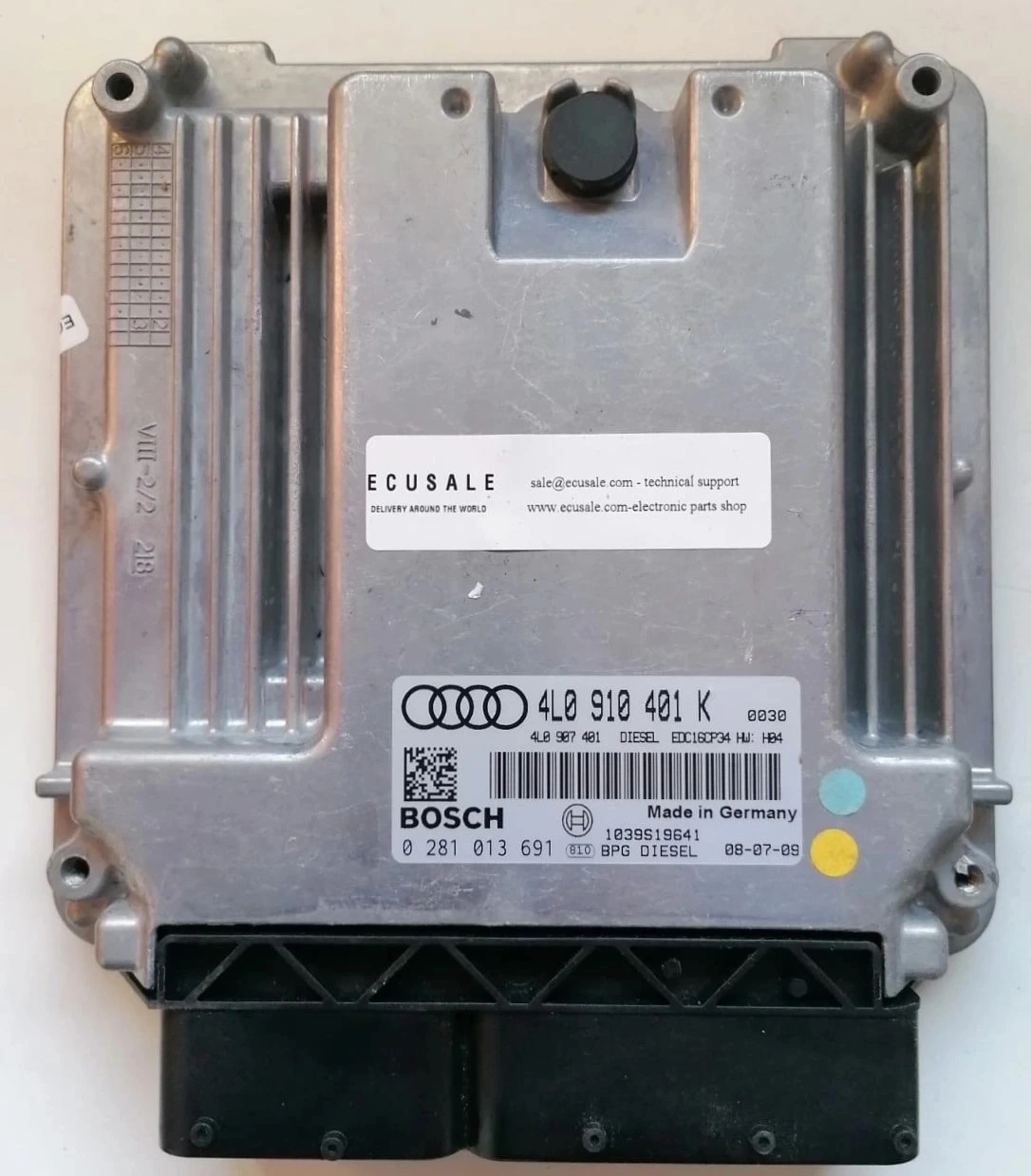
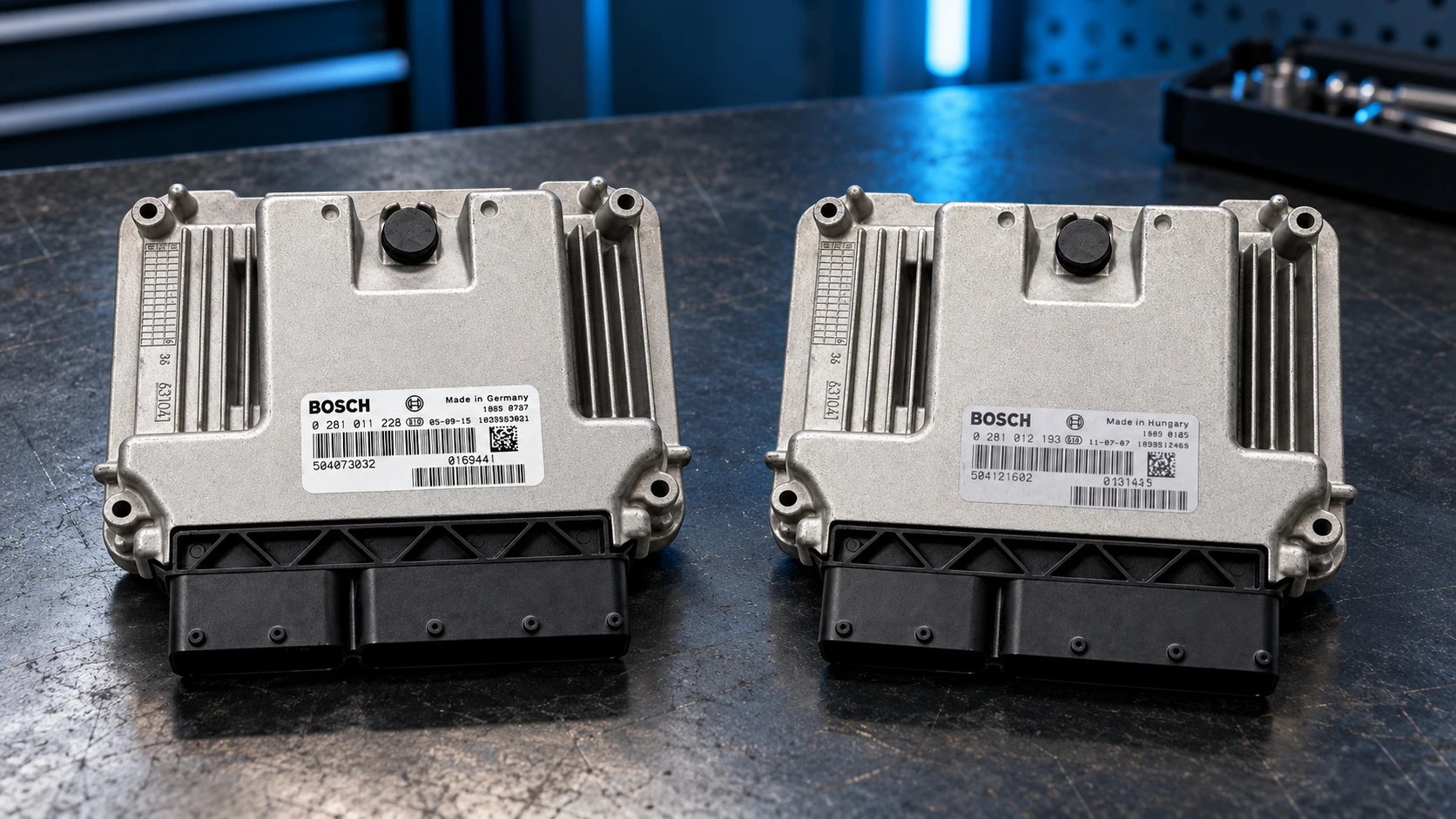
SEAT ECU engine controllers – tested replacement modules
A SEAT ECU engine controller, also known as an engine control unit, engine computer or injection control module, manages essential engine functions. Depending on the vehicle, it controls fuel injection, ignition, turbocharger operation, EGR, DPF regeneration and communication with the immobiliser and other electronic modules.
At ECUSale, you can find original engine control units for SEAT vehicles including the Ibiza, Leon, Toledo, Altea, Altea XL, Exeo, Ateca, Arona and Tarraco. Availability depends on the complete OEM number, ECU manufacturer, engine specification, hardware version and installed software.
Not sure which SEAT ECU you need?
Send us a clear photograph of the complete label from your original ECU together with the vehicle’s VIN. We will compare the numbers and help determine whether you need an IMMO OFF, Plug & Play, VIRGIN or cloned controller.
Send your ECU details
Popular SEAT ECU engine controllers
SEAT vehicles use several generations of petrol and diesel engine management systems. These include Bosch MED controllers for TSI petrol engines and Bosch EDC controllers for TDI diesel engines. Even units from the same ECU family may contain different hardware, software and vehicle configurations, so the family designation alone does not confirm compatibility.
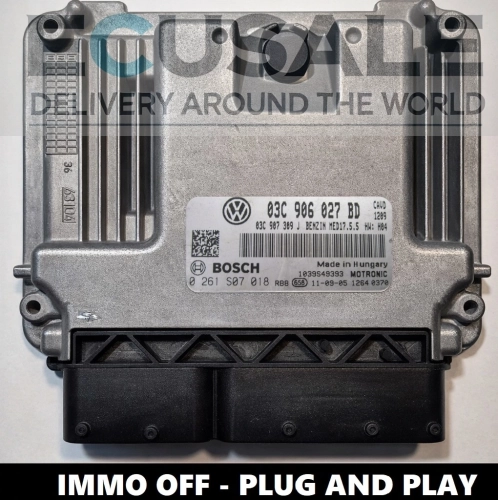
0261S07018 / 03C906027BD – SEAT 1.4 TSI MED17.5.5 ECU
The 0261S07018 / 03C906027BD Bosch MED17.5.5 engine controller is used in selected Volkswagen Group vehicles with 1.4 TSI petrol engines, including certain versions of the SEAT Leon and Altea.
The offered module is prepared as IMMO OFF and Plug & Play. The complete VAG number, Bosch number, engine code and software calibration must nevertheless be checked before purchase. A matching engine capacity alone does not confirm that the controller is suitable.
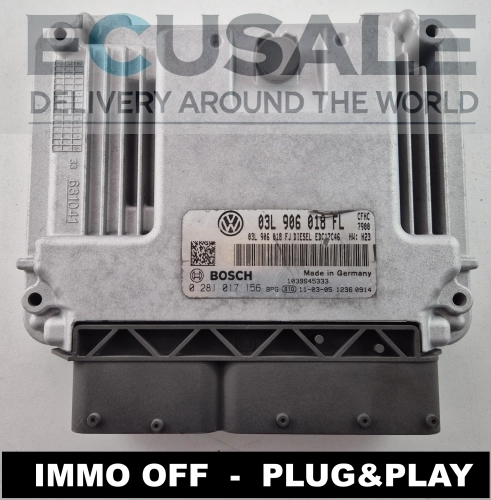
0281017156 / 03L906018FL – SEAT Altea XL 2.0 TDI ECU
For selected diesel vehicles, ECUSale offers the 0281017156 / 03L906018FL ECU for the SEAT Altea XL 2.0 TDI. This original Bosch controller is prepared as IMMO OFF and Plug & Play.
Before ordering, compare both identification numbers with your original controller. The engine code, emissions equipment, gearbox specification and software version may affect compatibility, even between vehicles with the same 2.0 TDI engine capacity.
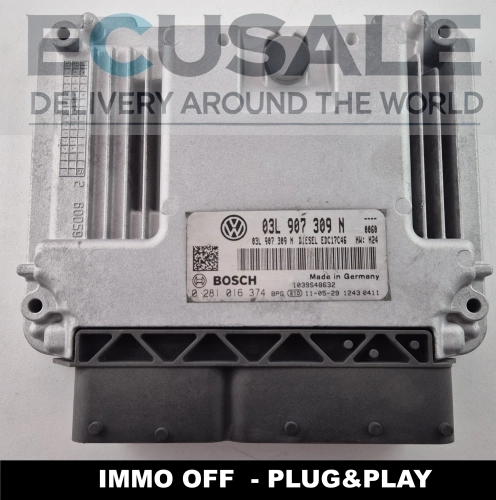
0281016374 / 03L907309N – Bosch EDC17C46 ECU
Another available option is the 0281016374 / 03L907309N Bosch EDC17C46 engine controller. This unit is listed for selected SEAT, Volkswagen, Audi and Skoda applications and is prepared as IMMO OFF and Plug & Play.
The shared Volkswagen Group part number does not mean that every EDC17C46 controller can be fitted to every compatible-looking vehicle. Its hardware, software, engine version, emissions system and gearbox configuration must also be correct.
Choosing an ECU for a SEAT Leon, Ibiza or Altea?
Do not select the replacement only by vehicle model, engine capacity or production year. Compare every number on the original ECU label and check the preparation method stated on the product page.
View SEAT ECUs Check compatibility
SEAT ECU compatibility within the Volkswagen Group
SEAT shares many engines and electronic systems with Volkswagen, Audi and Skoda. As a result, the same Bosch or VAG number may appear in vehicles sold under several brands. You can also browse our Volkswagen ECU engine controllers, Audi ECU engine controllers and Skoda ECU engine controllers.
Cross-brand use is possible only when all relevant identifiers and technical specifications match. The fact that two vehicles use a similar TSI or TDI engine does not make their controllers automatically interchangeable.
How to select the correct SEAT ECU
The most reliable starting point is the complete label on the original engine controller. Vehicle model, year, engine capacity and power output alone are insufficient because several ECU versions may have been installed in the same model.
Before ordering, compare:
- the complete SEAT or Volkswagen Group OEM part number,
- the Bosch, Continental, Siemens or other manufacturer number,
- the ECU family, such as MED17.5.5 or EDC17C46,
- hardware and software versions,
- engine code, capacity, power output and fuel type,
- emissions standard and DPF configuration,
- manual, DSG or other gearbox specification,
- vehicle equipment and market version.
Letters at the end of a VAG part number are important and may identify a different hardware or software version. The VIN helps identify the vehicle, but it does not replace the numbers printed on the original ECU.
SEAT ECU IMMO OFF – what does it mean?
IMMO OFF means that the immobiliser function has been disabled in a compatible engine controller. This can allow the engine to start without carrying out the standard adaptation between the replacement ECU and the vehicle’s immobiliser system.
IMMO OFF does not make an incorrectly selected controller compatible. The replacement must still contain suitable hardware and software for the engine and vehicle configuration. Depending on the vehicle and preparation method, an immobiliser warning or related fault code may remain in the instrument cluster or another module even when the engine starts and runs correctly.
Not every SEAT controller supports the same IMMO OFF solution. Always check the preparation stated on the individual product page.
SEAT ECU Plug & Play and cloning
A Plug & Play ECU has been prepared to reduce the programming required after installation. Depending on the product, this may mean that the controller has been cloned from the customer’s original unit, prepared as IMMO OFF or configured using another compatible method.
ECU cloning involves transferring data from the original controller to a compatible replacement. Depending on the ECU architecture, this can include EEPROM, FLASH and processor data. A successful clone may retain the immobiliser information, VIN, engine software and vehicle configuration.
Cloning normally requires the original ECU to remain readable and the replacement controller to be technically compatible. If the old module cannot be read, an IMMO OFF or VIRGIN solution may be considered where supported.
SEAT VIRGIN ECU and adaptation
A VIRGIN ECU has been reset so that it no longer contains the previous vehicle’s immobiliser assignment. It can then be adapted to a compatible vehicle using an appropriate diagnostic or programming procedure.
VIRGIN does not always mean that the controller will configure itself immediately after connection. Depending on the generation of the immobiliser system, specialist diagnostic equipment, online access, key data or additional coding may be required. Always confirm the installation procedure before ordering.
Common symptoms of a faulty SEAT engine ECU
- the engine cranks but does not start,
- no diagnostic communication with the engine controller,
- intermittent starting or unexpected engine cut-out,
- limp mode and reduced engine power,
- injector, ignition, throttle or turbocharger faults,
- immobiliser or CAN communication errors,
- internal ECU fault codes that return after clearing,
- problems following water ingress, a short circuit or voltage surge,
- a no-start condition after interrupted ECU programming.
These symptoms do not automatically prove that the ECU is defective. Similar problems may be caused by damaged wiring, poor power or earth connections, blown fuses, faulty relays, sensors, actuators or communication faults elsewhere in the vehicle.
Checks to perform before replacing the ECU
Before purchasing a replacement controller, check the ECU power supply and earth circuits, relevant fuses and relays, wiring continuity, connector condition and CAN communication. Diagnostic fault codes should be read from all available modules rather than only from the engine controller.
If the original ECU still communicates, save its identification and coding data before removal. Where possible, retain the old module until the replacement has been installed and tested, as its memory content may be needed for cloning or configuration.
Why buy a SEAT ECU from ECUSale?
- original Bosch and other manufacturer modules,
- engine controllers tested before dispatch,
- complete OEM and manufacturer numbers shown in product listings,
- clear information about IMMO OFF, VIRGIN and Plug & Play preparation,
- compatibility support based on the original ECU label and VIN,
- warranty according to the terms stated for the selected product,
- delivery across Europe and worldwide.
Before ordering, you can review the available payment methods, information about shipping costs and delivery times and the returns and complaints policy.
Find the correct SEAT engine controller
Compare the complete numbers from your original ECU or send us a clear photograph of its label. We will help you select a compatible controller and the appropriate preparation method.
View SEAT ECUs Send your ECU numbers
FAQ – SEAT ECU engine controllers
Does a replacement SEAT ECU need identical numbers?
The safest option is a controller with the same complete SEAT or VAG OEM number and a matching manufacturer number. Compatible supersessions may exist, but they should be confirmed before purchase.
Will an ordinary used SEAT ECU work after connection?
An ordinary used controller usually contains immobiliser and configuration data from its previous vehicle. It may therefore prevent the engine from starting unless it is cloned, reset as VIRGIN, adapted or prepared as IMMO OFF.
What does Plug & Play mean for a SEAT ECU?
It means that the controller has been prepared to reduce or eliminate programming after installation. The exact preparation may involve cloning, IMMO OFF or another supported solution, so always check the individual product description.
Can a Volkswagen or Skoda ECU be used in a SEAT?
Some controllers are shared across SEAT, Volkswagen, Audi and Skoda vehicles. Compatibility still depends on the complete VAG and manufacturer numbers, hardware, software, engine code, gearbox and emissions configuration.
Which ECU fits a SEAT Leon 1.4 TSI?
The correct controller depends on the engine code, year and original ECU numbers. The 03C906027BD / 0261S07018 Bosch MED17.5.5 is used in selected 1.4 TSI applications, but the complete identification must be checked before ordering.
Which ECU fits a SEAT Altea XL 2.0 TDI?
The 03L906018FL / 0281017156 Bosch controller is available for selected SEAT Altea XL 2.0 TDI vehicles. Match both numbers and confirm the engine code, gearbox and software version.
Does a SEAT IMMO OFF ECU require key programming?
An ECU correctly prepared as IMMO OFF generally does not require standard immobiliser adaptation to authorise engine starting. Other coding or configuration work may still be necessary depending on the vehicle and product.
Can a damaged SEAT ECU be cloned?
Cloning may be possible when the required memory data can still be read from the original controller and a compatible replacement is available. If the original ECU is completely unreadable, another preparation method may be required.
What information should I send before buying a SEAT ECU?
Send a clear photograph of the complete ECU label, the VIN, vehicle model and year, engine code and capacity, power output, gearbox type and diagnostic fault codes. Details of any previous programming attempt are also helpful.