

These products will be shipped today if you order within:

English
Open search engine
Search
Close search engine Clear Search
Products in the cart: 0. See details

Your cart is empty

Engine controller SEAT

Filters

Subcategories and filters

Filters

in category: Engine controller SEAT

Subcategories

Back to: ECU Engine Controller
  • Engine controller SEAT

Chosen Filters

Clear

Price

Vendor

Vendor

Engine controller SEAT

Products: 3

ECU engine controllers for SEAT vehicles

This category includes original engine control units for SEAT vehicles, used in models such as the Ibiza, Leon, Toledo, Altea, Ateca, Arona and Tarraco. We offer tested modules for petrol and diesel engines, identified by SEAT, Volkswagen Group, Bosch, Continental, Siemens or Magneti Marelli part numbers.

Each ECU is selected according to the references shown on the original controller, as the same vehicle model and engine may be fitted with several different electronic versions. Depending on the product, the modules are available as Virgin, Plug & Play, Immo Off, reset or prepared for cloning.

Products: 3

List of products

Product name: A to Z Default Product name: A to Z Product name: Z to A Price: from lowest Price: from highest
Bestseller
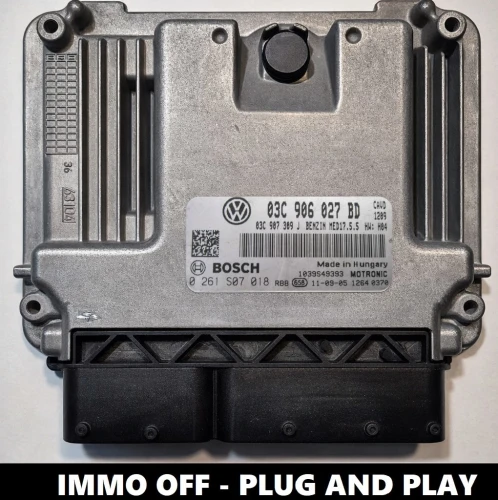
Engine control unit 03C906027BD 0261S07018 VW Golf 1.4 TSI MED17.5.5 IMMO OFF
Product code 0261S07018 Producer code 03C906027BD

03C906027BD 0261S07018 – Ecu engine controller VW / Seat / Skoda 1.4 TSI MED17.5.5 IMMO OFF Plug & Play

Manufacturer BOSCH
Price €323.65
Price €263.13
Bestseller
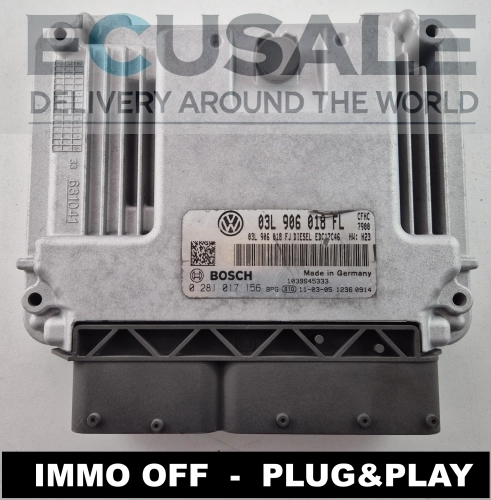
ECU Engine controller 03L906018FL 0281017156 Seat Altea XL 2.0 TDI  IMMO OFF
Product code 0281017156 Producer code 03L906018FL

03L906018FL 0281017156 ECU Engine controller IMMO OFF Seat Altea XL 2.0 TDI PLUG&PLAY

Manufacturer BOSCH
Price €173.38
Price €140.96
Bestseller
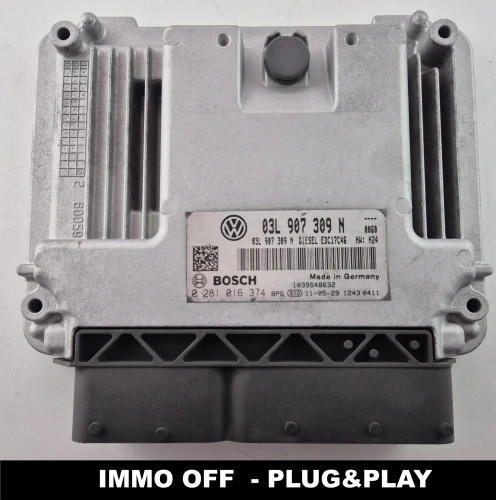
03L907309N 0281016374 ECU Engine VW Audi Seat Skoda Bosch EDC17C46 IMMO OFF Plug & Play
Product code 0281016374 Producer code 03L907309N

03L907309N 0281016374 ECU Engine Controller VW Audi Seat Skoda IMMO OFF Plug & Play

Manufacturer BOSCH
Price €231.18
Price €187.95

ECU Engine Controllers for SEAT

The Engine Control Unit (ECU) is one of the most critical components in modern SEAT vehicles, acting as the central brain that manages various engine functions and ensures peak performance. As SEAT is known for its dynamic design and efficient engineering, the ECU plays a crucial role in maintaining fuel efficiency, enhancing driving comfort, and meeting emission standards. In this guide, we’ll explore the role of ECUs in SEAT models, the benefits of using genuine SEAT ECU units, and key factors to consider when selecting or replacing an ECU.

The Role of the ECU in SEAT Models

In SEAT cars, the ECU is responsible for collecting and processing data from a range of sensors distributed throughout the vehicle. It controls essential systems, including fuel injection, ignition timing, and throttle response, to achieve optimal engine performance. The ECU’s ability to instantly adjust to changing conditions—such as speed, temperature, or air quality—means that it can fine-tune engine parameters to deliver smooth acceleration, efficient fuel consumption, and reduced emissions. Each SEAT model has a unique ECU configuration designed to match its specific engine requirements. For instance, a SEAT Leon with a turbocharged engine may have an ECU programmed to handle higher boost levels, while a SEAT Ibiza’s ECU may focus more on efficiency and city driving. This model-specific design ensures that every SEAT vehicle performs to the highest standard of reliability and comfort.

Key Features of SEAT ECU Engine Controllers

SEAT ECUs are designed with several advanced features that enhance their functionality and make them stand out in the automotive industry: Dynamic Adaptability: SEAT ECUs are programmed to adapt to a range of driving conditions. By monitoring real-time sensor data, they can adjust performance metrics, ensuring a balanced and responsive driving experience. Improved Fuel Efficiency: Fuel management is a core function of the ECU, allowing SEAT vehicles to achieve better fuel economy. By controlling the precise amount of fuel injected into the engine, the ECU helps reduce fuel consumption without sacrificing power. Emission Control: ECUs in SEAT vehicles are built to help meet strict emission standards. With precise combustion control, the ECU limits harmful emissions, ensuring compliance with environmental regulations. Diagnostics and Troubleshooting: SEAT ECUs come with advanced diagnostic capabilities that store fault codes when an issue is detected. These codes simplify troubleshooting for technicians, saving time and reducing repair costs. Enhanced Safety: Some SEAT ECUs also interact with vehicle safety features, such as traction control or anti-lock braking systems (ABS), enhancing the safety of the vehicle through real-time adjustments.

Benefits of Choosing Genuine SEAT ECUs

Opting for a genuine SEAT ECU ensures compatibility and performance specific to your vehicle model. Genuine SEAT ECUs are rigorously tested and built to the manufacturer’s precise standards, providing reliable integration with other systems in the car. This results in smoother operations, greater fuel efficiency, and consistent performance under various conditions. Furthermore, genuine SEAT ECUs are backed by manufacturer warranties, providing peace of mind regarding product quality and reliability. Aftermarket ECUs, while sometimes offering additional features or customization, often lack the rigorous calibration needed to work seamlessly with SEAT’s electronic systems. Using a genuine ECU not only safeguards engine performance but also reduces the risk of compatibility issues that can arise from generic or aftermarket alternatives.

When to Replace or Upgrade the ECU in Your SEAT?

Although the ECU is built to last, there are situations where replacement or upgrading becomes necessary. Here are a few scenarios when a new ECU might be required: ECU Failure or Malfunction: Over time, an ECU may experience malfunctions due to electrical issues, extreme temperatures, or moisture. If the ECU fails, it can lead to symptoms like rough idling, poor fuel economy, or even an inability to start the car. Upgrading for Performance: Many SEAT owners looking to enhance vehicle performance might choose to replace the ECU with a high-performance model or one that offers tuning capabilities. With specialized tuning, the ECU can be adjusted to deliver more power or better throttle response, particularly for sportier SEAT models. Meeting Emission Standards: In cases where older models require compliance with updated emission regulations, replacing the ECU with a newer model may be necessary. Upgraded ECUs are designed to help engines burn fuel more efficiently, reducing emissions.

Selecting the Right ECU for Your SEAT Model

Choosing an ECU for a SEAT vehicle requires careful consideration to ensure compatibility with the engine and other electronic systems. Below are some tips to help with the selection process: Identify the Vehicle Model and Year: Each SEAT model has unique ECU requirements based on engine type, year, and specific design. Knowing your model and production year is essential when selecting a compatible ECU. Verify Engine Compatibility: SEAT ECUs are designed to work with specific engines. Ensure the ECU you’re selecting is compatible with your car’s engine type to prevent performance issues. Consider Genuine Parts for Longevity: While aftermarket ECUs may offer customization options, genuine SEAT ECUs are optimized for long-term reliability and seamless integration. They also maintain the original driving experience as intended by SEAT engineers. Performance Needs: If upgrading for better performance, consider an ECU that allows tuning. This way, you can modify settings like fuel maps or boost control for a customized driving experience.

Maintaining Your SEAT ECU

Keeping the ECU in good condition is vital for the long-term health of your SEAT’s engine. Here are some maintenance tips to ensure the ECU functions optimally: Protect from Extreme Conditions: Extreme heat or cold can impact ECU performance. Park in shaded areas when possible and avoid exposure to water, which can cause short circuits. Regular Diagnostic Scans: Performing regular diagnostic checks can help detect any potential ECU issues early. Many SEAT models allow diagnostic scans that can reveal error codes stored by the ECU, making it easier to address problems before they worsen. Software Updates: Some SEAT ECUs allow for software updates, which can improve functionality and address any known software issues. Check with your SEAT dealer about available updates for your model. Battery Health: A weak battery can impact ECU performance, as fluctuations in voltage can disrupt the ECU’s operation. Regularly checking your vehicle’s battery health helps maintain ECU stability. The ECU is a vital component in every SEAT vehicle, responsible for managing various engine functions and enhancing overall driving performance. From optimizing fuel economy to enabling smooth power delivery, the ECU ensures that SEAT drivers experience the comfort, efficiency, and responsiveness they expect from their vehicles. Whether you’re replacing a malfunctioning unit or considering an upgrade, choosing the right ECU for your SEAT model is crucial. Opting for a genuine ECU guarantees compatibility, reliability, and a driving experience that aligns with SEAT’s standards of innovation and quality.

FAQ – SEAT engine control units

Which part numbers should be used to select the correct SEAT engine control unit?

The most reliable method is to compare all the references shown on the label of the original ECU. Check both the SEAT or Volkswagen Group part number and the control unit manufacturer’s reference, such as Bosch, Continental or Siemens. Choosing an ECU solely by vehicle model, year of manufacture and engine capacity may result in purchasing an incompatible version.


Will a used SEAT ECU work immediately after installation?

A standard used control unit usually retains the immobiliser data and configuration of the previous vehicle, so it will often not work without prior preparation. It may require data cloning, a Virgin reset, immobiliser adaptation, VIN programming or diagnostic coding. The required procedure depends on the vehicle generation and the type of ECU.


What does Plug & Play mean for a SEAT engine control unit?

The term Plug & Play means that the module has been prepared for a specific installation procedure and is not simply a standard control unit removed from another vehicle. Depending on the product, it may contain cloned data, have the immobiliser disabled or include settings that allow automatic pairing. The exact details should always be checked in the description of the selected product.


Can a damaged SEAT engine control unit be cloned?

In many cases, the data stored in the original ECU can be read and transferred to a working replacement module. Cloning makes it possible to retain the engine software, immobiliser data, VIN and vehicle configuration. This requires the memory of the original control unit to be readable and the replacement unit to be compatible.


Can an ECU from a Volkswagen or Skoda be used in a SEAT?

Some VAG Group models use similar engine control units, but compatibility cannot be determined by the appearance of the module alone. The hardware numbers, software version, engine type, transmission and vehicle equipment must all be checked. Even a similar ECU from a Volkswagen, Audi or Skoda may require different software or may prove to be incompatible.


How can I identify a faulty engine control unit in a SEAT?

Possible symptoms include starting problems, loss of diagnostic communication, unexpected stalling, irregular engine operation, reduced power or loss of control over certain components. Before replacing the ECU, check the power supply, ground connections, wiring, fuses, relays, sensors and CAN network, as similar faults are not always caused by a damaged control unit.

  • SID208 VIRGIN Plug & Play ECU – First Installation and Start-Up Guide

    How the SID208 VIRGIN ECU Works and Pairs with Your Vehicle

    Have you purchased a Continental SID208 engine control unit for a Peugeot Boxer or Citroën Jumper 2.2 HDi? Learn how to prepare your vehicle correctly for the first installation, start-up and automatic ECU pairing process.

    • how the SID208 VIRGIN Plug & Play ECU works,
    • how the engine control unit retrieves the vehicle configuration from the BCM/BSI module,
    • why a working vehicle key and a fully charged battery are essential,
    • what to check if the engine does not start after installing the replacement ECU,
    • how to protect the Continental SID208 ECU from water and moisture damage.

    Read the installation guide before fitting the ECU to avoid common problems during the first start-up and automatic vehicle configuration process.

    Read more
  • Renault 3.0 dCi ECU 0281013806 Water Damage – Common Symptoms, Causes and Replacement Options

    Water-Damaged Bosch ECU 0281013806 / 8200689519 – What Should You Check?

    Water ingress is a common cause of failure in the Bosch engine ECU 0281013806 / 8200689519 fitted to selected Renault Master, Renault Mascott, Opel Movano and Nissan Interstar 3.0 dCi or 3.0 CDTI models. This guide explains how moisture can enter the engine control unit, which warning signs may indicate ECU damage and what should be inspected before installing a replacement module.

    We also look at the benefits of a new Plug & Play ECU that is supplied ready for installation without complex vehicle programming. You will also learn how an ECU performance upgrade delivering approximately 15% more power can improve torque response and everyday drivability in a commercial vehicle. Read the guide to identify the fault more accurately, reduce the risk of further water damage and choose the correct replacement ECU for your vehicle.

    Read more

    Automotive Electronics Manufacturers

    ECU Engine Controllers, ABS Pumps, BCM Modules and automotive electronics.