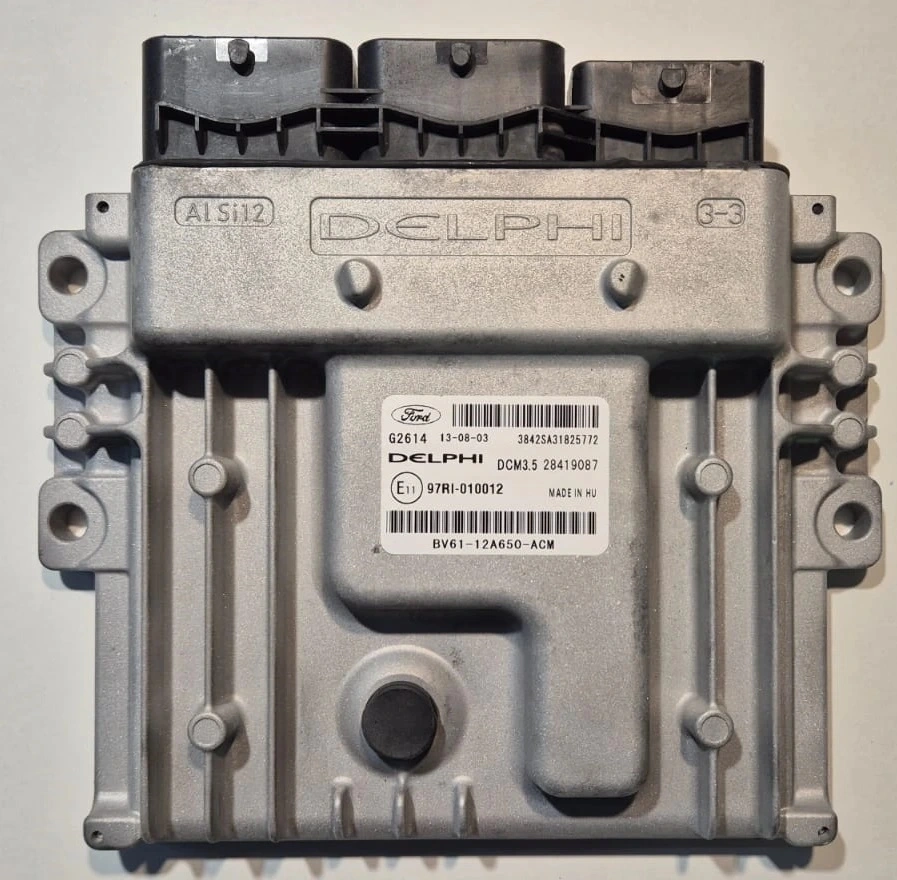
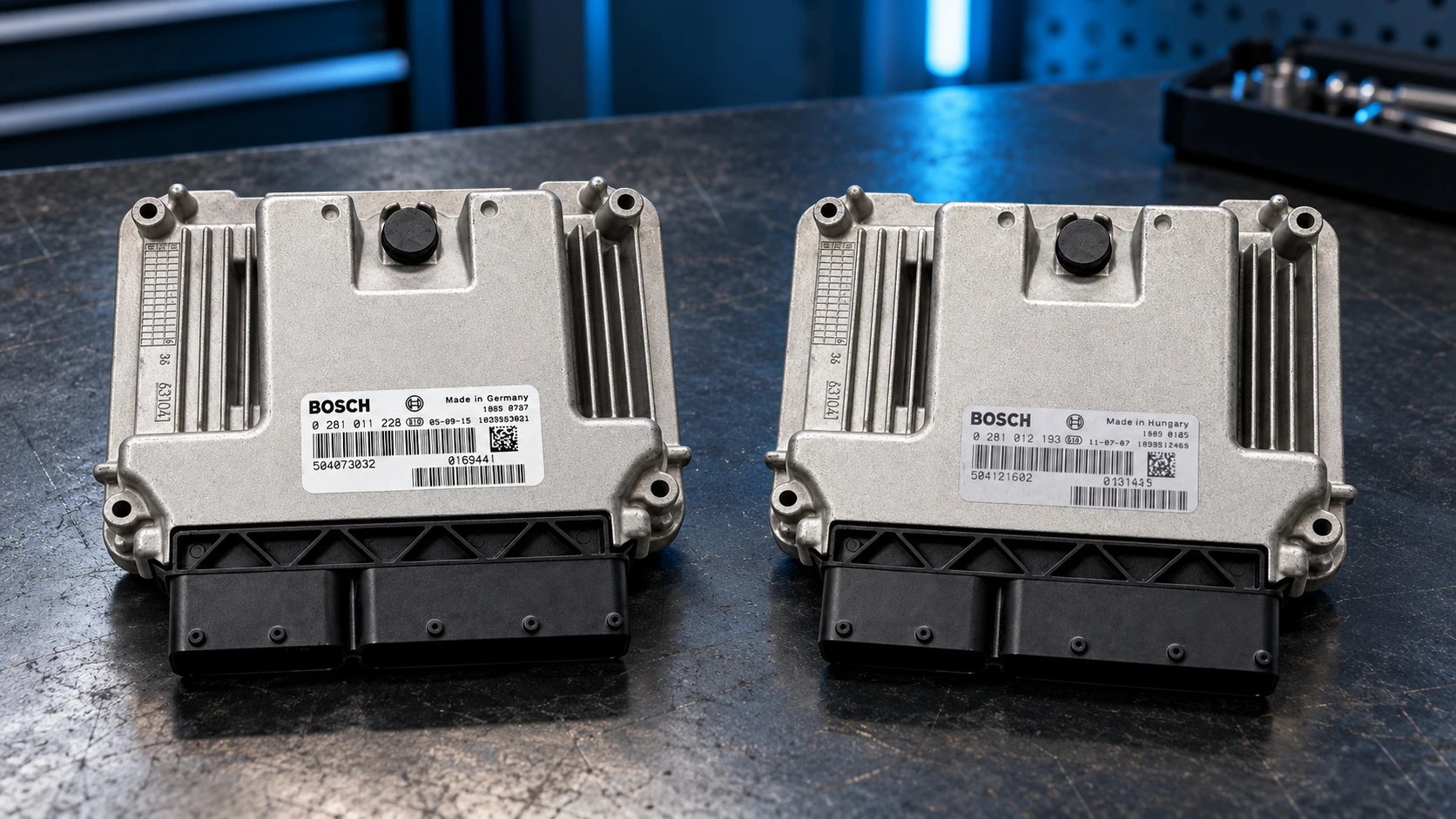
Suzuki engine control units – ECUs for petrol and diesel cars
A Suzuki engine control unit, also called the ECU or engine computer, manages the key functions of the engine. Among other things, it controls fuel injection, ignition, the throttle, the turbocharger, the EGR system and the DPF filter, and communicates with the immobiliser and the other modules of the vehicle.
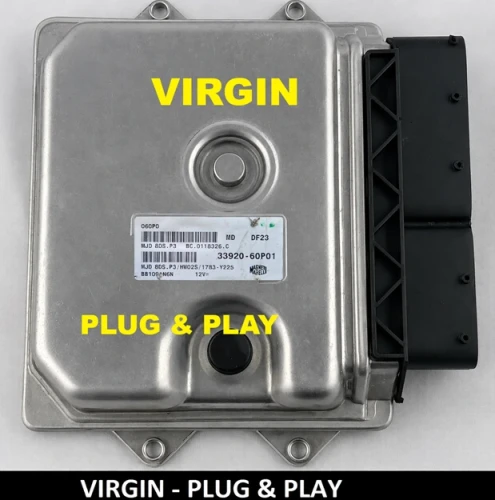
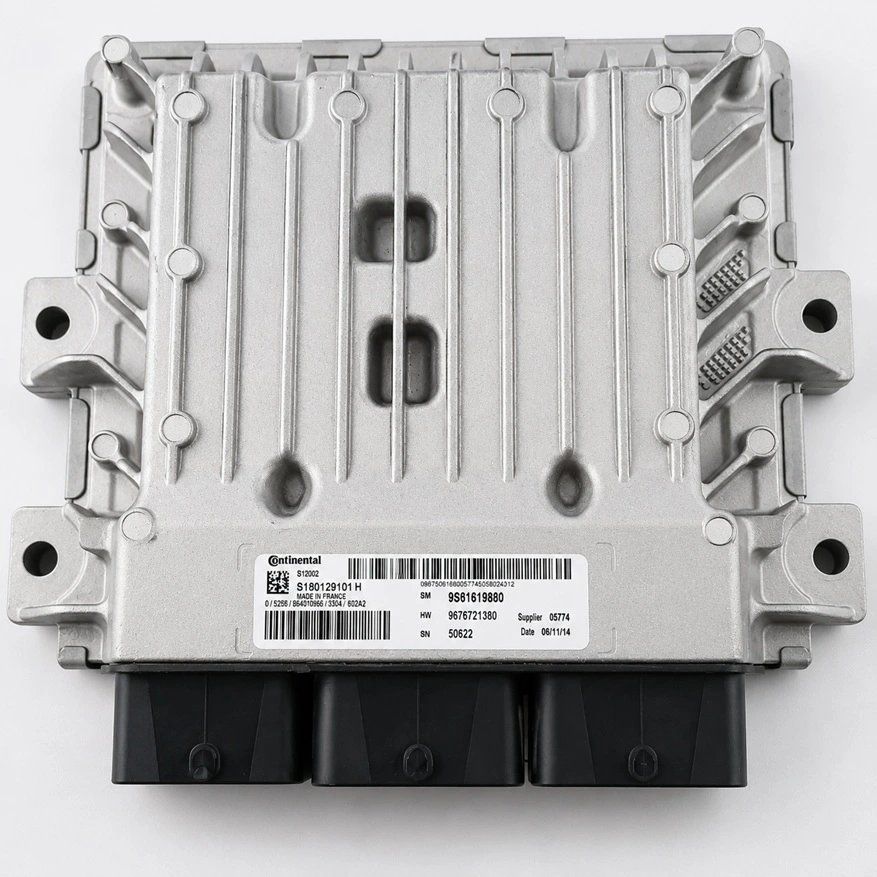
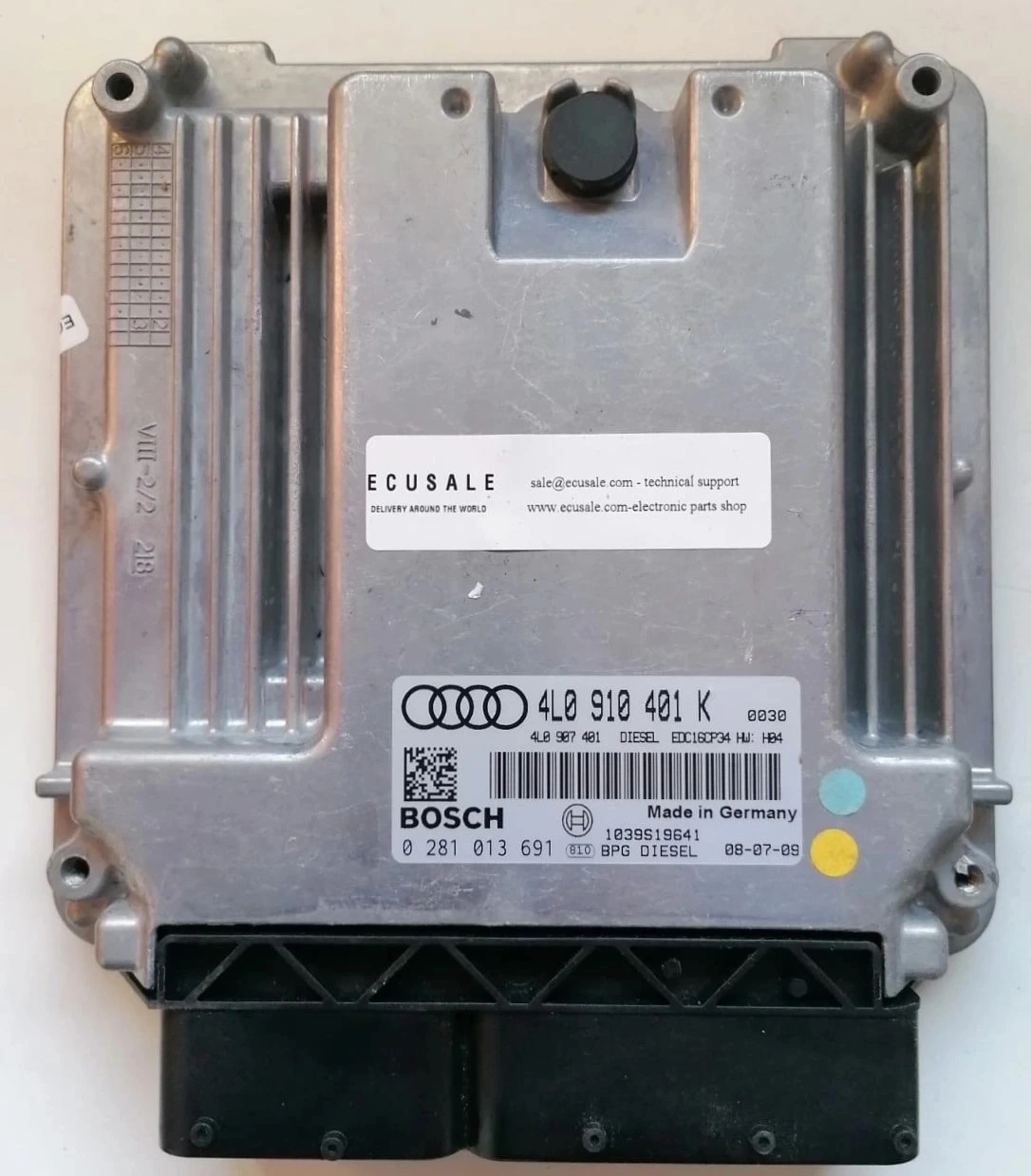
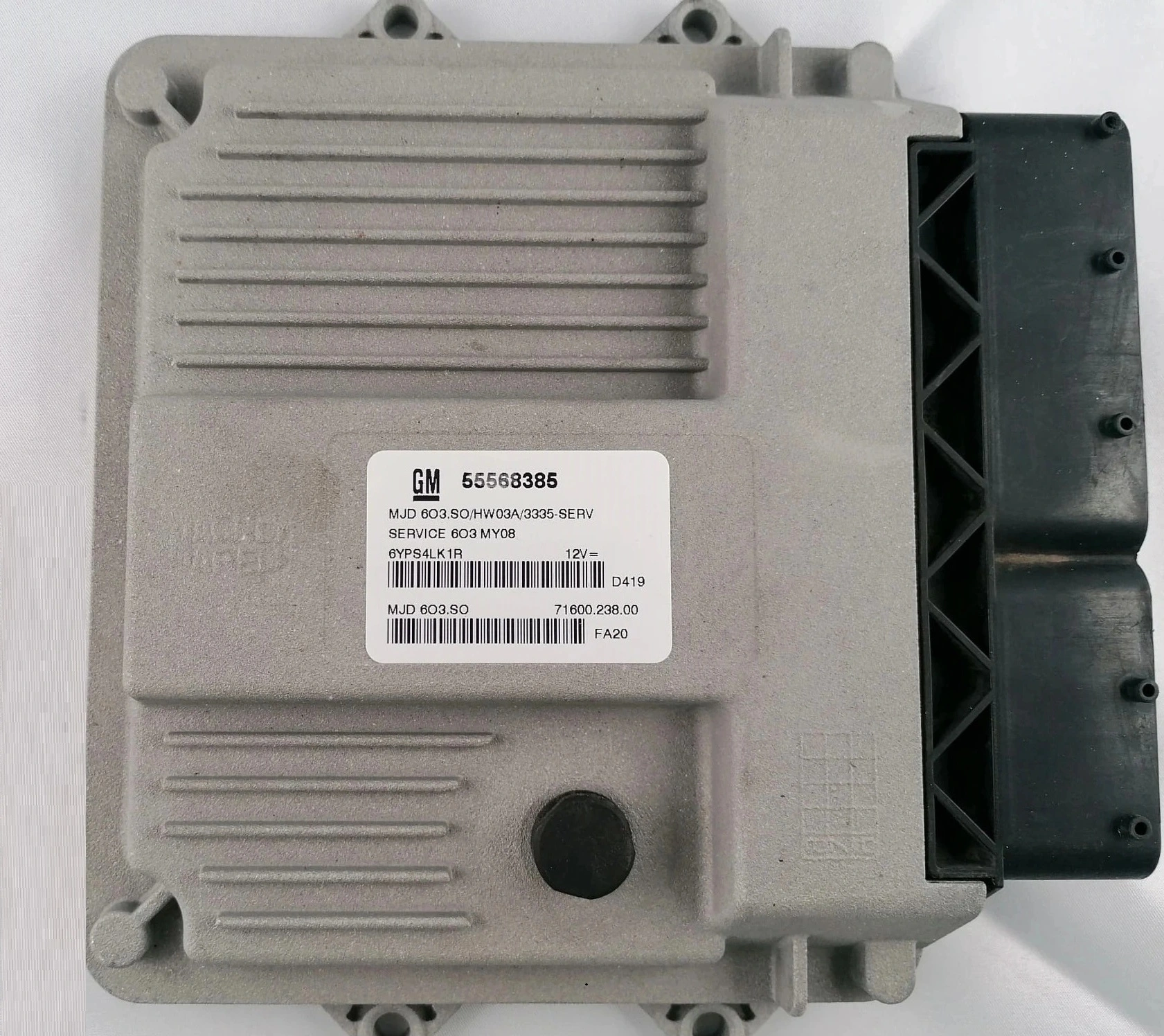
ECUSale offers original, used and tested engine control units for selected versions of the Suzuki Swift, SX4, SX4 S-Cross and Grand Vitara. Modules for petrol and diesel engines are available, including Bosch units prepared as VIRGIN, IMMO OFF or for further programming.
Not every module is ready to work just by plugging it in. The required fitting method depends on the control unit family, the immobiliser system, the software version and the preparation variant stated on the product page.
How to choose the right Suzuki engine control unit?
When choosing an ECU, the most important thing is all the markings on the label of the original control unit. The model, year of manufacture and engine size are not enough, because the same car version may have used different modules and software variants.
Before buying, compare:
- the full Suzuki OEM number,
- the control unit manufacturer number, for example Bosch,
- all the trailing letter and number markings,
- the ECU family and hardware version,
- the engine code, capacity and power,
- the car's year of manufacture,
- the gearbox type,
- the module preparation method stated in the offer.
The VIN can help to check the car further, but it should not replace comparing the numbers on the label. A similar-looking housing or the same connectors do not confirm compatibility.
Need help choosing? Send a clear photo of the old ECU label, the VIN and details of the engine and gearbox through the ECUSale contact form. We will check the markings and the available preparation method for the control unit.
Available Suzuki engine control units
Below are the control units currently available in this category. Before ordering, check the product description and compare all the numbers with the original module.
Suzuki Grand Vitara 1.9 DDiS VIRGIN control units
The Suzuki Grand Vitara 1.9 DDiS uses, among others, Bosch EDC16 control units with the OEM number 8200518648. The range includes different Bosch number variants, so compare the complete markings with the original ECU.
Control units offered as VIRGIN are prepared for reassignment to a car. After fitting, they need the appropriate adaptation procedure, which includes synchronisation with the immobiliser and writing the required vehicle configuration.
The OEM number 8200518648 can appear together with different Bosch numbers. A match on one marking should not be taken as automatic confirmation that every variant can be used.
IMMO OFF control units for Suzuki Swift and SX4
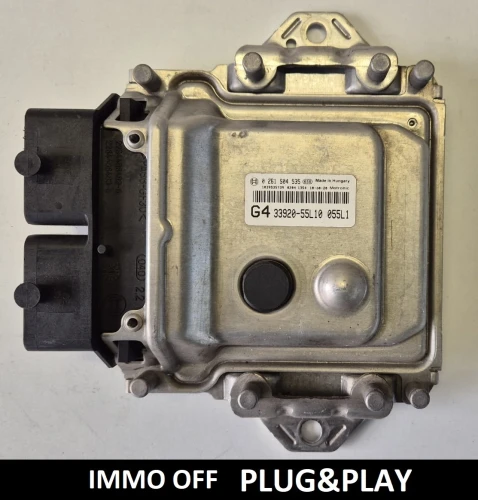
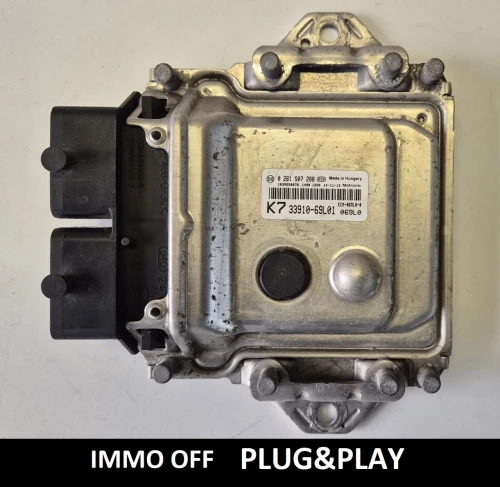
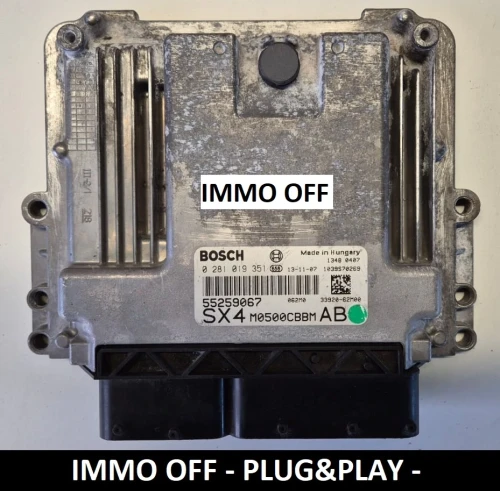
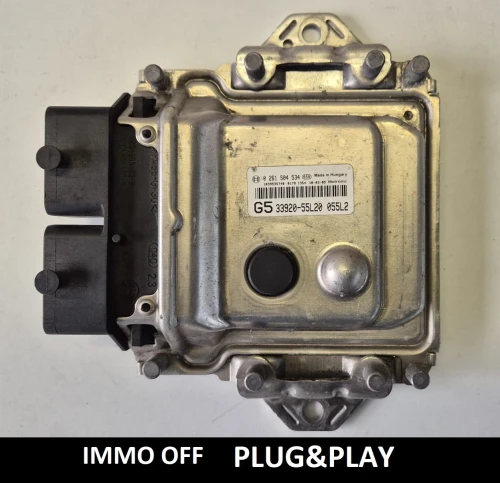
Selected Suzuki Swift, SX4 and SX4 S-Cross control units are available as IMMO OFF. This means the immobiliser function has been suitably modified in the specific ECU.
The IMMO OFF version does not automatically mean compatibility with every car fitted with the same engine. The part numbers, hardware version, software and module configuration must still match.
After fitting an IMMO OFF control unit, an immobiliser-related fault or a security system warning light may remain in the vehicle memory. Details of how the specific module behaves are in its description.
VIRGIN, IMMO OFF, cloning and Plug & Play
- VIRGIN – a control unit cleared of the previous car's data and prepared for adaptation in another vehicle.
- IMMO OFF – a suitably modified control unit with the immobiliser function disabled, available for selected platforms.
- Cloning – transferring the complete data from the old ECU to a compatible replacement module.
- Plug & Play – a control unit prepared individually for a specific car, as stated on the product page.
- Ready for programming – a tested module that needs a specific diagnostic procedure after fitting.
These terms should not be used interchangeably. For example, a VIRGIN control unit usually needs programming, while an IMMO OFF unit may allow the engine to start without standard immobiliser synchronisation, but it still has to be hardware- and software-compatible.
Does every Suzuki control unit need programming?
No single rule applies to all Suzuki models and years. The requirements depend on the specific ECU, the immobiliser system and how the module has been prepared.
After replacement it may be necessary to:
- program the control unit in the vehicle,
- adapt or synchronise the immobiliser,
- write the VIN,
- code the equipment configuration,
- clone the data from the old module,
- carry out learning or initialisation procedures.
Before buying, make sure the workshop has a device that supports the required procedures for the specific Suzuki model.
Cloning a Suzuki engine control unit
In selected cases, data can be transferred from the old control unit to a compatible replacement ECU. This keeps, among other things, the immobiliser data and the engine configuration.
A correct clone requires:
- a compatible replacement control unit,
- a complete and correct data read,
- working memory in the old ECU,
- matching hardware versions of both modules.
If the old ECU does not communicate in the standard way, in some cases the data can be read directly on the bench or in a suitable service mode. Whether the service is possible requires an individual assessment of the control unit.
Most common symptoms of a faulty Suzuki ECU
- the engine cannot be started,
- intermittent starting problems,
- the car cuts out while driving,
- no diagnostic communication with the ECU,
- limp mode and reduced power,
- injection or ignition system faults,
- uneven engine running,
- CAN communication faults,
- immobiliser faults or no start authorisation,
- numerous sensor or actuator faults.
These symptoms do not automatically mean the ECU is damaged. Similar problems can be caused by a faulty power supply, grounds, fuses, relays, wiring, sensors, ignition coils, injectors or the fuel system.
Most common causes of Suzuki control unit failure
An ECU can be damaged by moisture getting in, corrosion of the electronics, a short circuit in the wiring, incorrect voltage, reversed power connection or the failure of an actuator controlled by the module.
Before fitting a replacement control unit, the cause of the original failure must be found and eliminated. A remaining short circuit or damaged wiring component can damage a working ECU again.
What to check before replacing a Suzuki control unit?
- the battery condition and voltage,
- the main power supplies and ECU ground points,
- fuses and relays,
- connectors and the wiring harness,
- communication on the CAN network,
- the crankshaft and camshaft sensors,
- the injection or ignition system,
- the condition of the key and the immobiliser system,
- the presence of moisture, corrosion and signs of short circuits.
Bosch control units for Suzuki cars
All control units currently available in this category were made by Bosch. When choosing, compare both the Bosch number and the Suzuki OEM number or the number used by the engine manufacturer.
See also the available Bosch control units and electronic modules and the full category of ECU engine control units.
How do we test Suzuki engine control units?
The modules we offer are checked before sale. The checks may include diagnostic communication, power supply, memory, the CAN network and the main electronic circuits.
Information on the product condition, preparation variant, warranty and required programming is on the page of each control unit.
Warranty, shipping and technical support
The Suzuki engine control units we offer are covered by warranty as stated in each offer. Before ordering, check the preparation variant and the fitting requirements.
See the information on delivery times and costs and the available payment methods.
FAQ – Suzuki engine control units
How do I choose the right Suzuki engine control unit?
Compare the full Suzuki OEM number, the ECU manufacturer number, the hardware version, the engine code and all additional markings on the label. The VIN is helpful, but it does not replace matching part numbers.
Does every Suzuki control unit need programming?
No. The requirements depend on the platform and how the module has been prepared. A control unit may need programming, immobiliser adaptation or cloning, or it may be available as IMMO OFF.
What does a Suzuki VIRGIN control unit mean?
It is a module cleared of the previous car's data and prepared for new adaptation. After fitting, it usually needs synchronisation with the immobiliser and writing of the correct configuration.
Does an IMMO OFF control unit work after plugging it in?
It depends on the specific ECU and vehicle. The part numbers and software version must still match. Also check the information about any immobiliser faults or warning lights.
Can a Suzuki engine control unit be cloned?
In many cases yes, if the data from the old module can be read correctly and a compatible replacement control unit is available. Whether a clone can be made depends on the type and condition of the ECU.
Is the number 8200518648 enough to choose a Grand Vitara control unit?
Not always. The number 8200518648 appears with different Bosch numbers. Before buying, compare all the markings on the label of the original module.
Does a starting failure always mean ECU damage?
No. A no-start can be caused by problems with the power supply, wiring, sensors, fuel system, ignition or immobiliser. Before replacing the control unit, the vehicle should be fully diagnosed.