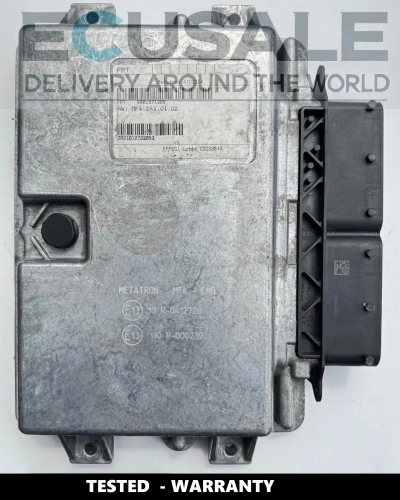
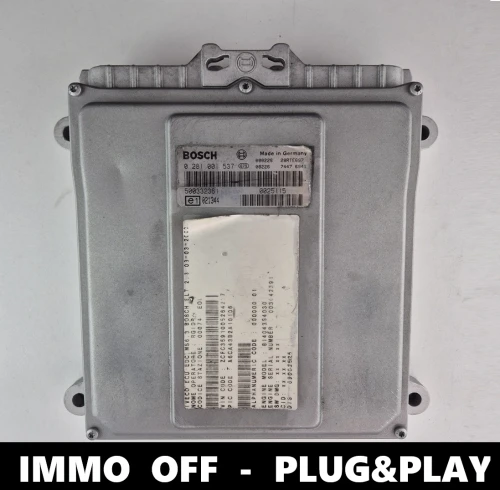
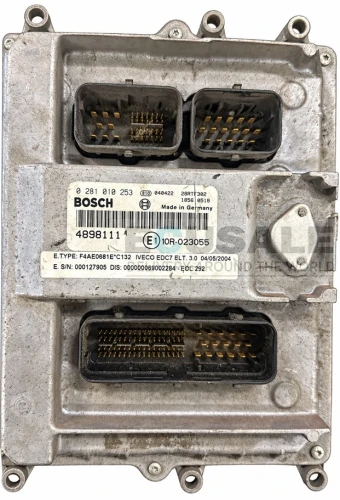
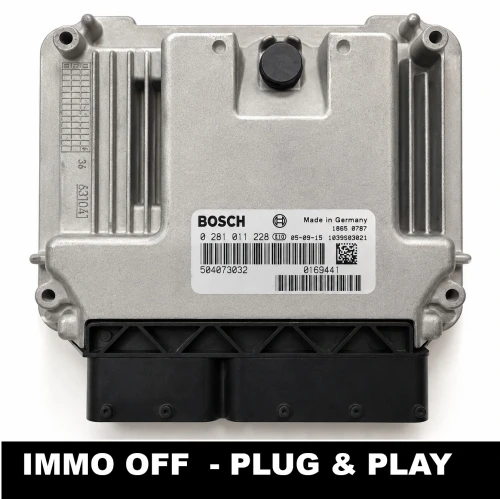
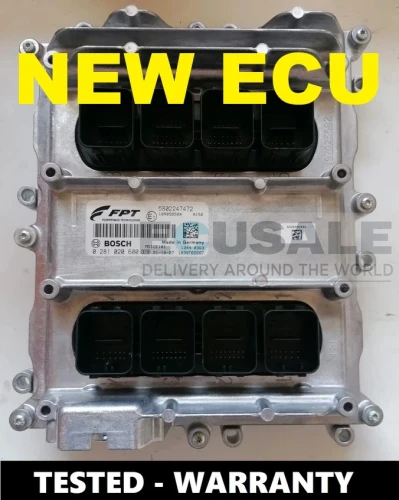
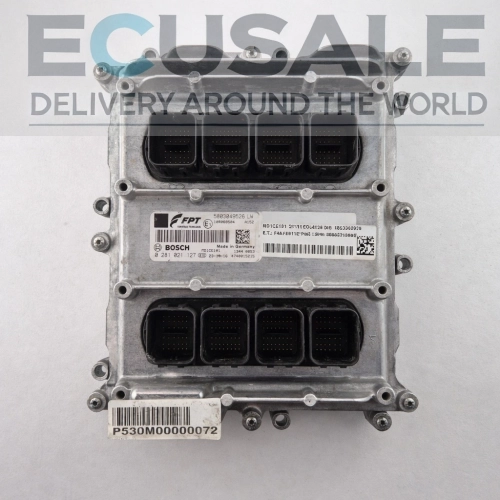
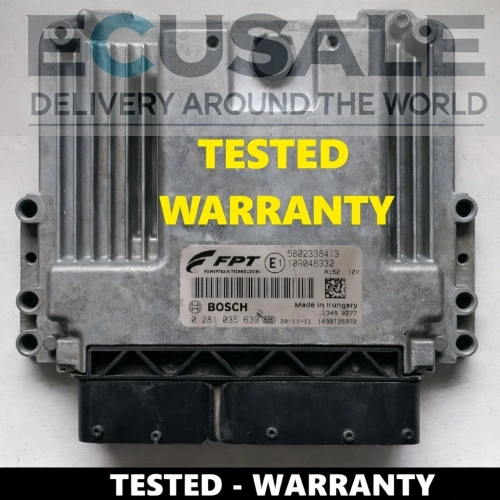
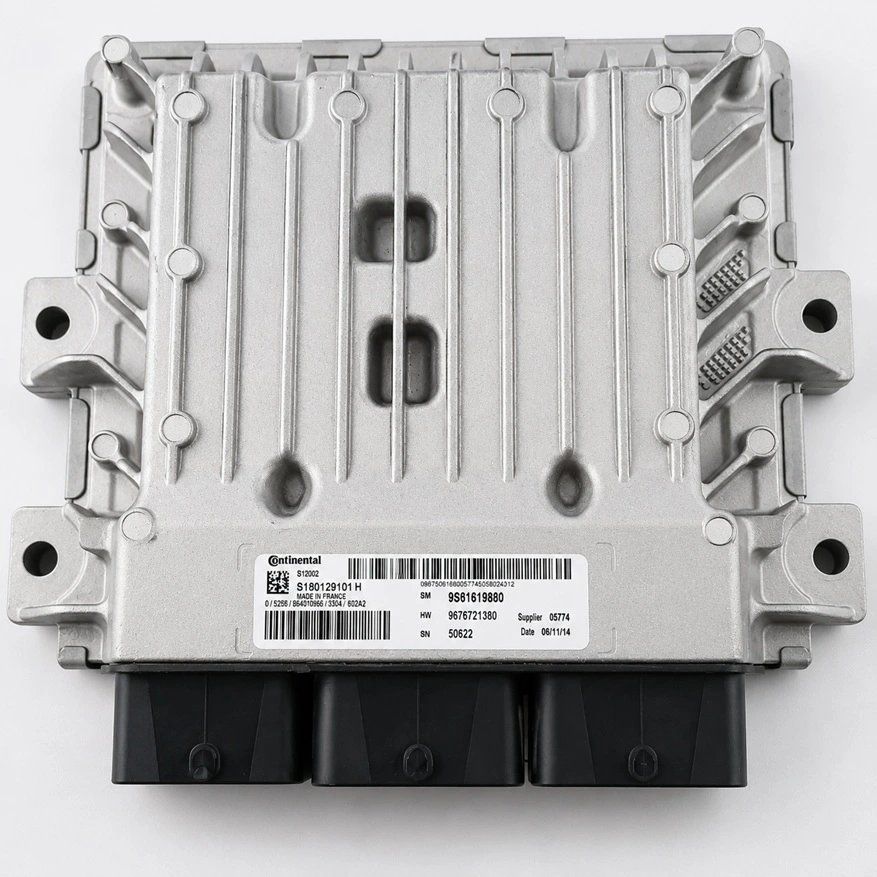
IVECO engine control units – ECUs for vans and trucks
An IVECO engine control unit, also called an ECU or engine computer, manages the key functions of the powertrain. Among other things, it controls fuel injection, boost pressure, the Common Rail system, the EGR valve, the DPF filter and the SCR system, and it communicates with the other modules in the vehicle.
The ECUSale range includes control units for IVECO vans and trucks such as the Daily, Eurocargo, Stralis, S-Way, Stralis Hi-Way, Hi-Road and Hi-Street. Bosch and FPT modules are available for various generations of HPI, HPT and Cursor engines.
Depending on the product, the ECU may be prepared as IMMO OFF Plug & Play, supplied as a new blank module that needs programming, or intended for cloning the data from the original ECU. Always check the installation method on the page of the specific product.
How to choose the right IVECO engine control unit
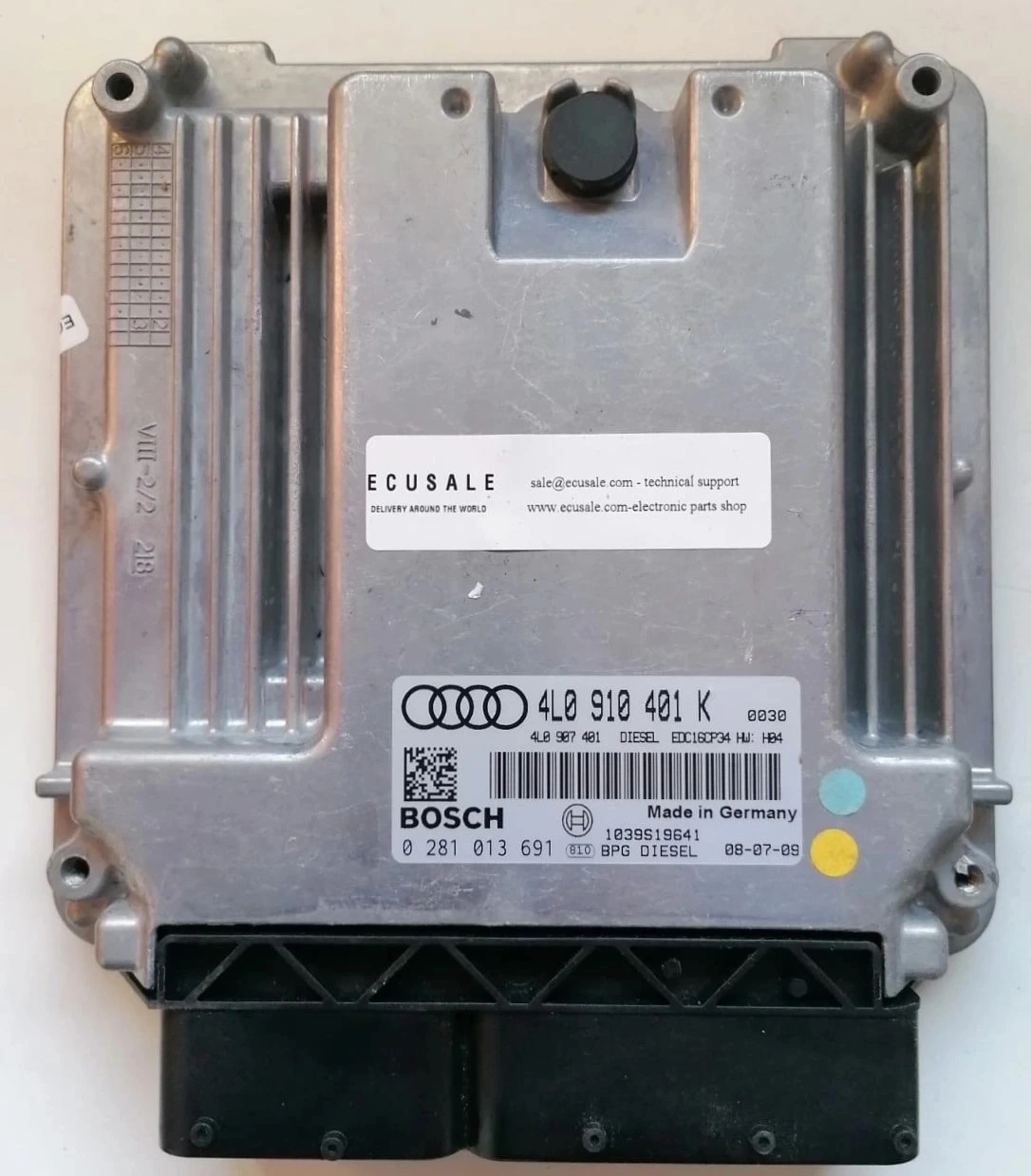
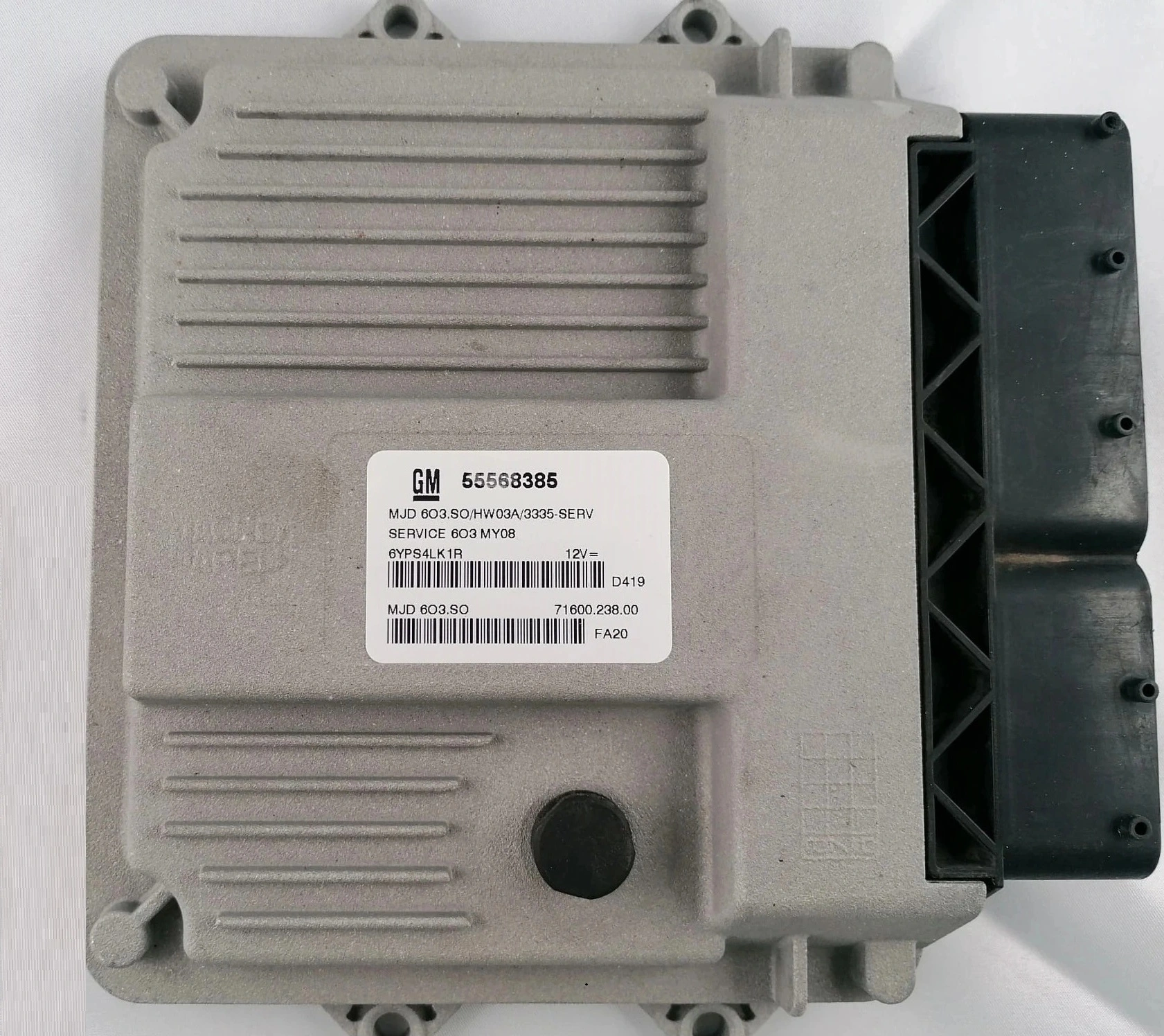
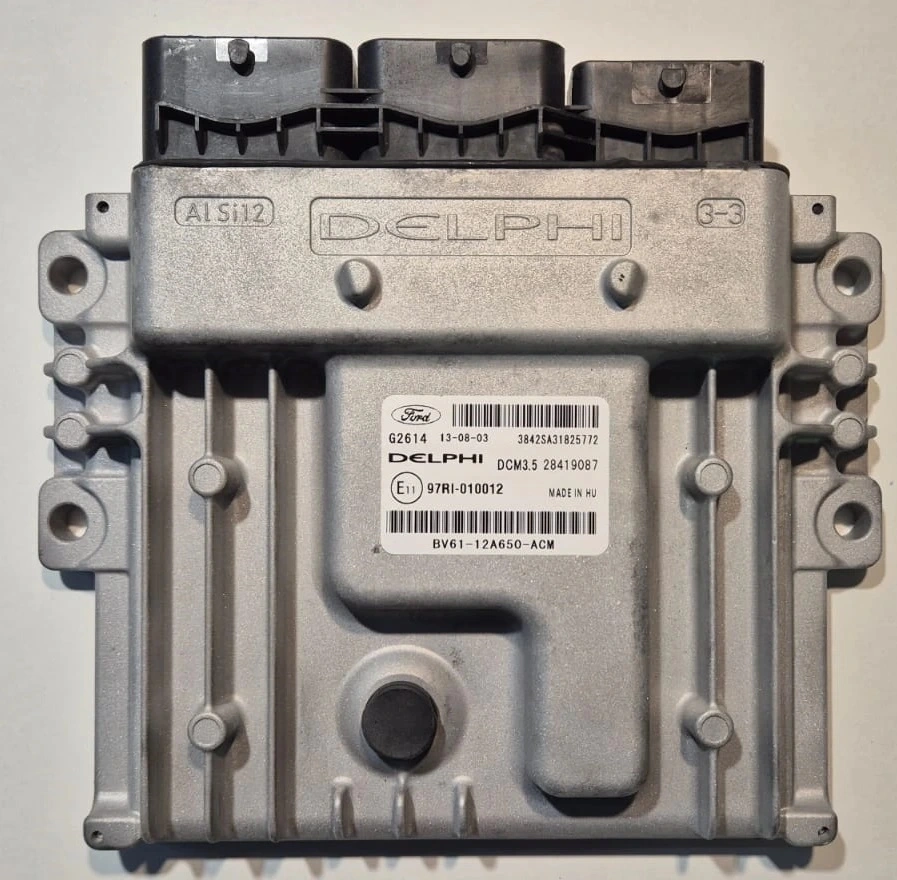
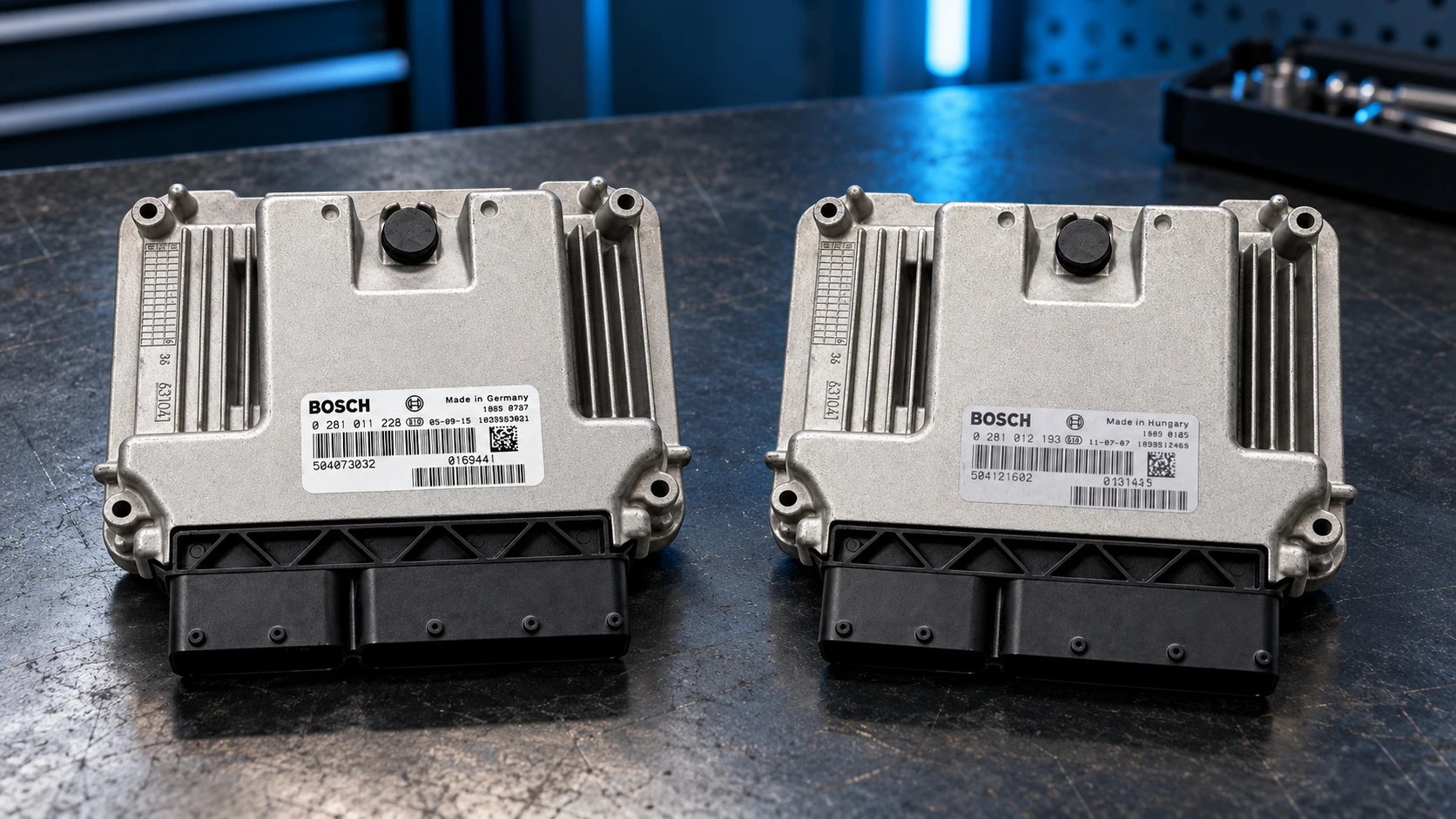
Correct selection is based on the complete numbers on the label of the original ECU. The vehicle model, engine size or year of manufacture alone are not enough, because similar IVECO versions may have used different ECU generations and software variants.
Before buying, compare:
- the full IVECO OEM number,
- the ECU manufacturer number, for example Bosch,
- the ECU family and hardware version,
- the engine type and code,
- the emission standard,
- the type of gearbox,
- the year of manufacture and vehicle configuration,
- the way the module has been prepared.
The VIN helps to confirm the vehicle version, but it should not replace the numbers on the label. If the numbers differ by even one character, compatibility must be confirmed before ordering.
Not sure which ECU to choose? Send a clear photo of the label on your old ECU, the VIN and details of the model, engine and gearbox via the ECUSale contact form. We will check that the numbers match and which preparation variant is right.
IVECO IMMO OFF Plug & Play control units
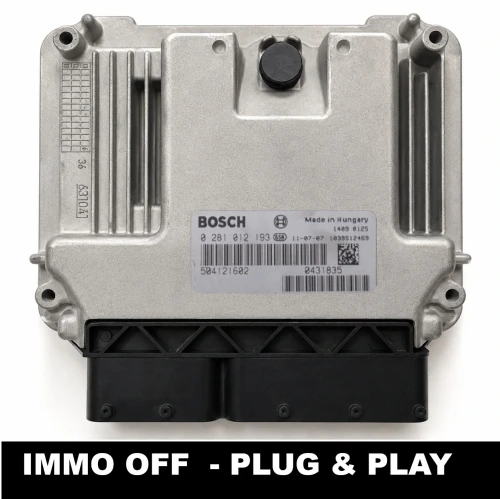
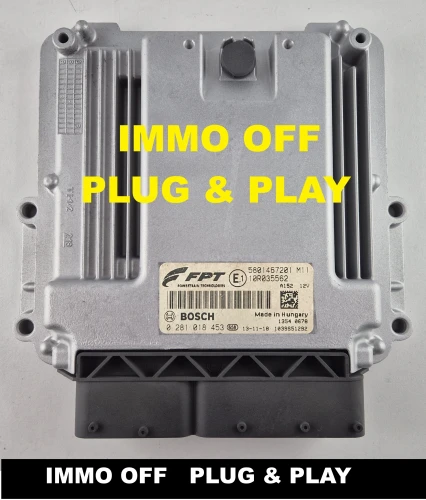
Selected IVECO Daily ECUs are available in an IMMO OFF Plug & Play version. These modules are prepared for fitting without the standard procedure of pairing the ECU with the immobiliser.
Currently available, among others:
Despite the IMMO OFF preparation, the part numbers must match the original ECU. The Plug & Play label does not mean that one module fits every IVECO Daily version.
After fitting, a fault related to the immobiliser or security system may remain stored in the vehicle. It does not have to prevent the engine from running, but the exact behaviour depends on the ECU type and vehicle configuration.
New blank IVECO control units that need programming
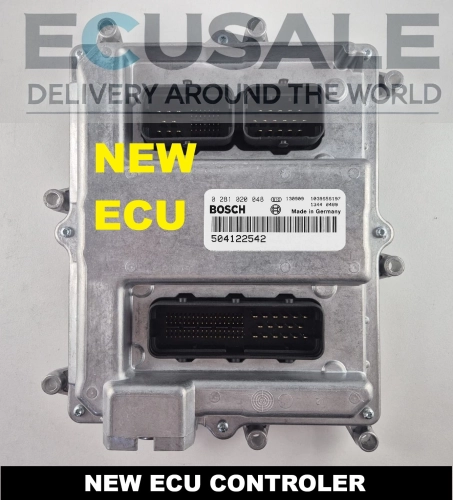
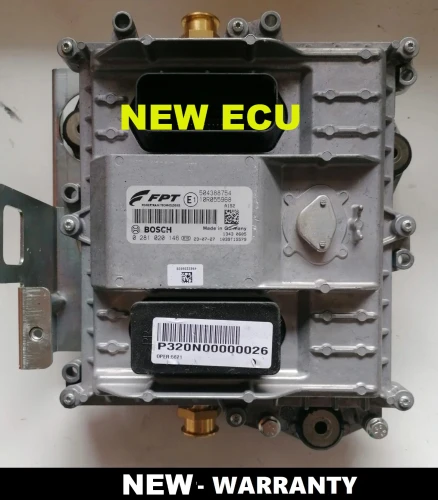
The range also includes new, blank IVECO engine control units. They do not contain the complete configuration of a specific vehicle and therefore need professional programming after fitting.
This group includes, among others:
After installing such a module, it may be necessary to:
- write the VIN,
- load the correct software version,
- write the engine and equipment configuration,
- match it to the other modules in the vehicle,
- carry out initialisation and adaptation procedures,
- clear faults and check CAN communication.
A new ECU is not automatically a Plug & Play module. Before buying, make sure the workshop has the equipment and software needed to program the specific IVECO ECU.
IMMO OFF, blank ECU, VIRGIN and cloning – the differences
- IMMO OFF Plug & Play – an ECU with suitably modified immobiliser handling, prepared for fitting as described on the product page.
- New blank ECU – a module without the full vehicle configuration that needs programming after fitting.
- VIRGIN – an ECU wiped of the previous vehicle's data and prepared for re-adaptation.
- Cloning – transferring the data from the original ECU to a compatible replacement module.
- Used ECU – a technically checked module that may still contain the previous vehicle's configuration.
These terms should not be used interchangeably. A VIRGIN ECU and a new blank ECU usually need programming, whereas a correctly prepared clone or an IMMO OFF Plug & Play module may be ready to fit as stated in the listing.
Programming an IVECO engine control unit
IVECO ECUs are programmed and configured with specialist tools that support vans and trucks. Depending on the model and year, the factory diagnostic system IVECO EASY or another compatible workshop device may be used, among others.
ECU programming should be done with a stable supply voltage. An interrupted write caused by a voltage drop or loss of communication may damage the ECU software.
Before ordering a new blank module, the workshop should confirm that it is able to:
- program the specific ECU number,
- load the correct software,
- write the VIN,
- configure equipment and engine parameters,
- carry out the required security procedures.
Cloning an IVECO ECU
In selected cases, the data from the old ECU can be cloned to a compatible replacement unit. A correct clone may contain the VIN, configuration, immobiliser data and the appropriate engine software.
Cloning requires:
- a compatible replacement ECU,
- a complete memory read of the old ECU,
- intact FLASH, EEPROM and processor data,
- a matching hardware version of the modules.
If the old ECU does not communicate via the diagnostic connector, the data can sometimes be read directly on the bench or in boot mode. Whether the service is possible depends on the type and extent of the ECU damage.
IVECO Daily control units
The IVECO Daily comes with many ECU variants for the 2.3, 2.8 and 3.0 engines. Depending on the year and vehicle version, different generations of Bosch ECUs were used, including EDC15, EDC16 and EDC17.
When choosing a Daily ECU, the full Bosch and IVECO numbers, the engine type, the emission standard and the way the module has been prepared are especially important. ECUs with a similar housing may differ in internal hardware and software.
IVECO Stralis and Eurocargo control units
The Stralis and Eurocargo use control units designed for heavy commercial vehicles and Cursor and Tector engines. New modules must be programmed correctly to the configuration of the specific vehicle.
Before fitting, also check the electrical system and CAN communication. In trucks the engine ECU works with many modules, and a lack of communication with one of them may prevent the ECU from starting up or being configured correctly.
Most common symptoms of a faulty IVECO ECU
- the engine cannot be started,
- intermittent starting problems,
- the vehicle stalls while driving,
- no diagnostic communication with the ECU,
- CAN communication faults,
- limp mode and reduced power,
- injector or Common Rail faults,
- problems with the EGR, DPF or SCR system,
- immobiliser faults,
- numerous sensor and actuator faults.
These symptoms do not always mean that the ECU is faulty. Similar problems can be caused by a faulty power supply, earths, relays, the wiring harness, injectors, sensors, the fuel system or other vehicle modules.
What to check before replacing an IVECO ECU
- the condition of the batteries and the system voltage,
- the main power supplies and ECU earth points,
- fuses and relays,
- connectors and the wiring harness,
- CAN communication with the other modules,
- the injection system and actuators,
- the condition of the immobiliser system,
- signs of moisture, corrosion or short circuits.
Before connecting a replacement ECU, the original cause of the failure must be eliminated. An unresolved short circuit or a damaged actuator can damage a working ECU again.
Proven Bosch control units for IVECO
Most of the ECUs in this category were made by Bosch. When buying, compare both the ten-digit Bosch number and the IVECO OEM number.
See also the available Bosch control units and electronic modules and the full engine control units (ECU) category.
How we test IVECO engine control units
The modules we offer are checked before sale. The checks may include diagnostic communication, power supply, memory, the CAN network and the most important electronic circuits.
Information about the product's condition, preparation variant, programming and warranty is given on the page of the specific ECU.
Warranty, shipping and technical support
The IVECO engine control units we offer are covered by a warranty as stated on the product page. Before ordering, check whether the selected module is prepared as IMMO OFF Plug & Play or needs programming.
See the information on delivery times and costs and the available payment methods.
FAQ – IVECO engine control units
How do I choose an IVECO engine control unit?
Compare the full Bosch number, the IVECO OEM number, the hardware version, the engine type, the emission standard and the vehicle configuration. The VIN is helpful, but it does not replace the markings on the ECU label.
Is an IVECO IMMO OFF control unit Plug & Play?
Selected products are prepared as IMMO OFF Plug & Play and do not need the standard pairing with the immobiliser. Always confirm this in the description of the specific product.
Does a new IVECO ECU need programming?
Yes. A new blank ECU does not contain the full configuration of a specific vehicle. After fitting, the correct software must be loaded, the vehicle data written and the required configuration procedures carried out.
What are IVECO control units programmed with?
Depending on the model, the factory IVECO EASY system or other devices that support programming the specific ECU version are used, among others.
Can an IVECO ECU be cloned?
In many cases yes, provided the data from the old ECU can be read correctly and a compatible replacement module is available. Whether a clone can be made depends on the platform and the condition of the electronics.
Is ECU 0281020048 or 0281020146 ready to drive once connected?
No. These are new, blank ECUs that need programming and configuration after being fitted to the vehicle.
Do the Bosch and IVECO numbers have to match?
Yes. The safest way is to choose the ECU based on a match of both numbers and of the hardware and software version. A match of only one marking may not be enough.