Most Common Symptoms of a Faulty Engine Control Unit in Real-World Diagnostics
In day-to-day automotive electronics work, one thing becomes obvious very quickly – the symptoms of a faulty engine control unit tend to repeat across many different makes and models. Whether it is BMW, Opel, Fiat, Peugeot, Citroën, Volkswagen, Ford, Mercedes or Renault, the problems can look very similar. That is exactly what makes accurate diagnosis more difficult.
The biggest challenge is that many symptoms that appear to point to ECU failure can actually come from a completely different source. Sometimes the real cause is wiring, sometimes poor power supply or ground, sometimes a faulty sensor, injector, immobiliser issue or disrupted CAN communication. That is why fault code reading alone is very often not enough to say with confidence: yes, this is definitely the engine control unit.
From practical experience, one thing is clear: a faulty engine control unit rarely gives one simple, obvious symptom. Much more often the faults are irregular and inconsistent, affected by temperature, moisture, engine load or even how long the vehicle has been parked. One day the car starts normally, the next day there is no communication with the ECU, and on the third day everything suddenly works again for a while. This kind of behavior is very often the first sign that the issue may be inside the engine electronics.
The most common symptoms of ECU failure include:
- no response when attempting to start – the engine cranks but does not fire,
- no communication with the engine control unit via OBD diagnostics,
- no injector control or no injection pulse,
- no fuel delivery despite a working pump and other fuel system components,
- fault codes that appear and disappear without any clear logical pattern,
- no turbo control, resulting in no boost and significant power loss,
- limp mode and limited engine speed, for example around 2500–3000 rpm,
- irregular engine operation, stalling once warm, or failure to start after being parked,
- inability to carry out adaptation, coding or immobiliser synchronization,
- partial communication – the ECU responds to the diagnostic tool but does not control outputs correctly,
- no diagnostics despite proper power supply and intact fuses,
- faults from several systems at once that do not appear to be related at first glance.
In practice, it often looks like this: the car owner or workshop replaces half the vehicle – sensors, wiring, valves, injectors, airflow meter, battery, relays, sometimes even the turbocharger. And the problem is still there. Only later does it turn out that the real cause was the engine control unit. This is especially common when the ECU is unstable or only partially failing. For example, the module may communicate with the diagnostic tool but not control the injectors. Or the opposite – some functions still work, while others no longer do.
It is also important to stress one very important point: symptoms of a faulty engine control unit do not always mean that the control unit itself is the original cause. In many cases, the ECU is simply another victim of an earlier fault in the vehicle. It may be damaged by a wiring short, a faulty injector, moisture, poor ground or a voltage spike. That is why replacing the control unit without identifying what caused the damage in the first place is often only a temporary fix.
Can a faulty engine control unit cause a no-start condition?
Yes. The control unit manages injection, ignition, synchronization and many other key engine functions, so a failure very often prevents the vehicle from starting.
Can an engine control unit failure cause a loss of communication with the diagnostic tool?
Yes. One common symptom of ECU failure is complete or partial loss of OBD communication, even when power is present and the fuses are intact.
Can ECU failure cause loss of power and limp mode?
Yes. If the control unit does not manage the turbo, fuel pressure or other actuators correctly, the vehicle may enter limp mode and lose a noticeable amount of power.
Can the engine control unit work properly one moment and fail the next?
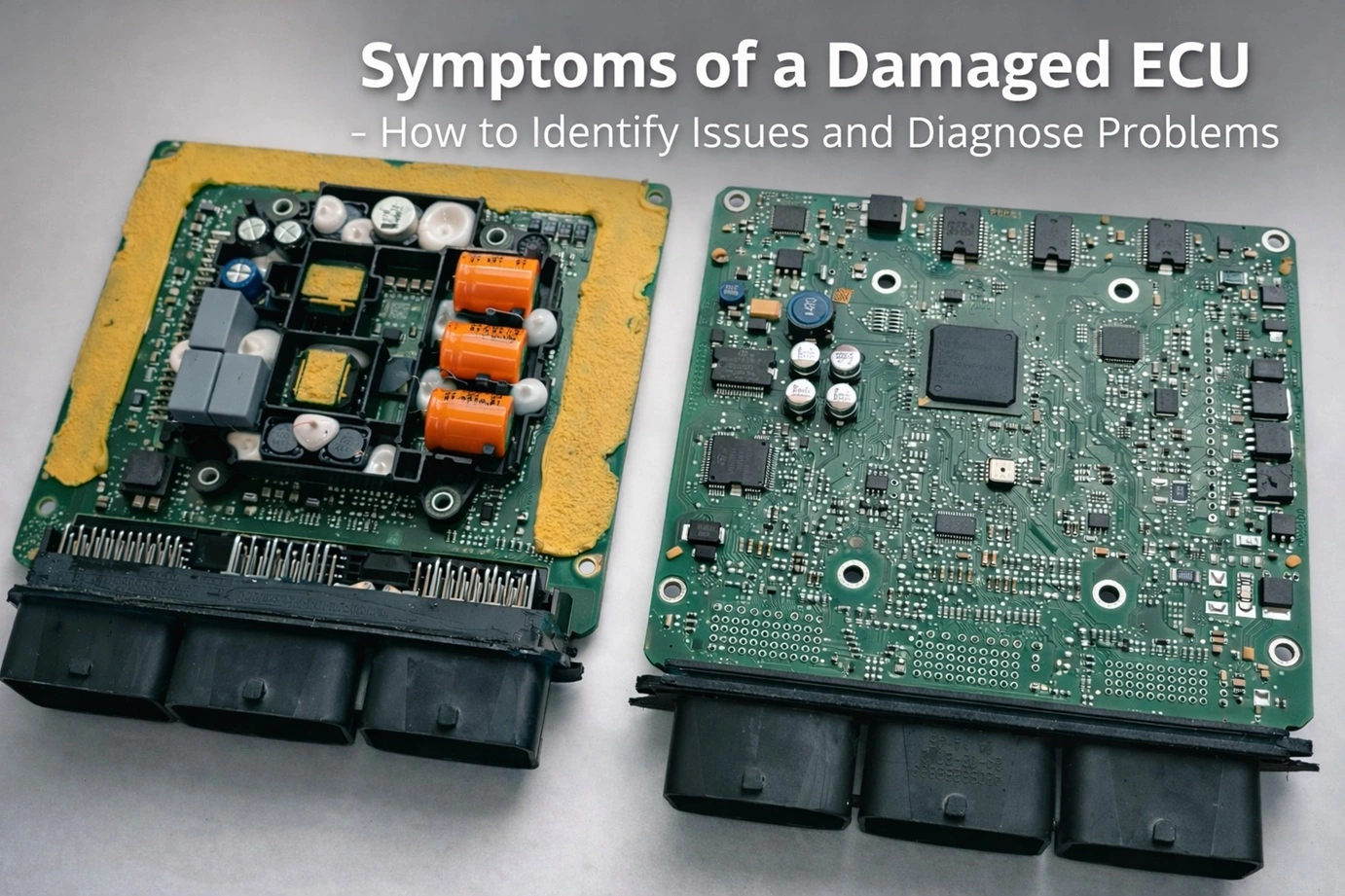
Yes. This is one of the more common signs of internal electronic damage, micro-cracks, thermal issues and corrosion on the ECU board.
Symptoms of ECU Failure Do Not Always Mean the Control Unit Is Faulty
This is one of the most important points in the entire diagnostic process. In real-world work, this is exactly where mistakes are most likely to happen. Many symptoms that get blamed on the engine control unit may actually be caused by completely different parts of the vehicle. For example, lack of power does not automatically mean ECU failure. Very often, the real cause is stuck turbo geometry, a vacuum problem, an intake leak, a clogged DPF or incorrect sensor readings.
The same applies to a no-start issue. The driver sees that the engine will not start and immediately suspects a faulty control unit. In reality, the cause may be lack of immobiliser authorization, no communication with the BCM, a broken wire, a faulty crankshaft sensor, loss of ignition-switched power or a CAN network problem. Likewise, no communication with the ECU does not always mean the module itself is burnt out. Quite often the real cause is wiring, poor ground or a short in another module that is blocking network communication.
That is why a proper diagnosis is not just about plugging in a scan tool and reading fault codes. You have to look at the bigger picture: how the vehicle behaves, when the problem occurs, whether it happens on a cold or warm engine, what the voltage, grounds and communication signals look like. Only then can you honestly assess whether the ECU is actually the issue.
The most common situations that can look like a faulty engine control unit are:
- power loss caused by turbocharger or vacuum system faults,
- limp mode triggered by a clogged DPF,
- no start caused by the immobiliser or BCM,
- random fault codes caused by weak ground connections,
- loss of communication caused by a short on the CAN network,
- lack of injector control caused by a faulty injector overloading the ECU.
That is why saying “it is definitely the ECU” very often turns out to be wrong. But at the same time, the opposite statement – “it definitely is not the ECU” – is just as often wrong. In automotive electronics, extreme assumptions usually lead in the wrong direction. What really matters is measurement, experience and logical diagnosis.
Does no communication with the ECU always mean the control unit is faulty?
No. Loss of communication may also result from power supply issues, poor ground, wiring faults or CAN network problems.
Does loss of power always mean engine control unit failure?
No. Power loss is very often caused by a mechanical or ancillary issue, for example in the turbocharger, DPF, intake system or sensors.
Can a workshop misdiagnose an ECU fault?
Yes. If the diagnosis is based only on fault code reading, without measurements and without checking the installation, the risk of a wrong assessment is very high.
Real-World Example – P157000 and “Engine Control Unit Locked”
One of the cases that regularly appears in practice is fault code P157000, often described as engine control unit locked or ECU locked. For many people, that description sounds straightforward: the control unit is faulty. In reality, things often look very different.
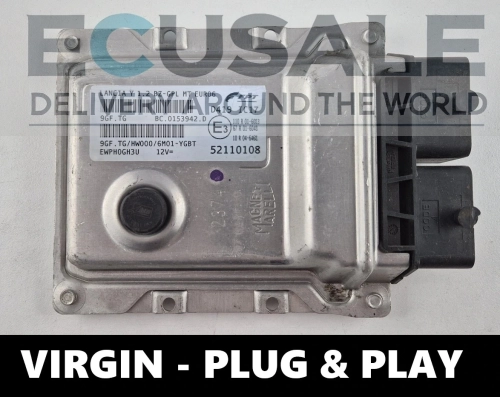
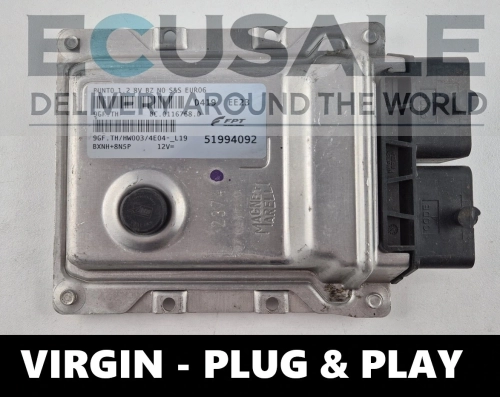
This type of case often involves a control unit prepared in VIRGIN mode. The module itself is fine, correctly prepared and ready for adaptation, but the vehicle cannot complete the procedure because there is no proper communication with the BCM or the immobiliser system. As a result, the vehicle does not start, the ECU cannot retrieve the required data, and diagnostics show the ECU as locked.
In practice, this means the problem does not necessarily lie in the control unit itself. The cause may be:
- no communication with the BCM,
- an immobiliser fault,
- a key-related issue,
- disrupted CAN communication,
- an earlier incorrect coding attempt,
- damaged wiring between control modules.
In these situations, there are usually two possible solutions. The first is to fix the underlying problem by restoring correct communication between modules and completing proper adaptation of the VIRGIN ECU. The second is IMMO OFF, meaning the immobiliser is disabled in the ECU. This solution often allows the vehicle to start quickly without standard immobiliser authorization, but it is important to remember that in some models immobiliser-related faults may still remain in the instrument cluster or fault memory.
This example clearly shows that when diagnosing ECU problems, looking only at the fault description is not enough. The code itself does not tell you whether the fault lies in the control unit, the BCM, communication or the vehicle configuration. That is exactly why practical experience matters more here than theory alone.
Does fault code P157000 always mean the engine control unit is faulty?
No. In many cases it points to an adaptation, immobiliser or BCM communication issue rather than physical ECU damage.
Can a VIRGIN ECU fail to adapt even if it is fully functional?
Yes. If the vehicle has an immobiliser problem, key issue or faults in the modules responsible for authorization, the ECU may fail to complete the adaptation process.
Does IMMO OFF solve the problem of a locked ECU?
Yes, in many cases it allows the vehicle to start, but it does not always remove messages and faults stored in other modules.
Examples of Real Engine Control Unit Failures
Based on real service experience, it is possible to point to several ECU types and vehicle models where problems occur particularly often. This is not simply due to vehicle age. The ECU mounting location, exposure to moisture, road salt, vibration, temperature and the condition of the vehicle’s electrical system all play a major role.
Opel Corsa D 1.3 CDTI – ECU Mounted Under the Cowl Panel
In the Opel Corsa D 1.3 CDTI, the control unit is mounted in an area especially exposed to moisture and water ingress. The cowl area can develop blocked drains, accumulated dirt or leaks over time. As a result, moisture affects the ECU housing for long periods and can eventually make its way inside the unit.
The result is usually internal corrosion, oxidized pins, short circuits, damaged tracks and communication problems. Typical symptoms include no start, random fault codes, no injector control, diagnostic issues or unstable engine operation. In these cases, it is very important not only to check the ECU itself, but also to eliminate the source of the water ingress. Otherwise, even a newly installed or repaired engine control unit may fail again very quickly.
If you are looking for a proven solution for this model, see our range of engine control units for Opel Corsa D 1.3 CDTI prepared in VIRGIN version and ready for installation: HW03A Collection.
Opel Astra H / Zafira B 1.7 CDTI – ECU in the Wheel Arch Area
In the Opel Astra H 1.7 CDTI and Opel Zafira B 1.7 diesel, the control unit is often located in the wheel arch area, which exposes it heavily to moisture, mud, road salt and major temperature changes. Over time this can lead to deterioration of the housing, connector condition and a higher risk of internal corrosion.
In practice, these failures show up as loss of communication with the engine control unit, intermittent fault codes, starting problems, stalling while driving or limp mode. In these models, it is also very important to inspect the wiring and ground points, because poor electrical condition can intensify the symptoms and make the diagnosis much more difficult.
SID208 – Fiat Ducato, Peugeot Boxer, Citroën Jumper
SID208 is a very common control unit used in vehicles such as the Fiat Ducato, Peugeot Boxer and Citroën Jumper. In commercial vehicles, it usually operates under demanding conditions: high mileage, strong vibration, heavy use, regular operation under load and exposure to moisture. For that reason, it is one of the ECU types where electronic failures are seen regularly.
Typical SID208 failure symptoms include no communication, no injector control, engine starting problems, no response during starting attempts and faults pointing to several apparently unrelated issues. In practice, a common cause is moisture entering the control unit or gradual internal electronic damage caused by long-term operation in harsh conditions.
See our range of SID208 control units in VIRGIN version, prepared for installation without programming: SID208 Fiat / Citroën / Peugeot.
BMW Diesel – Engine Control Unit Damage Caused by Diesel Fuel
In some BMW diesel models, there is a very characteristic issue: fuel can travel through the electrical wiring and connectors all the way to the engine control unit. For many people this sounds unusual, but in practice it is a very real scenario. In most cases it is linked to leaks in the fuel system or fuel migrating along the wiring harness.
This process does not always cause a sudden failure. More often, it develops in stages: first sporadic fault codes appear, then starting problems, then loss of communication, and eventually complete engine control unit failure with no possible diagnostic connection. In these cases, simply replacing the ECU without removing the original source of the problem will not provide a lasting solution.
If you would like to learn more, read about our repair process for the BMW 2.0 diesel engine control unit: BMW 2.0 Diesel ECU Repair.
Ford and Adaptation Problems After ECU Installation
In some Ford models, the issue is not that the engine control unit itself is faulty, but that after installation it requires correct adaptation of the vehicle security system, for example through the PATS procedure. In practice, this often looks like the customer buys a fully working module, installs it, the engine does not start, and the mechanic concludes that the ECU is defective. In reality, the real cause is failure to perform the required programming or synchronization procedure.
This is another good example showing that a no-start condition after ECU installation does not automatically mean the control unit is faulty. Sometimes the real problem is missing adaptation, lack of workshop experience or an incomplete setup procedure.
Can an engine control unit be damaged by moisture?
Yes. Moisture and water ingress are among the most common causes of internal corrosion, short circuits and damaged ECU tracks.
Does the location of the ECU in the vehicle matter?
Yes. The more exposed the control unit is to water, mud, road salt and high temperatures, the greater the risk of failure.
Is SID208 considered a failure-prone engine control unit?
Yes. It is one of the ECU types where issues related to moisture, vibration and internal electronic damage are seen regularly.
Can a BMW engine control unit be damaged by diesel fuel?
Yes. In some BMW models, fuel can migrate through the wiring harness and damage the electronics inside the control unit.
Why Does the Engine Control Unit Fail?
Contrary to what many people assume, the engine control unit very rarely fails for no reason at all. In most cases, there is a specific cause, and the ECU failure itself is simply the final result of an earlier problem in the vehicle. That is why during diagnosis it is worth asking not only “is the control unit faulty?” but also “why did it fail in the first place?”
The most common causes include:
- water ingress or long-term exposure to moisture,
- electrical short circuits,
- faulty injectors overloading the control unit,
- voltage spikes and unstable power supply,
- poor ground connections,
- corrosion of connectors and pins,
- mechanical damage to the housing or circuit board,
- high temperatures and thermal stress,
- previous incorrect repairs or unprofessional ECU opening,
- fluid leaks around the control unit,
- long-term operation with a faulty component overloading ECU outputs.
Finding the root cause is essential. If the vehicle still has a short circuit, moisture problem, electrical fault or a component overloading the ECU, then even a new or used replacement control unit may fail again after a short time. That is why professional diagnosis should include not only the ECU itself, but the entire system it works in.
This is exactly where many repairs fail. The customer buys another control unit, installs it, the vehicle works for a short time or does not work at all, and later it turns out the real cause was a wiring short, faulty injector, poor ground, corrosion in the connectors or a leak that had been gradually damaging the electronics.
So it can be said very simply: a faulty engine control unit is very often the result of a problem, not the beginning of one. If the original cause is not removed, the issue will come back.
Can a new engine control unit fail again?
Yes. If the real cause of the original failure is not removed, a new or used replacement control unit may be damaged again.
Can a faulty injector damage the engine control unit?
Yes. A short circuit or overload on the injector circuit can damage the ECU output stages.
Can poor ground connections cause symptoms similar to ECU failure?
Yes. Weak or unstable grounding very often produces symptoms that closely resemble control unit failure.
Can improper opening of the control unit damage it?
Yes. Unprofessional handling can damage the housing, circuit board, pins or ECU memory.
Step-by-Step Engine Control Unit Diagnosis
Accurate diagnosis is the foundation of a successful repair. When dealing with ECU-related issues, fault code reading alone is not enough. Very often the codes are only secondary symptoms, not direct proof that the control unit itself is faulty. That is why step-by-step ECU diagnosis should be carried out carefully, logically and in the right order.
- Check the engine control unit power supply – confirm that voltage is present on the correct pins. A good fuse alone does not guarantee that proper voltage actually reaches the ECU under load.
- Check the grounds – poor grounding very often produces symptoms similar to ECU failure. Bad ground can cause multiple fault codes, communication loss and unstable ECU operation.
- Check the CAN network – if communication between modules is disrupted, the vehicle may wrongly suggest ECU failure even though the real problem lies in the communication network.
- Read the diagnostic trouble codes – fault codes must be interpreted logically, not literally. Several seemingly unrelated faults may point to one common issue involving the ECU or its power supply.
- Test input and output signals – check whether the ECU controls injectors, turbocharger, valves and relays properly, and whether it receives correct sensor signals.
- Test the control unit on the bench – a bench test allows the ECU to be checked outside the vehicle and helps distinguish an ECU problem from a vehicle-side issue.
In practice, a bench test of the engine control unit very often saves a lot of time and money. Testing on the bench allows you to verify communication, basic module functions and ECU response, and in many cases determine whether the fault lies in the control unit or in the vehicle itself. This is especially important when symptoms are unstable and difficult to confirm inside the vehicle alone.
Without these steps, it is very easy to make a wrong diagnosis and replace perfectly good parts. This is one of the most common reasons for unnecessary costs. From a practical point of view, a correct diagnosis is often worth more than the part itself.
Will computer diagnostics always detect ECU failure?
No. In many cases the control unit does not respond at all, or it generates misleading fault codes that do not directly identify the ECU as faulty.
Can an engine control unit be tested without installing it in the vehicle?
Yes. A bench test allows the control unit to be checked outside the vehicle and is often the most reliable verification method.
Are diagnostic fault codes alone enough to confirm ECU failure?
No. Fault codes should always be considered together with power supply checks, ground measurements, communication tests and the vehicle’s real-world behavior.
Does no communication with intact fuses rule out an electrical issue?
No. The fuses may be fine, while voltage or ground still fails to reach the ECU properly under load.
Is It Always Necessary to Replace the Engine Control Unit?
Not always. In many cases, a faulty engine control unit can be repaired, reconditioned or replaced with a used unit prepared for installation. This is important because many people immediately assume the only solution is to buy a brand-new ECU from the dealer, which usually means a very high cost.
Engine control unit repair is usually the least expensive solution, and one of its main advantages is that it preserves the original module matched to the vehicle. Thanks to that, additional coding, adaptation or immobiliser synchronization is not always necessary. Of course, not every ECU can be repaired. If the electronics are severely burnt, the processor is physically damaged or corrosion is too extensive, repair may not be possible or simply not economically worthwhile.
In that situation, a used engine control unit can be a good solution, but only if it comes from a trusted source and has been properly tested. When buying a used ECU, attention should be paid not only to part number compatibility, but also to the competence of the company selling it. The fact that a control unit “has the correct number” does not automatically mean it is fully functional. Communication testing, functional testing, electronic inspection and correct preparation for installation all matter.
In a professional offer, control units should be tested not only on the bench but, where possible, also on test vehicles or under conditions as close as possible to real operating conditions. This greatly reduces the risk of buying a faulty module.
The most common solutions are:
- ECU repair – when the original control unit is suitable for restoration,
- cloning – when the data from the old control unit can be transferred 1:1 to another module,
- VIRGIN – when the control unit is prepared for automatic adaptation or coding in the vehicle,
- IMMO OFF – when the immobiliser is disabled so the vehicle can start without standard authorization.
In practice, there is no single perfect solution for every case. Everything depends on the type of damage, the vehicle condition, adaptation options and the customer’s expectations. That is why the first step should always be to confirm what is actually faulty and what the vehicle configuration looks like, and only then choose the right solution.
Is engine control unit repair effective?
Yes. In many cases ECU repair is effective, as long as the damage is not too extensive and the root cause has been eliminated.
Is ECU cloning safe?
Yes. Properly performed cloning transfers the data 1:1 from the old control unit to the replacement module.
Can a used engine control unit work just like the original one?
Yes. If it matches the part number, has been tested and prepared correctly, it can work fully and reliably.
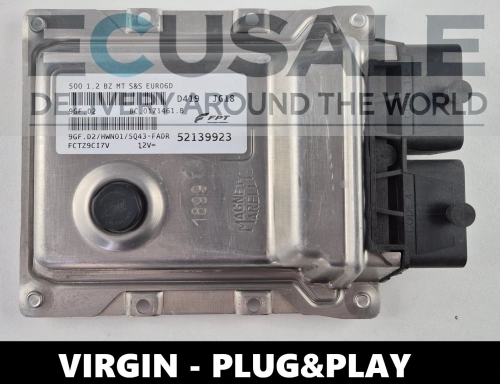
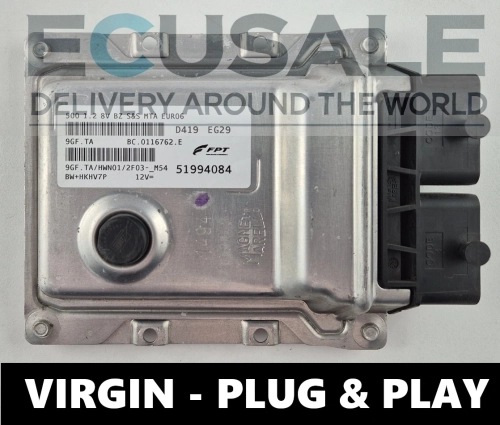
Does a VIRGIN control unit work as Plug & Play?
Yes, in many applications it can work as Plug & Play, but it always depends on the specific ECU model and the condition of the immobiliser system in the vehicle.
When Should You Choose VIRGIN and When IMMO OFF?
This is one of the most important questions when buying a Plug & Play engine control unit. Both solutions have their place, but they are not the same and should not be treated as interchangeable without understanding the difference.
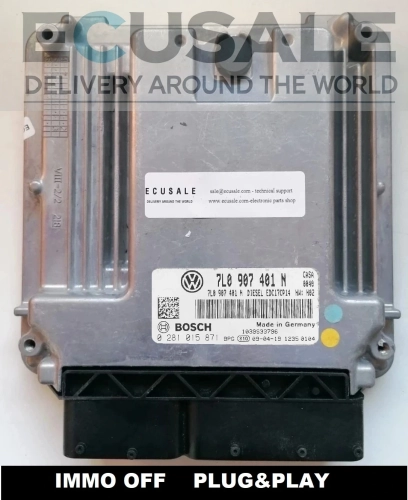
VIRGIN is usually the best and most OEM-like option. In this version, the immobiliser remains active and continues to perform its anti-theft function. However, it is important to understand that the term “VIRGIN” can describe two different states:
- a cleared, reset control unit that still requires programming or adaptation,
- a control unit prepared for automatic adaptation after installation in the vehicle.
This is a very important distinction. Many customers use the word “VIRGIN” in one general sense, while in practice the supplied control unit may require a completely different installation procedure. That is why before purchase it is worth confirming whether a given ECU will need programming, or whether it will adapt automatically after installation.
It should also be remembered that a VIRGIN unit requires the immobiliser, keys and all related modules in the vehicle – such as the BCM or comfort module, where applicable – to be functioning correctly. If the vehicle previously had immobiliser issues, damaged keys, BCM communication faults or earlier incorrect coding, the control unit may fail to adapt properly even if it is fully functional.
IMMO OFF, on the other hand, means that the immobiliser is disabled inside the engine control unit. This allows the vehicle to start without the standard immobiliser authorization, but it does have limitations. Depending on the vehicle model and ECU type, some cars will show no additional side effects after immobiliser deletion – the engine runs normally and there are no warnings on the dashboard. In newer vehicles, however, the ECU may work properly while immobiliser-related faults remain stored in the dashboard or fault memory.
In most cases, VIRGIN is the more recommended option because it preserves the original behavior of the vehicle and retains the factory anti-theft system. IMMO OFF is a very good solution where full immobiliser cooperation can no longer be restored, or when the customer needs a fast and effective way to get the vehicle running again.
In practice, this is exactly where experience matters most. One workshop may tell the customer a brand-new ECU is needed, another may say everything has to be programmed from scratch, while in reality the problem may be solved by a correctly prepared VIRGIN or IMMO OFF unit. The difference lies in whether someone understands the relationship between the ECU, immobiliser, BCM and the vehicle configuration.
Which option is better: VIRGIN or IMMO OFF?
In most cases, VIRGIN is the better option because it is closer to the original vehicle configuration and keeps the immobiliser active.
Does IMMO OFF have disadvantages?
Yes. In some vehicles, immobiliser-related faults may remain on the dashboard or in the fault memory even though the car starts and drives normally.
Does a VIRGIN ECU always work without programming?
Not always. It depends on the exact ECU model, how it was prepared and the condition of the immobiliser system in the vehicle.
Is IMMO OFF a good emergency solution?
Yes. In many cases it allows the vehicle to start quickly when a standard adaptation procedure is no longer possible.
How to Choose the Correct Engine Control Unit
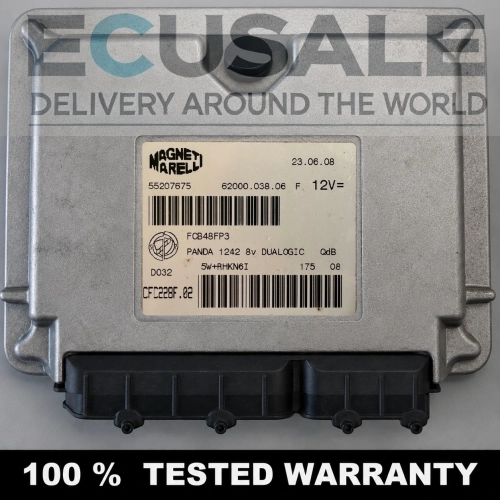
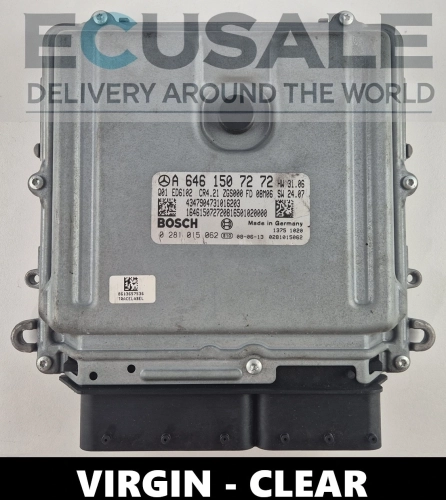
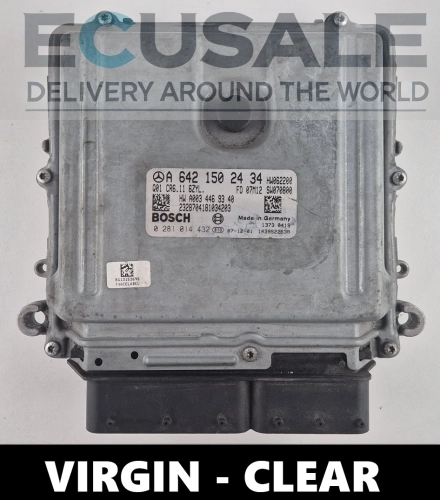
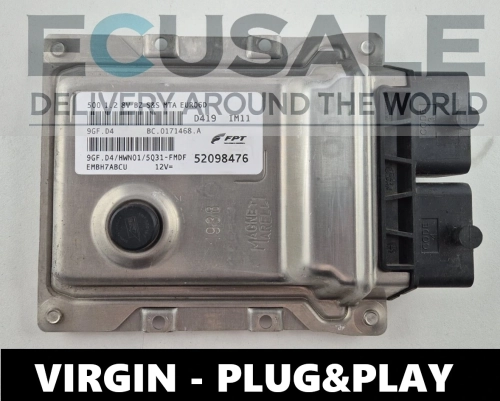
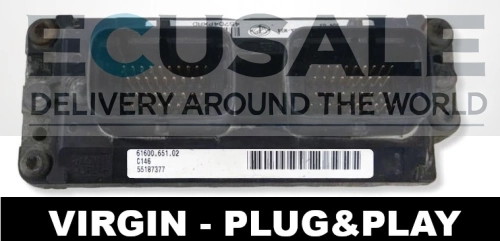
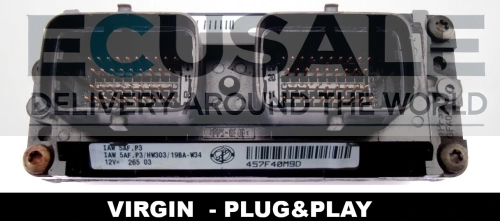
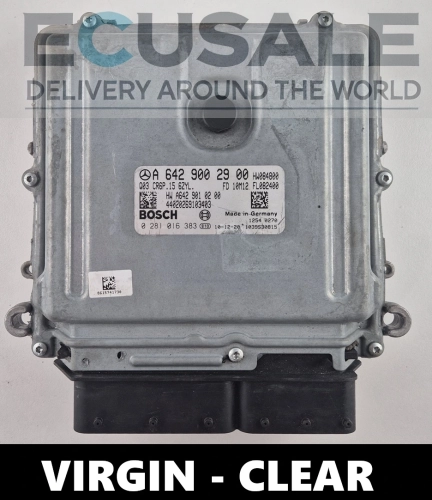
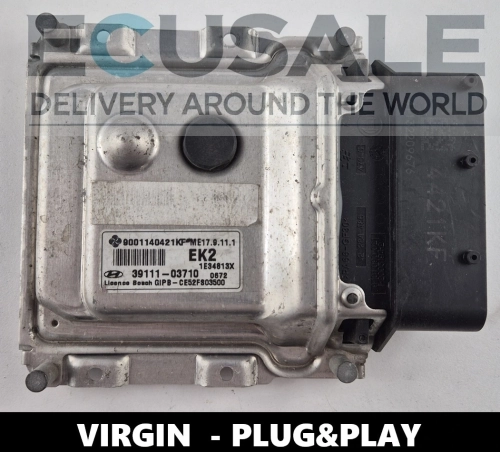
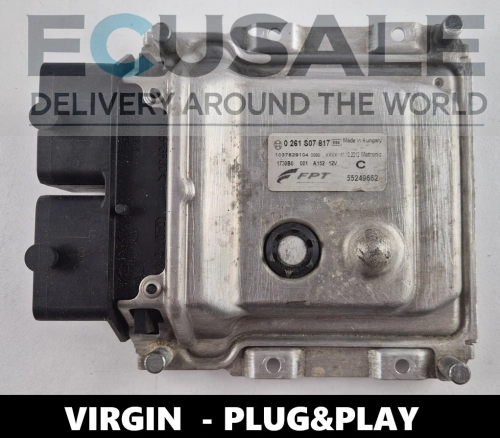
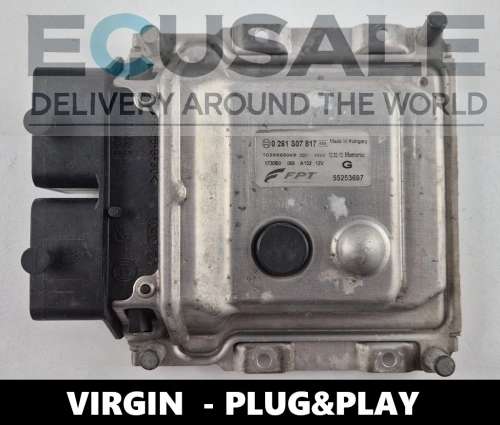
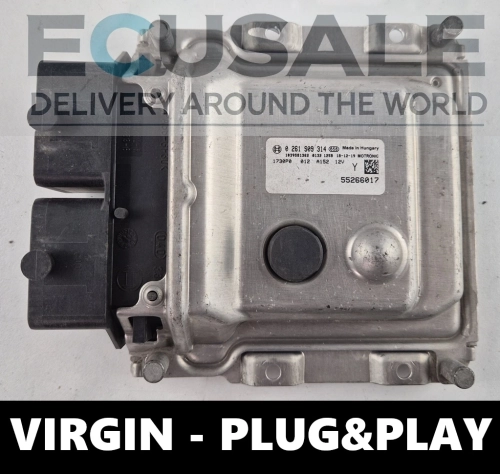
The most important rule is simple: an engine control unit must be matched by the part number on the ECU label. This is the absolute basis and the most important compatibility factor. Depending on the manufacturer – Bosch, Continental, Siemens, Visteon, Delphi and others – ECUs may use different numbering systems, but the rule remains the same: what matters is the number printed directly on the ECU label.
Typical markings include, among others:
- 028101xxxx,
- 03L906xxx,
- 55568383,
- 9666986680,
- DDE, EDC16, EDC17, SID208, MED17 and others.
Matching the main numbers visible on the ECU label is essential. An ECU should not be selected based only on model year, engine size, vehicle model or even the VIN alone. These details may help narrow the search, but they do not provide full certainty of compatibility.
Why is this so important? Because even two vehicles with the same engine, the same production year and very similar equipment can still have different ECU software versions, different hardware variants or a different set of supported components. The differences may involve the gearbox, turbo type, DPF version, air conditioning system, cruise control, start-stop system, emissions setup and many other details.
In practice, ECU compatibility is very often defined by two key areas:
- HW – hardware, meaning the hardware version and main board identification,
- SW – software, meaning the program version loaded into the ECU.
These markings often determine whether a given module will work correctly in a specific vehicle. That is why professional ECU selection should always take the exact part number into account and, where possible, the additional HW and SW markings as well. In many cases, the safest approach is simply to send a photo of your original ECU label. That is the most reliable way to verify compatibility and avoid buying the wrong part.
In practice, this is one of the most common reasons for problems after installation. The customer orders a control unit “with a similar number”, the mechanic installs it, the vehicle does not work correctly and the assumption is made that the module is faulty. In reality, the actual problem is that the ECU was not matched precisely by part number.
Does the engine control unit part number have to match exactly?
Yes. This is the most important factor when selecting an ECU, and in many cases it should match 1:1.
Can you install a control unit with a different number?
Not always. Sometimes differences in part numbers mean a different hardware or software version, which may prevent the ECU from working correctly.
Is the VIN enough to choose the correct engine control unit?
No. The VIN can help, but for a safe and accurate match you need the part number from the ECU label.
Does a photo of the ECU label help with selection?
Yes. It is the safest way to verify compatibility and reduce the risk of ordering the wrong control unit.
Summary – What Should You Do If the ECU Is Faulty?
A faulty engine control unit does not mean the end of the vehicle or unavoidable high costs. In many cases the problem can be solved effectively and at a reasonable cost, but only if the diagnosis is correct. The biggest mistake is guessing, replacing more and more parts without proper measurements, or buying a control unit based only on the vehicle model.
The most important steps when dealing with an engine control unit problem are:
- careful diagnosis of the symptoms and fault codes,
- checking power supply, grounds and the electrical system,
- verifying communication with the engine control unit,
- identifying the real cause of the ECU failure,
- choosing the right solution: repair, cloning, VIRGIN or IMMO OFF,
- matching the replacement ECU by the part number on the label.
In practice, one of the best solutions is often a used or reconditioned engine control unit prepared as Plug & Play. This is a much more affordable option than buying a brand-new module, and when it is matched correctly and prepared professionally, it can restore the vehicle to full operation quickly and effectively.
If the problem has been diagnosed correctly, the electrical system is in good condition and the control unit is matched by part number, ECU replacement can be a quick, safe and cost-effective solution. That is exactly why ECU-related problems should not be approached randomly, but through proper diagnosis and correct part selection.
If you are looking for a proven solution, see the engine control units available in our offer, prepared depending on the model in VIRGIN, IMMO OFF or cloned versions. If you are unsure which unit you need, the safest option is always to choose it based on a label photo and the exact part number.