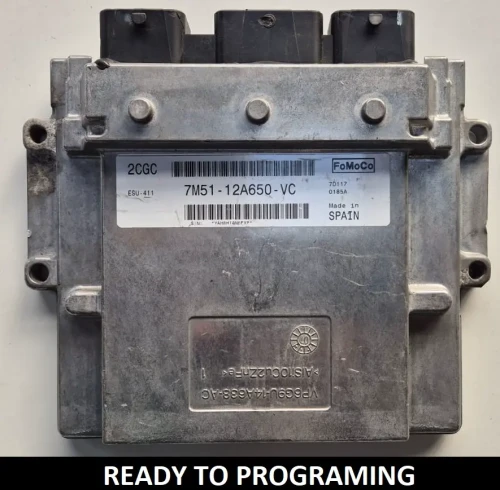
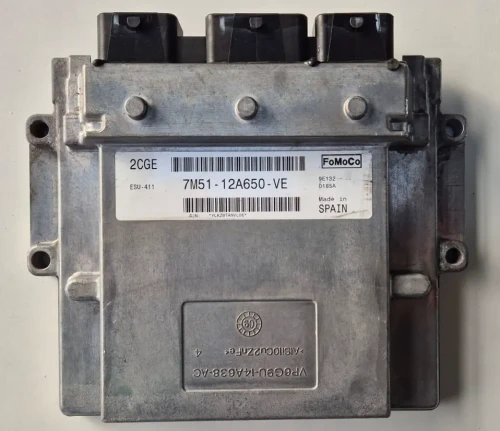
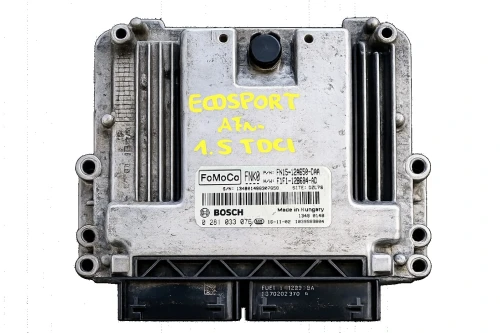
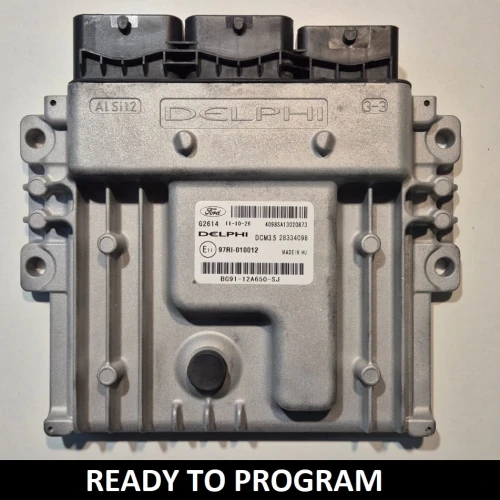
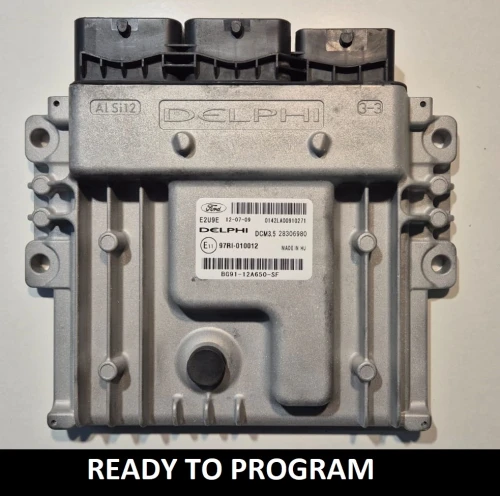
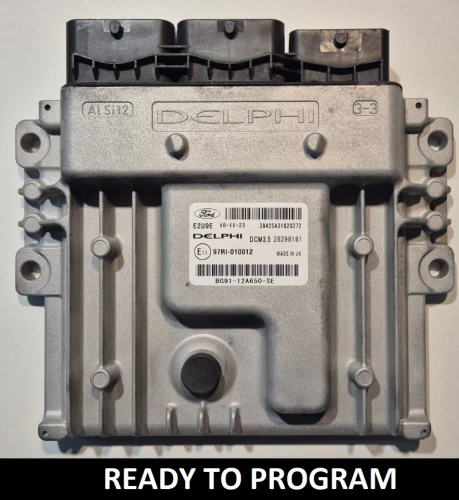
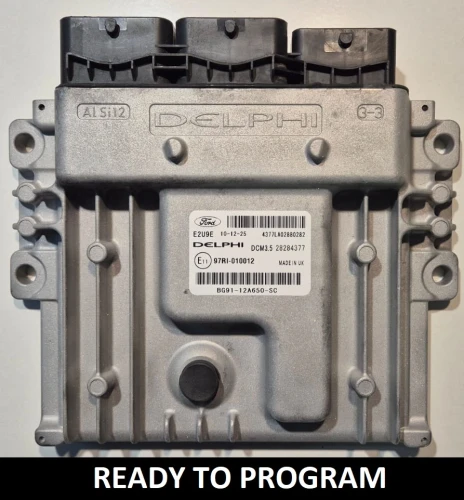
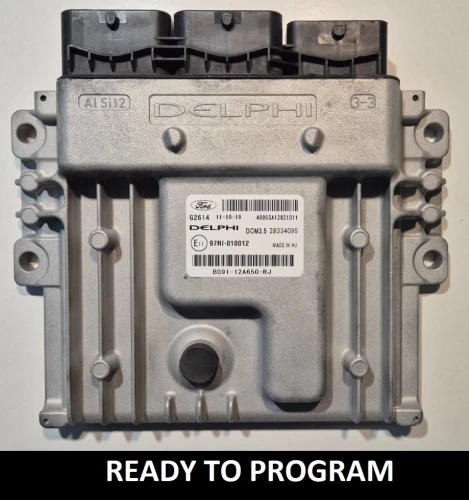
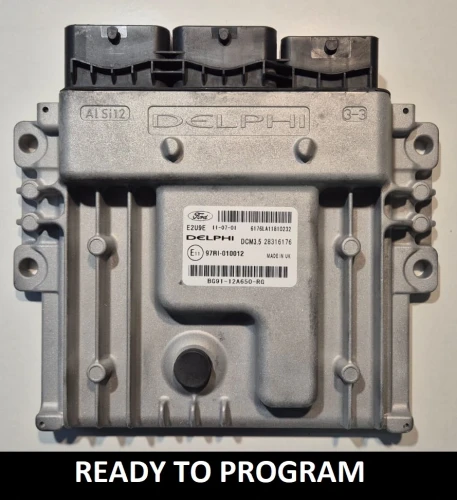
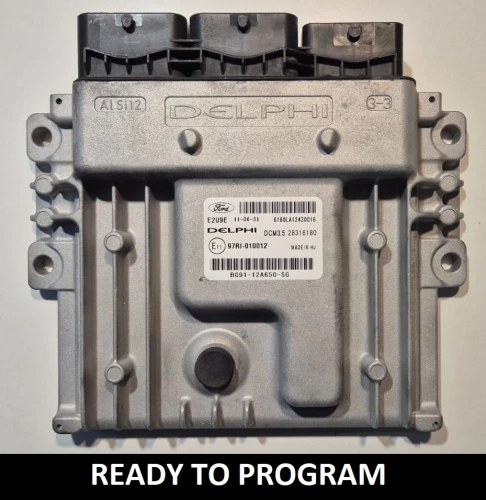
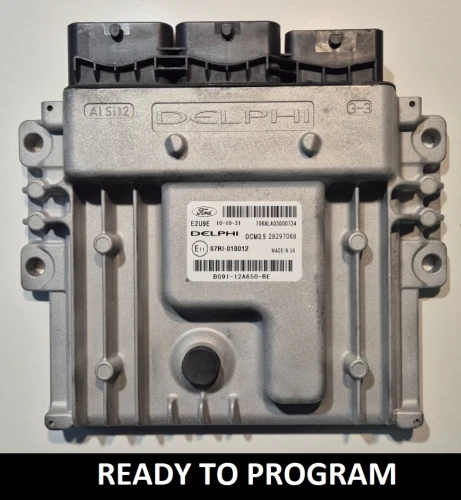
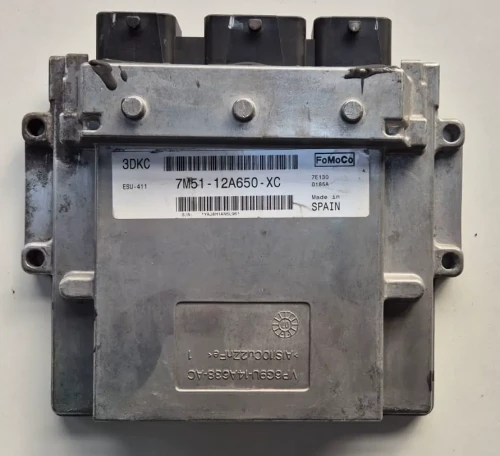
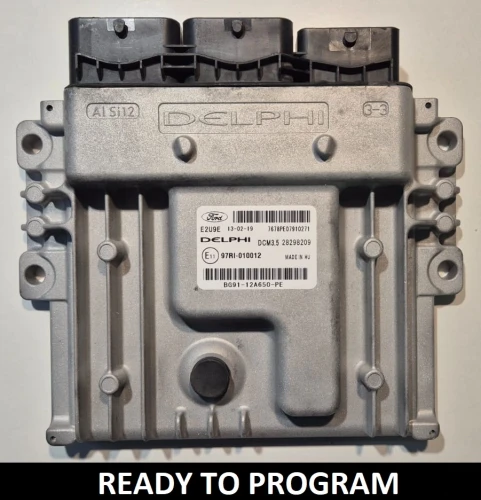
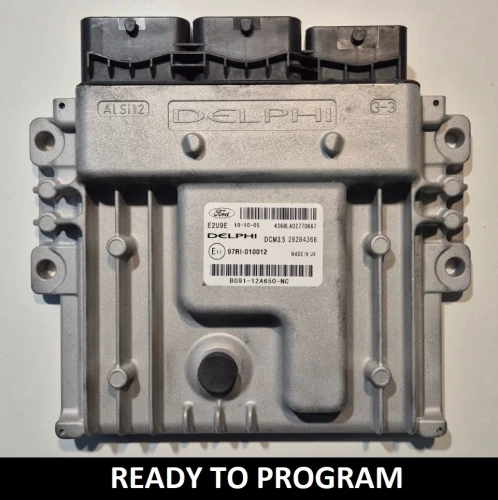
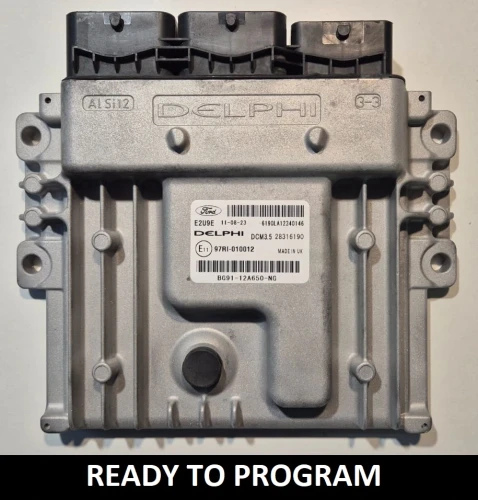
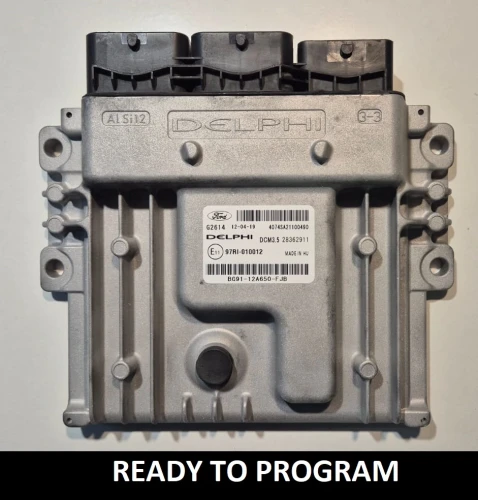
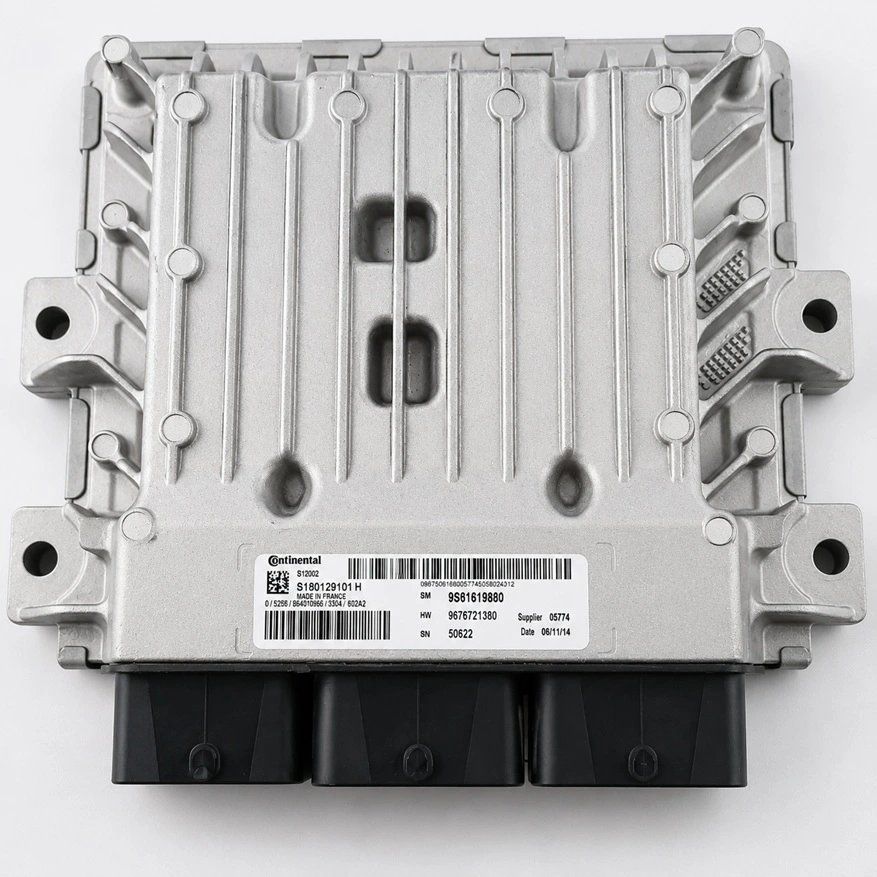
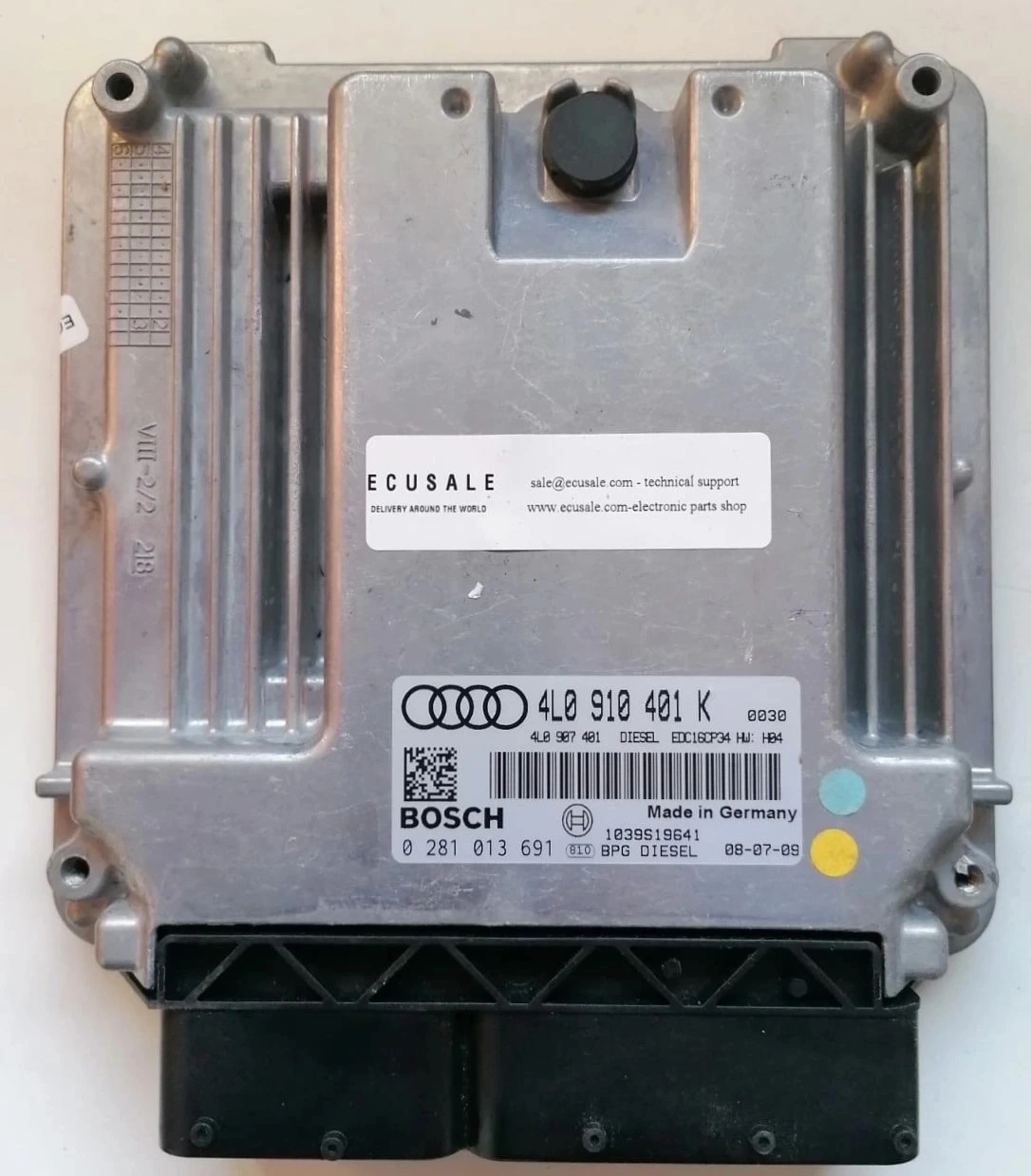
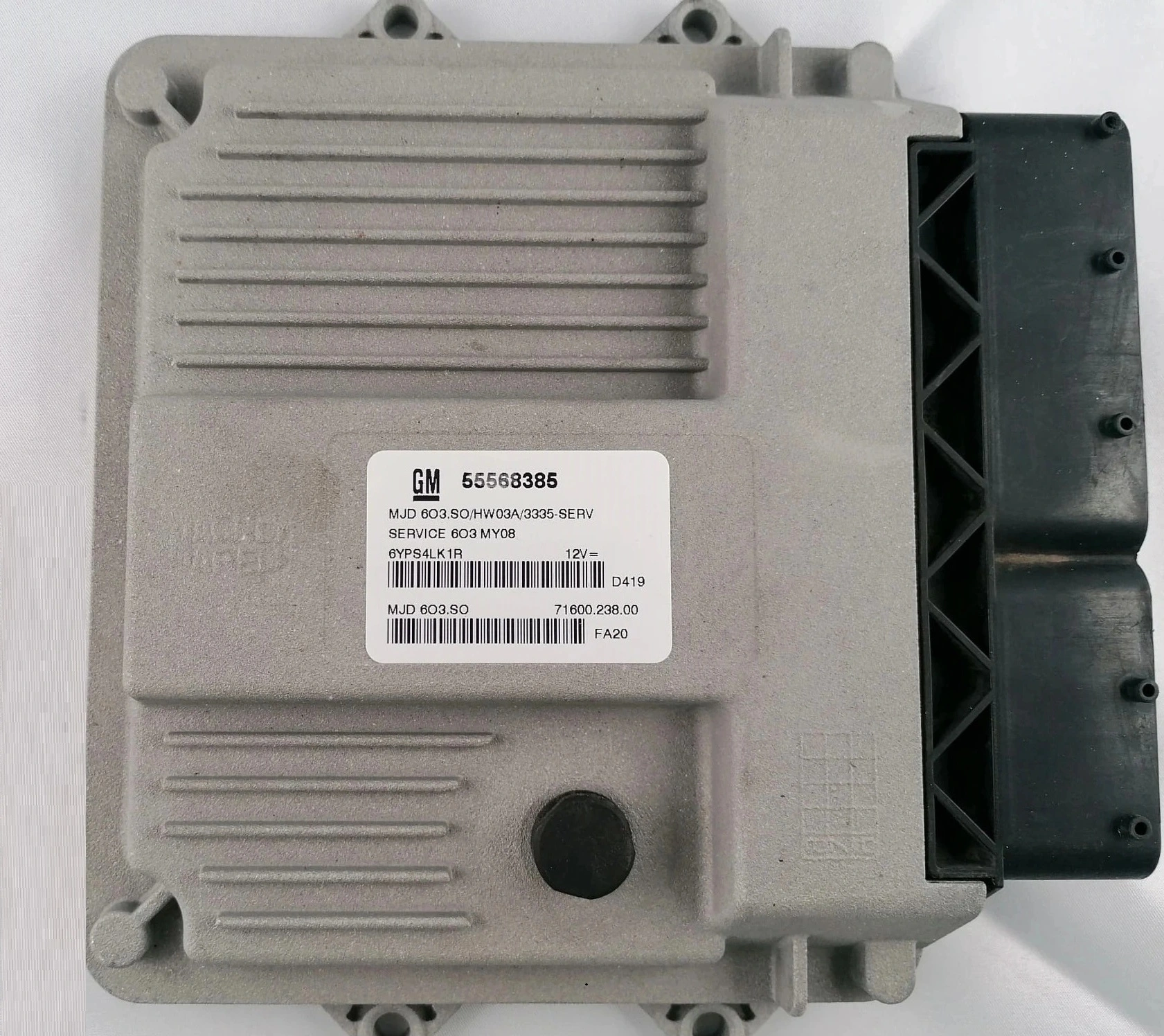
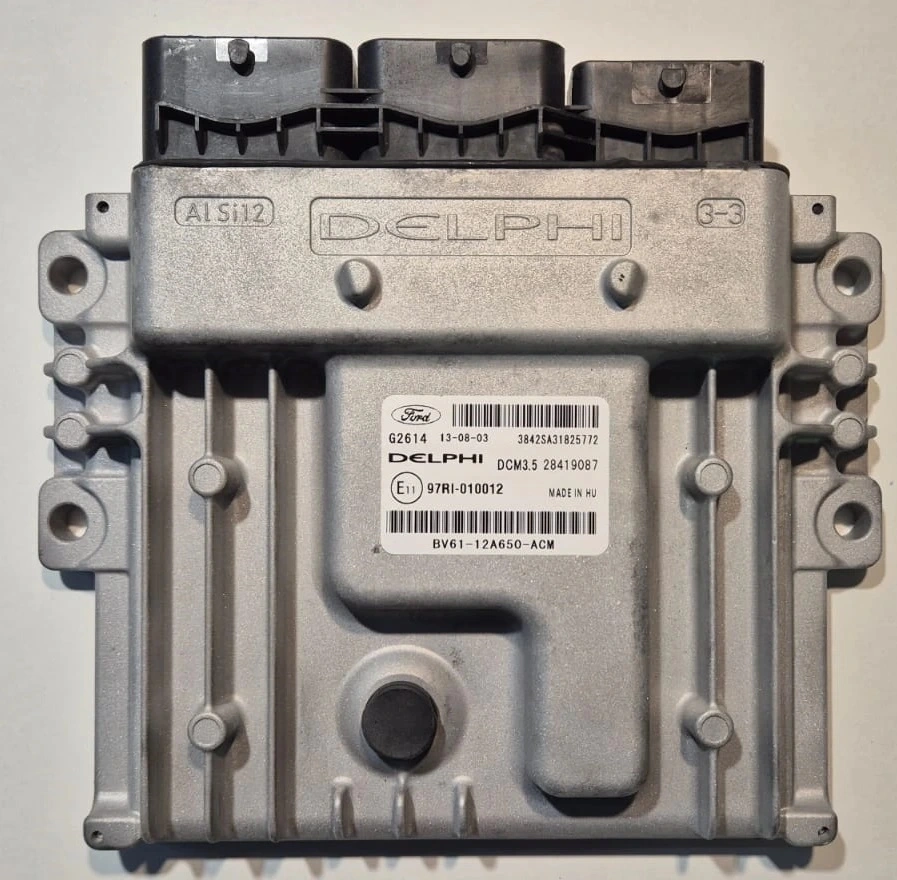
Ford engine control units for passenger cars and commercial vehicles
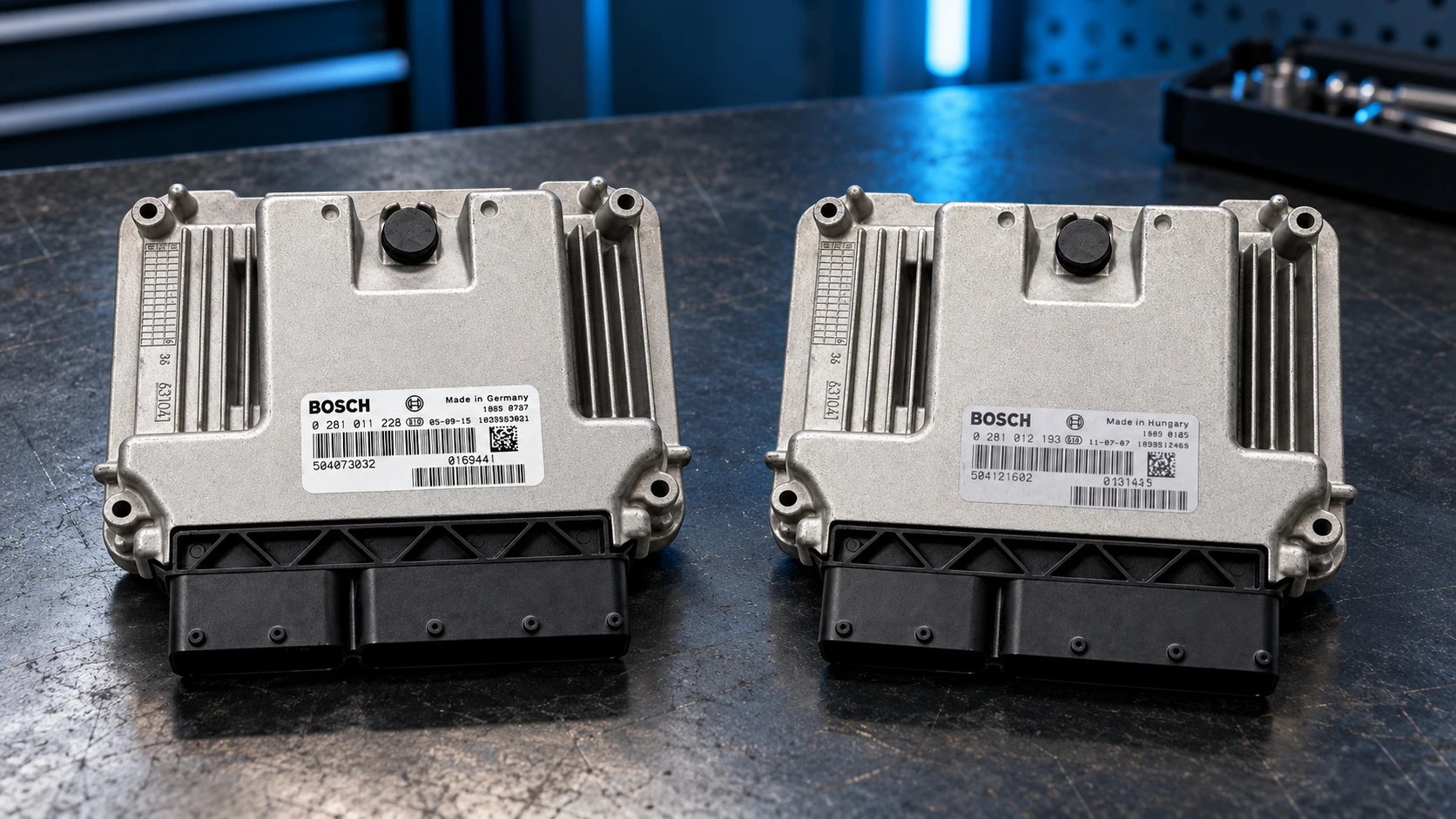
A Ford engine control unit, also known as an ECU, ECM, PCM or engine computer, controls many functions required for correct engine operation. Depending on the model and engine, it manages fuel injection, ignition, turbocharger boost, throttle operation, EGR, DPF regeneration, emissions and communication with the immobiliser and other electronic modules.
ECUSale supplies original, tested engine control units for Ford passenger cars, SUVs and commercial vehicles. Our range includes controllers for models such as the Ford Focus, Mondeo, Fiesta, Kuga, C-Max, S-Max, Galaxy, EcoSport, Ranger, Tourneo and Transit. Available units include original FoMoCo modules and controllers manufactured by Delphi, Continental and other original equipment suppliers.
The correct Ford ECU must be selected using the complete part numbers and technical markings. Vehicle model, production year or engine capacity alone cannot confirm compatibility because Ford used numerous hardware and software versions in apparently similar vehicles.
Not sure which Ford ECU you need?
Send us a clear photograph of the complete label on your original ECU together with the VIN, engine version and gearbox type. We will help you check the numbers and determine whether the replacement requires cloning, VIN programming, PATS adaptation or another preparation method.
Send your Ford ECU details
How to choose the correct Ford engine ECU
The most important step is to compare all the numbers shown on the original controller. Ford modules often display more than one reference, including a Ford engineering number, FoMoCo service number and a separate Delphi or Continental manufacturer number.
Before ordering, compare:
- the complete Ford or FoMoCo engineering number,
- the Delphi, Continental or other manufacturer number,
- the ECU family, such as DCM3.5,
- the hardware and software versions,
- the engine code, capacity and power output,
- the emissions standard,
- the manual or automatic gearbox configuration,
- the vehicle equipment and immobiliser generation,
- the preparation method stated in the product description.
Ford engineering numbers often contain groups such as 12A650, but this common centre section does not prove compatibility. The complete prefix and suffix must also be checked, for example AG91-12A650-YF or AG91-12A650-ZG.
The VIN helps identify the vehicle and its factory configuration, but it does not replace the complete numbers on the old module. A visually identical ECU may contain incompatible software or may not communicate correctly with the PATS immobiliser, instrument cluster, BCM or gearbox controller.
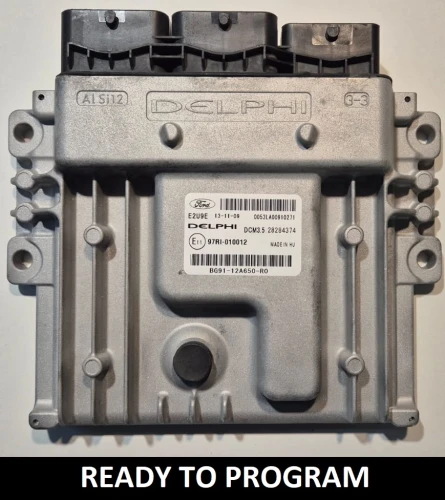
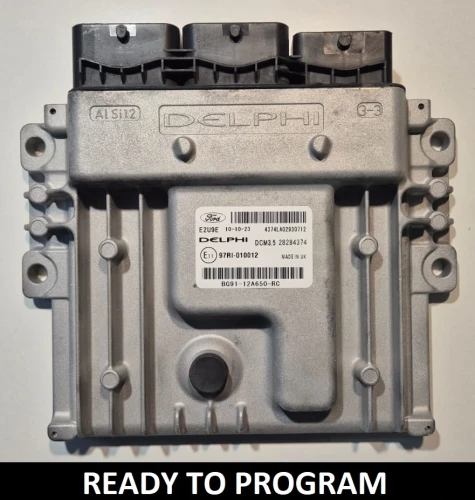
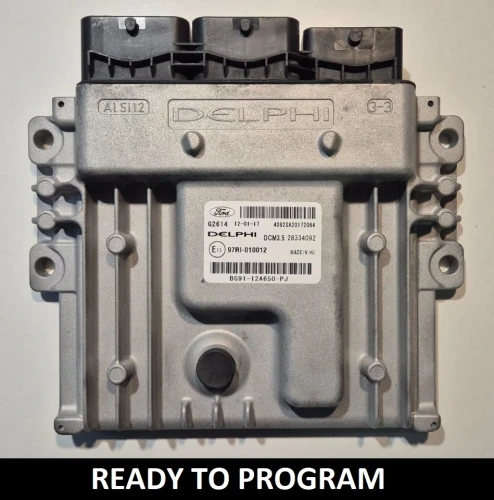
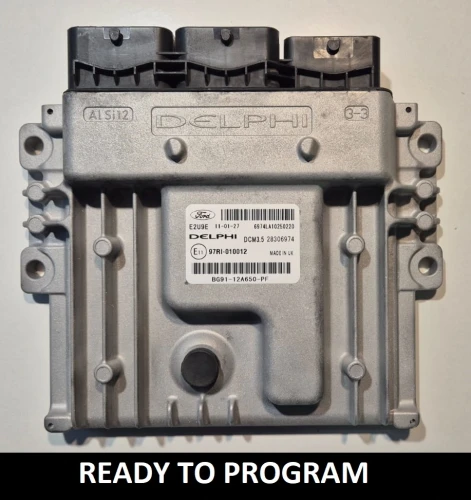
Ford DCM3.5 engine control units
Delphi DCM3.5 is a widely used diesel engine controller found in selected Ford vehicles equipped with 2.0 TDCi and 2.2 TDCi engines. Depending on the vehicle, these units may be fitted to the Ford Mondeo, Focus, Kuga, C-Max, S-Max, Galaxy and other models.
Our dedicated Ford DCM3.5 ECU collection brings together compatible replacement controllers identified by their complete Delphi and Ford numbers. The collection is useful for customers searching for terms such as:
- Ford DCM3.5 2.0 TDCi engine ECU,
- Ford DCM3.5 replacement with VIN programming,
- Delphi DCM3.5 ECU cloning,
- Ford Mondeo ECU no communication,
- Ford Kuga DCM3.5 PATS programming.
DCM3.5 controllers must not be selected using only the ECU family or engine capacity. The complete Delphi number, Ford engineering reference, hardware type and software configuration should be verified before purchase.
Popular Ford DCM3.5 controller numbers
Examples available in the Ford category include:
Other DCM3.5 references may look nearly identical but use different calibration, gearbox settings or vehicle configuration. Always compare the complete suffix rather than only the shared AG91-12A650 or BV61-12A650 section.
Replacing a Ford DCM3.5 ECU
Replacing a DCM3.5 controller may involve more than connecting another module. Depending on its preparation and the vehicle configuration, the procedure may require:
- reading data from the original ECU,
- transferring the correct engine software,
- writing or correcting the VIN,
- configuring the gearbox and vehicle equipment,
- performing PATS immobiliser adaptation,
- coding injectors where required,
- clearing diagnostic faults and completing a road test.
More technical information is available in our guide about replacing a Ford 2.0 TDCi DCM3.5 ECU, programming and VIN coding. The article currently uses a Polish page title, so an English-language version should be added later for better international SEO and user experience.
Does a Ford ECU require PATS programming?
Many Ford vehicles use the PATS immobiliser system to authorise engine starting. The PCM or ECU must communicate correctly with the instrument cluster, BCM, key transponder and other security-related modules.
A standard used Ford ECU normally contains security and configuration data from the donor vehicle. Installing it without preparation can result in a flashing immobiliser warning, a crank-without-start condition or PATS-related diagnostic codes.
Depending on the model, PATS programming may be performed with FORScan, Ford IDS or another diagnostic system supporting the required Ford security procedure. Some operations require security access, a timed login or access to at least two correctly programmed keys.
Unlocked does not always mean ready to start
An unlocked or VIRGIN Ford ECU may still require VIN programming, vehicle configuration and PATS adaptation after installation. Always check the individual product description and confirm that your workshop has FORScan, IDS or another suitable diagnostic system.
Ford ECU programming with FORScan or IDS
FORScan can support diagnostics, configuration, module programming and PATS-related functions in many Ford vehicles. The available operations depend on the model, module generation, software licence and diagnostic interface.
Ford IDS is used for diagnostics and programming on many Ford vehicles. Newer models may use FDRS or another manufacturer-supported procedure. No single tool supports every Ford ECU or every model year.
Before programming, the workshop should provide a stable power supply to the vehicle. Low voltage or an interrupted programming session can corrupt ECU data, cause loss of communication or leave the vehicle unable to start.
After programming or adaptation, diagnostic codes should be cleared and the ignition should normally be switched off for the time required by the procedure. The technician should then verify PATS authorisation, VIN data, injector coding, engine operation and communication with other modules.
Ford ECU cloning – when is it possible?
ECU cloning involves transferring data from the original controller to compatible replacement hardware. Depending on the ECU type, this may preserve:
- engine software and calibration,
- the VIN,
- PATS or immobiliser information,
- injector coding,
- gearbox and equipment configuration.
Cloning normally requires the original ECU and a compatible replacement. The procedure is possible only when the required EEPROM, FLASH or processor data can be read from the damaged controller.
If the original ECU is completely unreadable, an alternative may involve programming a compatible replacement using the VIN and then completing PATS and vehicle configuration procedures in the car. The correct solution depends on the ECU family and the condition of the original module.
Ford VIRGIN, unlocked and Plug & Play ECUs

The descriptions VIRGIN, unlocked and Plug & Play do not mean exactly the same thing:
- VIRGIN ECU – cleared of selected data from the previous vehicle and prepared for programming or adaptation,
- unlocked ECU – security protection or previous pairing has been removed, but PATS programming may still be required,
- Plug & Play ECU – prepared for a particular vehicle to minimise work after installation, often using data from the original module.
The preparation offered depends on the controller. Customers should not assume that a VIRGIN or unlocked Ford ECU will start the engine immediately after connection. The exact installation requirements are stated in the individual product description.
Delphi, FoMoCo and Continental Ford controllers
The Ford category contains original modules supplied under Ford or FoMoCo references and controllers manufactured by recognised automotive electronics companies. You can also browse:
The manufacturer name does not confirm vehicle compatibility by itself. Always compare the complete Ford engineering number and the manufacturer reference.
Common symptoms of a faulty Ford ECU
- the engine cranks but does not start,
- the engine cuts out while driving,
- intermittent starting problems,
- no diagnostic communication with the PCM,
- PATS or immobiliser warning displayed,
- limp mode and reduced power,
- injector, fuel-pressure or turbocharger fault codes,
- no control of the fuel pump or injectors,
- incorrect cooling-fan operation,
- multiple CAN communication faults,
- problems after water ingress, a short circuit or voltage damage,
- a no-start condition following interrupted programming.
These symptoms do not automatically confirm an ECU failure. Similar problems can be caused by wiring damage, poor earth connections, faulty sensors, relays, fuses, injectors, low fuel pressure, low battery voltage or a fault in the BCM or instrument cluster.
Before replacing the ECU, check the power supply, earth connections and CAN communication. If the original controller was damaged by a short circuit or an external component, the cause must be repaired before another ECU is installed.
Ford BCM, GEM, SJB and BdyCM modules
Starting authorisation and vehicle configuration can depend on communication between the engine ECU and body electronics. If diagnostic codes indicate a BCM, GEM, SJB, BdyCM, central locking or body-network problem, see our category of Ford BCM, GEM, SJB and BdyCM modules.
A replacement body module may require configuration, VIN programming, key programming or data transfer. A fault in the body module can sometimes appear to be an ECU or immobiliser problem, so the vehicle should be diagnosed before parts are replaced.
Ford ABS pumps and control modules
If the warning lights and fault codes concern ABS, ESP, traction control, brake-pressure regulation or wheel-speed signals, the problem may be located in the braking system rather than in the engine ECU. In that case, browse our Ford ABS pumps and control modules.
As with an engine controller, a Ford ABS pump must be selected using the complete OEM, hydraulic-pump and electronic-controller numbers. Programming or calibration may be required after installation.
Why buy a Ford ECU from ECUSale?
- original Ford, FoMoCo, Delphi and Continental modules,
- controllers electronically tested before dispatch,
- complete Ford and manufacturer numbers shown in product listings,
- DCM3.5 controllers for popular 2.0 and 2.2 TDCi applications,
- clear information about programming and preparation,
- compatibility assistance using a label photograph and VIN,
- warranty according to the conditions stated for the product,
- European and worldwide delivery options.
Before purchasing, you can check our guide explaining how to buy, available payment methods, shipping costs and delivery times and returns and complaints information.
Find the correct Ford engine control unit
Compare the complete numbers on the original ECU or send us a clear photograph of its label. We will help you verify compatibility and determine whether cloning, VIN programming or PATS adaptation is required.
Browse Ford ECUs Check ECU compatibility

FAQ – Ford engine control units
How do I choose the correct ECU for my Ford?
Compare the complete Ford or FoMoCo engineering number and the Delphi, Continental or other manufacturer number with the original module. The engine, model and year alone are not sufficient.
Does a used Ford ECU require programming?
In most cases, a standard used controller requires preparation, programming or data transfer. The exact procedure may include VIN programming, vehicle configuration, injector coding and PATS adaptation.
Is an unlocked Ford ECU Plug & Play?
Not necessarily. An unlocked controller may still require programming and PATS pairing with FORScan, IDS or another compatible diagnostic system before the vehicle will start.
Can a Ford VIRGIN ECU start the vehicle after connection?
A VIRGIN ECU is prepared for programming but should not automatically be treated as Plug & Play. It may require VIN programming, configuration and PATS adaptation in the vehicle.
What is a Ford DCM3.5 ECU?
DCM3.5 is a Delphi diesel engine controller used in selected Ford vehicles, including versions with 2.0 TDCi and 2.2 TDCi engines. Compatibility must be checked using the complete Ford and Delphi numbers.
Can a Ford DCM3.5 ECU be cloned?
Many DCM3.5 controllers can be cloned when the required data can be read from the original ECU and compatible replacement hardware is available. Both controllers may be required for the service.
Can FORScan programme a replacement Ford ECU?
FORScan supports programming, configuration and PATS functions in many Ford vehicles, but capability depends on the model, controller generation, licence and diagnostic interface. Confirm support before installation.
Can Ford IDS programme an engine ECU?
IDS supports diagnostics and module programming in many Ford vehicles. Newer models may require FDRS or another procedure. A stable external power supply should be used during programming.
What information should I send before buying a Ford ECU?
Send a clear photograph of the complete ECU label, the VIN, vehicle model and year, engine capacity and power, gearbox type and diagnostic fault codes. If possible, also confirm whether the original ECU still communicates.