Audi Engine Control Units – ECUs, Engine Computers and Control Modules
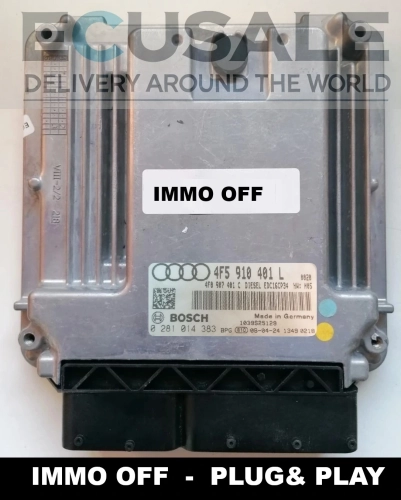
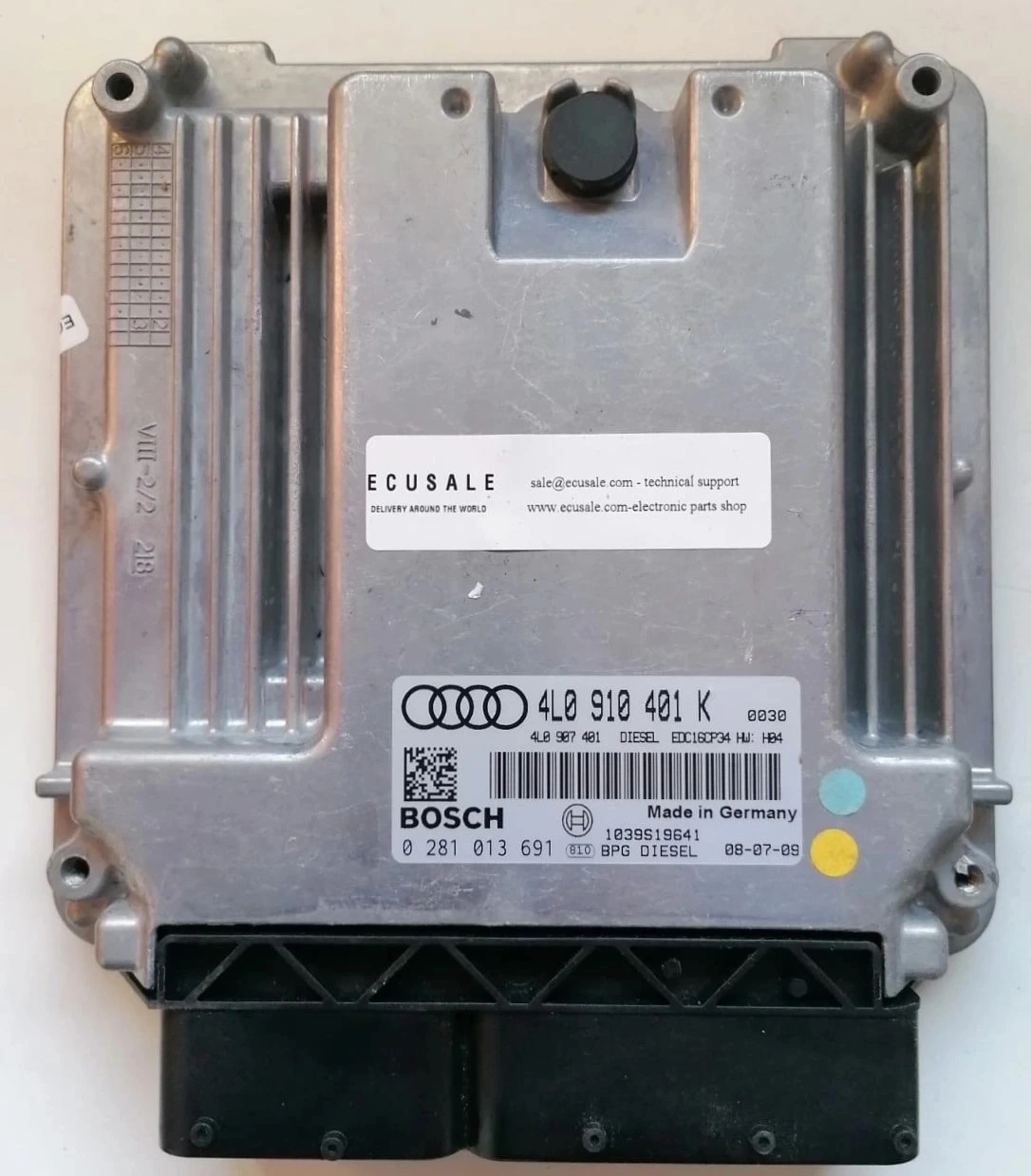
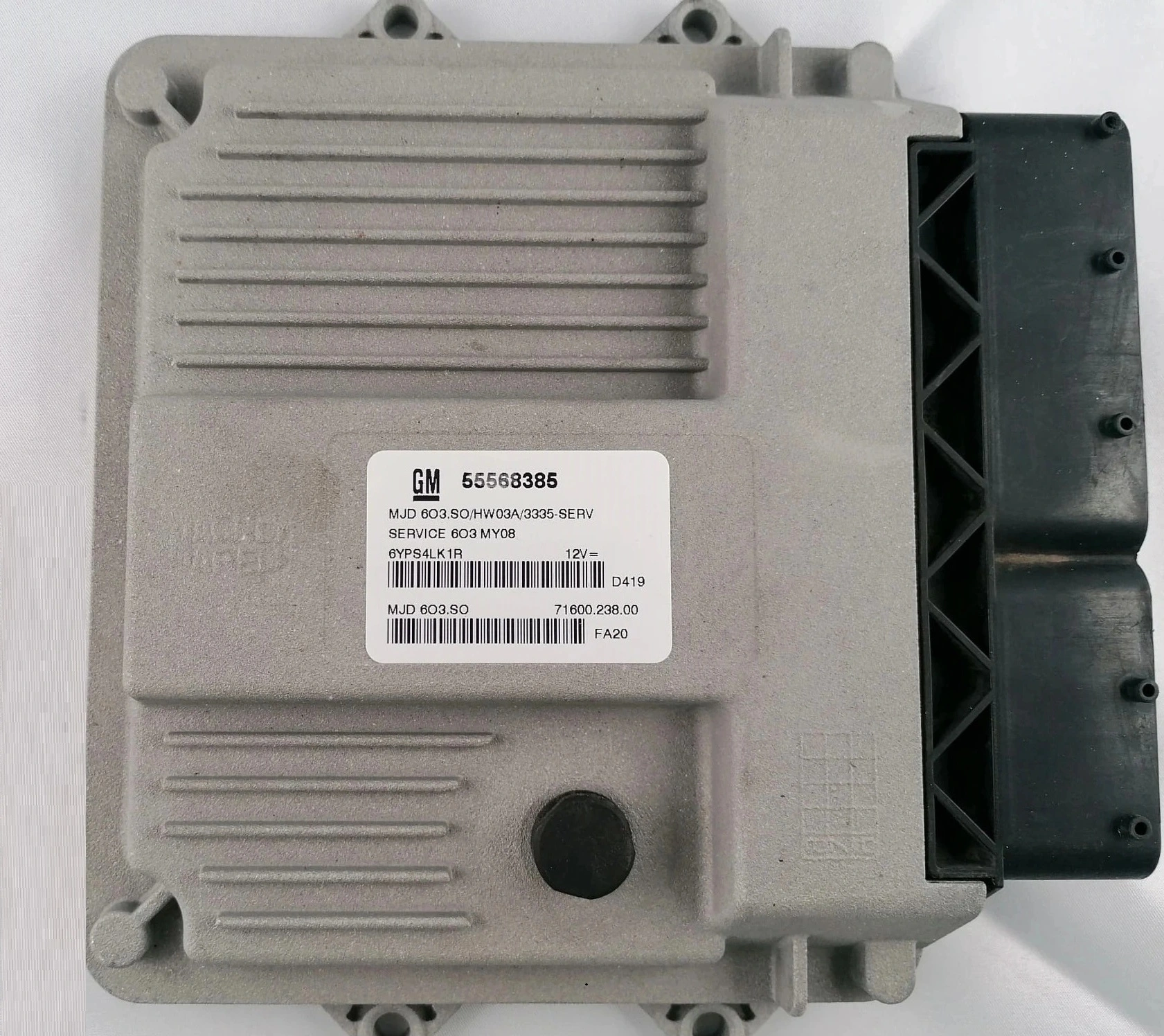
An Audi engine control unit, also known as an ECU or engine computer, manages the operation of the powertrain. It processes signals from the vehicle’s sensors and controls functions such as fuel injection, ignition, fuel pressure, turbocharger operation, throttle control, EGR, DPF regeneration and communication with other electronic modules.
This category includes original engine control units for petrol and diesel Audi vehicles, including the Audi A1, A3, A4, A5, A6, A8, TT, Q3, Q5 and Q7. Our current range consists mainly of Bosch modules from the EDC15, EDC16, EDC17, ME and MED families.
You can also browse our complete range of engine control units for other vehicle manufacturers.
Not sure which Audi ECU you need?
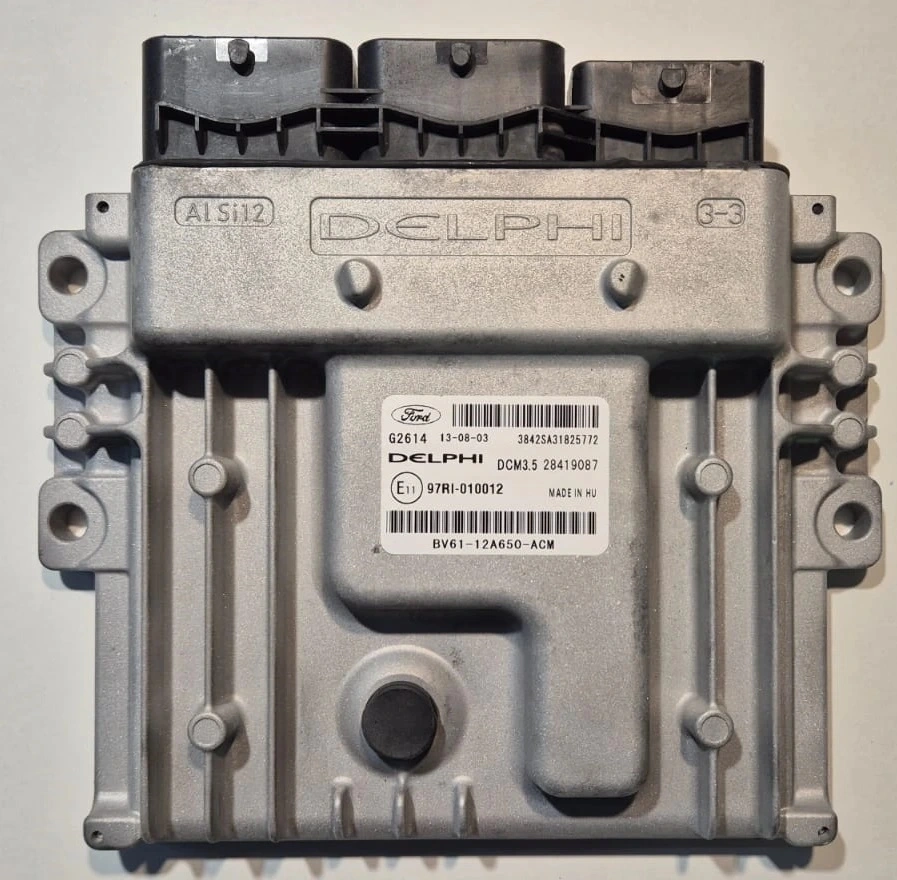
Send us a clear photo of the complete label, the Audi/VW OEM reference, the ECU manufacturer number and the vehicle VIN. We will help verify compatibility and determine the appropriate preparation method.
Send Your Audi ECU Numbers
How to Choose the Correct Audi Engine ECU
The safest way to choose an Audi engine control unit is to compare all references printed on the original ECU label. The vehicle model, production year, engine capacity or power output alone may not be sufficient to confirm compatibility.
Audi vehicles with apparently identical engines can use different ECU hardware and software versions. A single letter at the end of an Audi/VW OEM number may identify a different engine configuration, gearbox type, equipment specification or immobiliser system.
Before ordering, compare:
- the complete Audi/VW OEM part number,
- the Bosch or other ECU manufacturer number,
- the hardware and software references, if shown on the label,
- the engine code, capacity and power output,
- the petrol or diesel engine version,
- the manual or automatic gearbox configuration,
- the vehicle model and production year,
- the preparation method specified in the product description.
The VIN helps verify the original vehicle specification, but it does not always replace the references printed on the ECU. For reliable identification, provide both the VIN and a clear photograph of the original module.
Bosch Engine Control Units for Audi
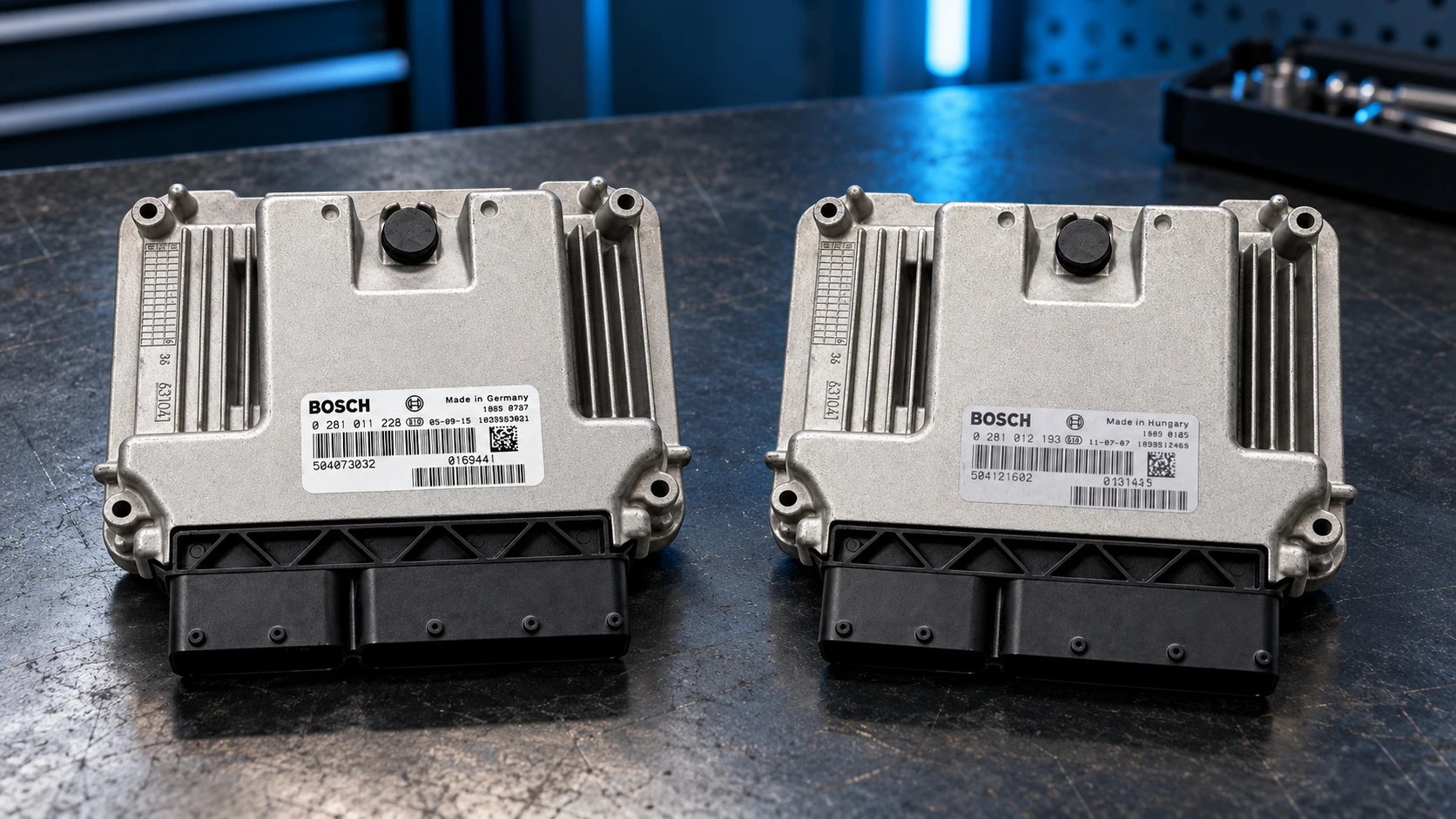
Audi frequently uses Bosch engine control units. Diesel engines may be equipped with EDC15, EDC16 or EDC17 platforms, while petrol engines commonly use ME and MED control units.
The complete Bosch reference should always be checked together with the Audi/VW OEM number. Two modules can have the same housing and connectors while containing different hardware, software or immobiliser data.
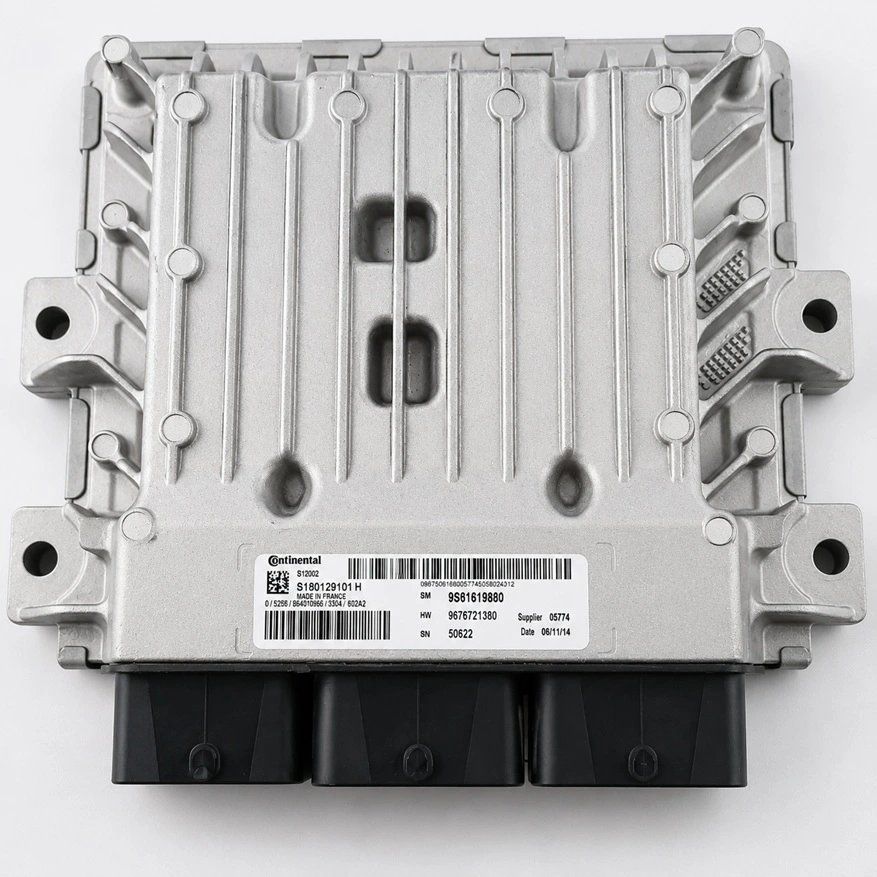
The current category primarily contains Bosch modules. Depending on future stock, Audi ECUs from Continental, Siemens or other original equipment manufacturers may also become available.
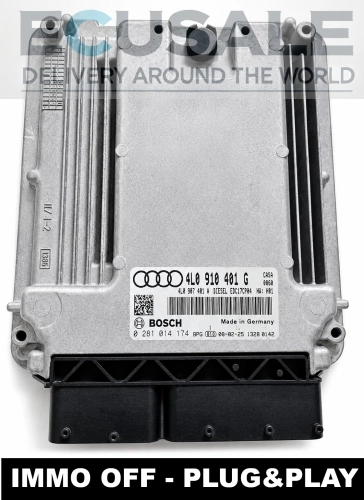
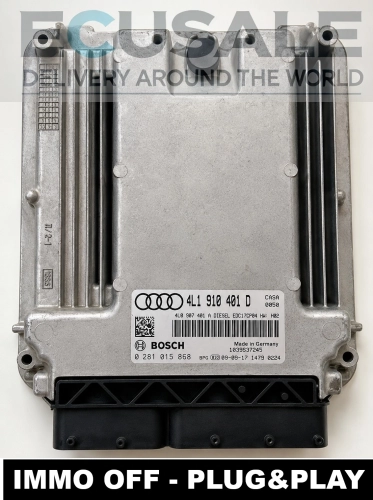
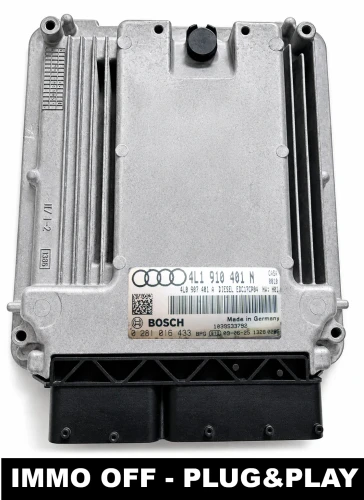
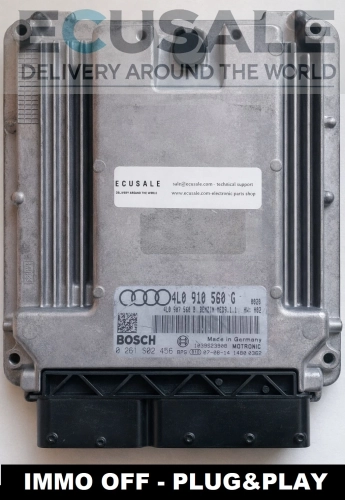
Popular Audi Engine Control Units Available from ECUSale
The following products are examples of Audi engine ECUs currently available in our catalogue. Always compare the complete references with the original module before ordering:
If you cannot find your reference in this list, use the search function or browse the remaining products in the category. Searching with the complete numbers together—for example, 0281012665 8E2910401J Audi A4 ECU—usually produces a more accurate result than searching only by vehicle model.
Audi Q7 3.0, 4.0 and 4.2 Engine ECUs
Audi Q7 models use different engine control units depending on the vehicle generation, engine capacity, power output, fuel type and equipment configuration. These include ECUs for the Audi Q7 3.0 TDI, 4.2 TDI, 3.0 TFSI and 4.0 TFSI.
For this model, we have created a dedicated collection of Audi Q7 engine ECUs in IMMO OFF and Plug & Play versions. The collection contains popular Audi and Bosch references for selected Q7 4L and Q7 4M applications.
One example is the 0281014406 / 4L0910401R Audi Q7 3.0 TDI ECU IMMO OFF Plug & Play. Compatibility must still be confirmed using the complete part numbers because an IMMO OFF modification does not make an incompatible ECU suitable for a different engine or hardware platform.
Common Audi Q7 ECU Failures
In Audi Q7 4L vehicles, water entering the plenum chamber or ECU compartment is a frequently encountered cause of engine control unit failure. Moisture may result in connector corrosion, CAN communication faults, starting problems, intermittent operation or complete loss of diagnostic communication.
Audi Q7 4.2 TDI engines may use two Bosch EDC16CP34 engine controllers operating as MASTER and SLAVE. These modules must be correctly identified and installed in their designated positions. More information is available in our guide to Audi Q7 4.2 TDI MASTER/SLAVE EDC16CP34 ECU failures.
Before fitting a replacement Audi Q7 ECU, check:
- the plenum chamber drains and ECU enclosure,
- the condition of the connectors and pins,
- power supplies and ground connections,
- CAN bus communication,
- the wiring harness for moisture and corrosion,
- the original reason for the ECU failure.
Installing another ECU without removing the source of water ingress or an electrical short circuit may damage the replacement module.
Audi ECU Programming, Cloning, VIRGIN and IMMO OFF
A standard used Audi ECU usually retains information from the donor vehicle. This may include the VIN, immobiliser data, coding, equipment configuration and software matched to a particular engine and gearbox version. For this reason, a used unit will not necessarily work after simply being connected to another vehicle.
Depending on the ECU platform, one of the following preparation methods may be available:
- Programming and adaptation – installing the appropriate software and assigning the ECU to the vehicle.
- ECU cloning – transferring the required data from the original controller to a compatible replacement module.
- VIRGIN preparation – removing selected data from the previous vehicle so that the ECU can be adapted again.
- IMMO OFF – modifying immobiliser handling on supported ECU platforms.
- Plug & Play preparation – preparing the module for the most direct possible installation according to the exact product specification.
Not every method is available for every Audi engine control unit. The appropriate solution depends on the ECU number, hardware and software version, immobiliser generation and whether the required data can still be read from the original module.
Important Information About Audi IMMO OFF ECUs
An Audi ECU described as IMMO OFF has been modified so that the supported engine controller does not require standard immobiliser authorisation to start the engine. However, IMMO OFF does not change the ECU’s hardware, engine software or vehicle configuration.
On some Audi and Volkswagen Group vehicles, an immobiliser warning, padlock symbol or diagnostic trouble code may remain in the instrument cluster or another vehicle module. This does not necessarily indicate an ECU fault if the engine starts and operates correctly.
Always read the description of the selected product. Some Plug & Play ECUs may still require additional configuration, fault-code clearing or coding related to the vehicle’s equipment.
Audi ECU Repair and Data Recovery
If an Audi engine computer has been damaged by water, corrosion, a short circuit, incorrect power supply or interrupted programming, repair or data recovery may be possible. The available procedure depends on the condition of the electronic board, processor, Flash memory and EEPROM.
If the original module remains readable, the required data may be transferred to a compatible replacement ECU. Where data cannot be recovered safely or an electronic repair would not provide dependable operation, preparing another compatible module may be the more appropriate solution.
Common Symptoms of a Faulty Audi Engine ECU
A damaged Audi ECU may produce several different symptoms. Similar faults can also be caused by the wiring, power supply, sensors, fuel system or actuators, so the vehicle should be diagnosed before the engine control unit is replaced.
- the engine does not start or starts intermittently,
- no diagnostic communication with the engine ECU,
- limp mode and reduced engine power,
- rough running, hesitation, jerking or stalling,
- injector, ignition coil or throttle body fault codes,
- turbocharger or fuel-pressure control problems,
- immobiliser or CAN communication faults,
- water damage, connector corrosion or damaged pins,
- problems after interrupted or incorrect ECU programming.
Before ordering a replacement, check the ECU power supplies, grounds, fuses, relays, CAN wiring, engine harness, sensors and relevant actuators. An unresolved electrical fault can damage the replacement ECU as well.
If the fault involves communication with other vehicle electronics, you can also check our range of Audi BCM, Gateway and central electrics modules.
Audi Engine ECUs Checked Before Dispatch
Audi engine control units supplied by ECUSale are checked before dispatch according to the technical capabilities of each ECU platform. Depending on the module, verification may include:
- diagnostic communication testing,
- power supply and basic electronic function checks,
- inspection of the housing, connectors and pins,
- checking for moisture, corrosion and previous repair attempts,
- memory access where supported,
- preparation according to the option specified in the product description.
Testing an ECU does not replace diagnosing the vehicle or identifying the cause of the original controller’s failure.
Warranty, Delivery and Help with Audi ECU Selection
Our product descriptions specify whether an ECU is used, tested, programmed, VIRGIN, IMMO OFF, Plug & Play or intended for further preparation. Products are covered by warranty according to the terms stated by ECUSale.
Before ordering, you can review:
Find the Correct Engine ECU for Your Audi
Compare the complete references from the original ECU or send us a photo of its label and the vehicle VIN. We will help you verify compatibility and the available preparation option.
Browse Audi Engine ECUs Ask Us to Check the Numbers
FAQ – Audi Engine Control Units
How do I choose the correct engine ECU for my Audi?
Compare the complete Audi/VW OEM number and the Bosch or other manufacturer reference with the label on the original ECU. The engine code, power output, production year, gearbox type and VIN are also helpful, but the vehicle model alone is not sufficient.
Does a used Audi engine control unit require programming?
In many cases, yes. A used Audi ECU may require programming, immobiliser adaptation, cloning or another preparation procedure. The requirements depend on the ECU platform and the option specified in the individual product description.
Can an Audi ECU be selected using only the VIN?
The VIN helps verify the vehicle specification, but it does not always identify the exact ECU hardware and software version. The complete references printed on the original engine controller remain the most important information.
Can an Audi engine ECU be cloned?
Cloning is possible on many Audi ECU platforms if the required data can be read safely from the original module and a compatible replacement controller is available. The replacement hardware must still be suitable for the vehicle.
Can every Audi ECU be prepared as IMMO OFF?
No. IMMO OFF is available only for selected ECU platforms and software versions. Availability must be confirmed in the description of the specific product.
Will an immobiliser warning remain after fitting an IMMO OFF Audi ECU?
On some Audi models, an immobiliser warning or stored fault code may remain in the instrument cluster or another control module. This does not necessarily mean that the engine ECU is defective if the engine starts and runs correctly.
Can a water-damaged Audi ECU be repaired?
It depends on the extent of corrosion, the number of damaged circuits and the condition of the processor and memory. In some cases, the ECU can be repaired or its data can be recovered and transferred to another compatible module.
Why do Audi Q7 engine ECUs suffer from water damage?
Water may collect around the plenum chamber or ECU enclosure when drains or protective covers do not function correctly. Moisture can then damage the connectors or electronics. The source of the water ingress must be removed before another ECU is installed.
Are Audi engine control units checked before dispatch?
Yes. The scope of testing depends on the construction and technical capabilities of the specific ECU platform. Always check the individual product description for its condition, preparation method and installation requirements.